Drone Video Versus Aerial Photos for Listings
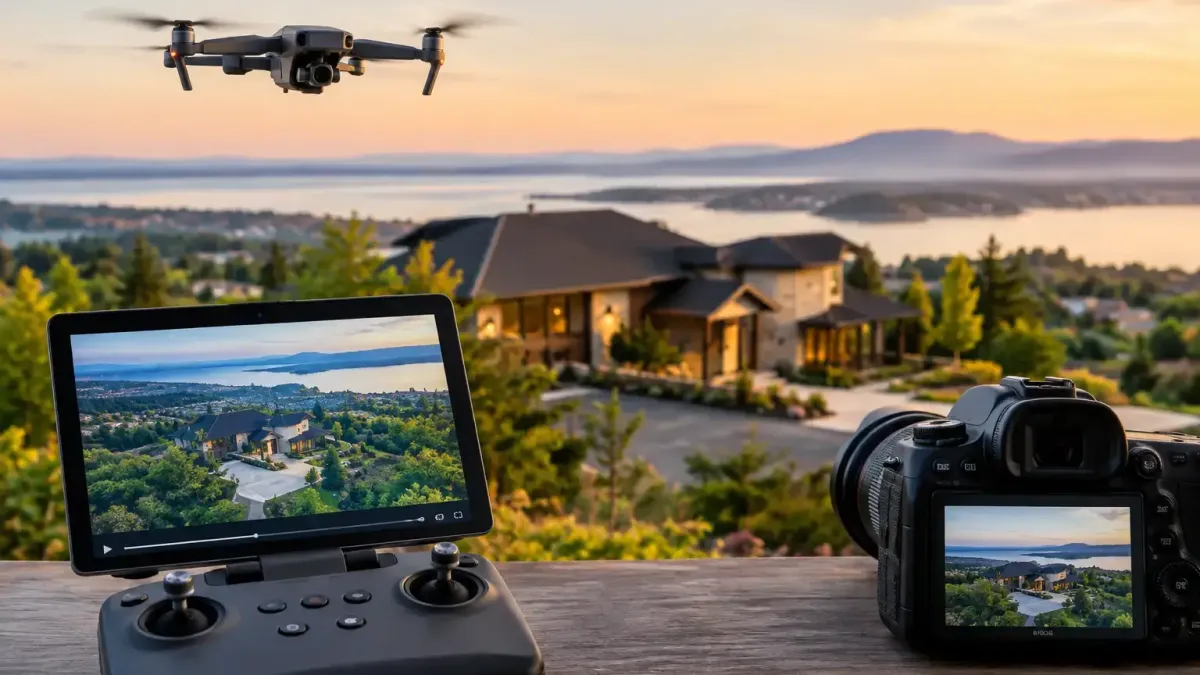
A waterfront home can have a beautifully renovated kitchen and still lose attention if buyers cannot see the canal, dock, bridge access, or relationship to the bay. That is where drone video versus aerial photos becomes a real listing decision, not a creative preference. Each format answers different buyer questions, and choosing the right one helps agents create stronger first impressions before a showing is ever scheduled.
For South Florida listings, aerial media often does more than add visual polish. It establishes location, lot context, proximity to the water, outdoor amenities, and the lifestyle a buyer is considering. The goal is not to fly a drone simply because a drone is available. The goal is to show the information that makes a property easier to understand and harder to overlook.
Drone Video Versus Aerial Photos: The Core Difference
Aerial photos are built for clarity. A single elevated image can show the full property, its roofline, lot boundaries, pool, landscaping, neighboring homes, and surrounding features in seconds. On MLS, property websites, brochures, email campaigns, and social posts, buyers can stop, inspect, and absorb the image at their own pace.
Drone video is built for movement and atmosphere. It can carry a buyer from the front approach to the backyard, rise above a rooftop terrace, or reveal how a condo sits in relation to the beach, marina, golf course, or downtown skyline. Video gives context a sequence. It helps a buyer imagine arriving, living there, and using the space.
Neither format replaces the other. Aerial photography is usually the more practical baseline because it works across nearly every marketing channel and gives buyers immediate reference points. Video becomes more valuable when the setting, approach, amenities, or lifestyle are major reasons someone would choose the property.
When Aerial Photos Do the Better Job
For many listings, aerial photos deliver the most usable value per image. They are especially effective when the property has features that are difficult to explain from ground level: a large corner lot, a new roof, a pool and outdoor kitchen, a long driveway, direct water frontage, or proximity to a landmark buyers already recognize.
A well-planned aerial photo set can also correct a common listing problem: buyers cannot tell what they are looking at. Ground photography may show an attractive patio, but an elevated image explains where that patio sits in relation to the pool, dock, guest house, or water. That added context can reduce uncertainty and help attract more qualified inquiries.
Best uses for aerial photography
Aerial stills are often the right priority for standard residential listings, rental properties, new construction, and homes where the exterior layout is a key selling point. They are also highly effective for agents who need flexible assets for MLS, social graphics, property websites, print materials, and listing presentations.
The strongest aerial images are not random top-down shots. They are selected to answer a buyer's likely questions. How private is the backyard? Is the home directly on the water? How close is the beach? Does the lot have usable outdoor space? Is there a rooftop, dock, or pool that deserves more attention?
For condo listings, a carefully framed aerial image can communicate building position and nearby lifestyle amenities without making the unit itself feel secondary. The photo should support the story of the home, not become a generic skyline image that could belong to any listing.
When Drone Video Creates More Demand
Drone video earns its place when motion makes the property more understandable or more desirable. Waterfront homes, estate properties, luxury condos, homes with exceptional exterior amenities, and listings near recognizable lifestyle destinations are natural candidates.
A cinematic aerial sequence can show the transition from street to property, home to backyard, or residence to shoreline. That movement is useful because buyers do not experience real estate as a collection of still images. They experience arrival, orientation, light, views, and the feeling of the surrounding neighborhood.
For example, a home near Biscayne Bay may benefit from video that rises from the backyard to reveal the water behind it, then establishes the relationship to the marina and skyline. Aerial photos can show those same elements, but video can make the location feel connected and immediate.
Video works best when it has a job to do
Drone video should not be a slow montage of the roof and nearby streets. It should support a clear marketing message. It may establish a waterfront lifestyle, demonstrate a property's scale, show access to a private dock, or connect a home to nearby parks, golf, beach access, and city amenities.
Short aerial clips also give agents high-performing material for social media, vertical reels, email teasers, and single-property websites. The first few seconds matter. A strong reveal of a pool, ocean view, gated entrance, or rooftop terrace can stop the scroll more effectively than another interior still.
That said, video asks more from the viewer. A buyer may watch 20 seconds of a polished reel, but they still need clear photos to compare rooms, examine finishes, and revisit features. Video generates interest. Photography supports evaluation.
Choose Based on the Property, Not the Price Point
It is easy to assume drone video belongs only on luxury listings. In practice, the better question is whether aerial content reveals a meaningful advantage. A modest home on a desirable canal, near a sought-after school, beside a large park, or within walking distance of the beach may gain more from aerial media than a higher-priced home with no notable exterior or location story.
Start with what a buyer cannot understand from eye level. If the answer is lot size, water access, outdoor living, privacy, views, or neighborhood positioning, aerial photos should likely be part of the plan. If movement is needed to make that advantage feel real, add drone video.
Aerial media is less useful when it does not reveal anything specific. For a tightly packed interior-focused condo without a distinctive view or location feature, investing in high-quality HDR photography, a walkthrough video, a virtual tour, and a floor plan may provide a clearer return. The visual strategy should follow the listing's strongest selling points.
Build a Media Plan That Works Across Channels
The smartest approach is usually not drone video or aerial photos. It is deciding what each asset needs to accomplish within the full listing package.
Photography is the foundation. Buyers expect bright, accurate, well-composed images that explain every major room and feature. Floor plans help them understand layout and flow. Virtual tours let serious prospects explore more deeply. Aerial photos establish setting, while video adds energy and lifestyle for channels where motion earns attention.
For a waterfront listing, that might mean using a hero aerial photo on MLS, a short drone reveal for social media, detailed exterior photography for the listing gallery, and a floor plan that shows how indoor rooms connect to the pool and outdoor living areas. Every asset has a role. Together, they turn the listing into a 24/7 open house for buyers who are browsing before they are ready to call.
This matters in competitive South Florida markets, where buyers often compare multiple properties quickly and may be viewing from out of town. Clear media helps them pre-qualify the property visually. It can encourage better questions, more purposeful showings, and a stronger understanding of why the home deserves attention.
What Good Aerial Capture Looks Like
Professional aerial work is more than sending a drone up at sunset. The pilot needs to evaluate airspace, weather, wind, sun direction, property orientation, nearby obstacles, and the story the listing needs to tell. In dense urban areas and near airports, legal flight restrictions and safety requirements can determine what is possible on a given day.
Timing also changes the result. Midday may provide clean visibility for lot and water-context images. Late afternoon can create warmer exterior light and longer shadows. A skilled plan often combines the most useful daylight angle with a more dramatic visual moment, rather than treating every aerial image the same.
The final selection should feel intentional. Too many nearly identical overhead images weaken a listing gallery. A few strong frames that show scale, setting, and a key feature will do more work than a long sequence of drone shots with no clear purpose.
The Decision Agents Should Make Before the Shoot
Before scheduling media, identify the property's visual proof points. Ask what a buyer needs to see to understand the value quickly, what they may question after viewing ground-level photos, and what feature makes this listing different from nearby alternatives.
If the answer is primarily interior design, layout, or renovation quality, focus first on photography, video walkthrough coverage, floor plans, and virtual-tour tools. If the answer includes land, water, views, privacy, outdoor amenities, or location, aerial photos should be part of the conversation. Add drone video when movement will make that selling point more compelling.
The best listing media does not try to impress everyone with more content. It gives the right buyer enough visual evidence to take the next step. Choose aerial photos when clarity is the priority. Choose drone video when the lifestyle needs to be felt. When the property has both a strong setting and a strong story, use each format for what it does best.
Shooting a listing in South Florida?
Flat prices by square footage, drone aerials included, photos back in 24–48 hours.