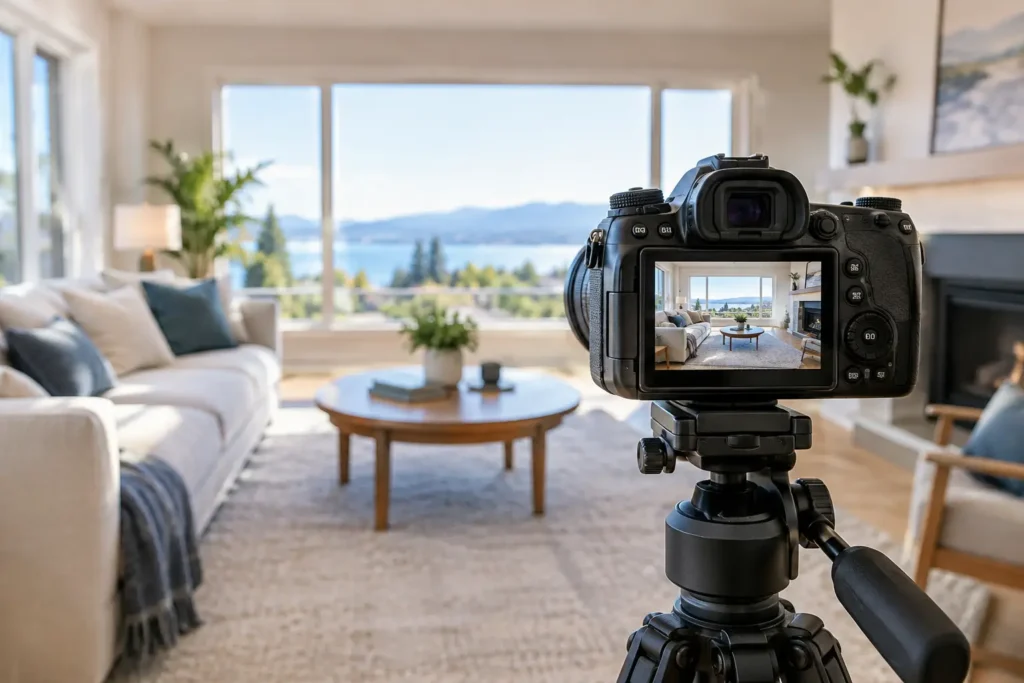
A bright window, a shaded living room, and a view of Biscayne Bay create a problem that one exposure cannot solve. This HDR photo guide explains how high-dynamic-range photography helps real estate agents present all three accurately, so buyers can understand the home before they decide whether to book a showing.
For a listing, HDR is not about creating a dramatic image. It is about controlling contrast. Buyers need to see the room, the finishes, and the view at the same time. When the exterior blows out to white or interior shadows hide a kitchen’s details, the property feels less clear and less valuable than it may be in person.
What HDR Photography Means for a Listing
HDR stands for high dynamic range. A photographer captures multiple exposures of the same composition: typically a darker frame for bright windows and light fixtures, a standard frame for midtones, and brighter frames for shadow detail. Those exposures are carefully blended into one finished image.
The goal is a photograph that feels close to how the eye experiences a room. A buyer should be able to see the ocean, skyline, backyard, or pool through the glass without losing the cabinetry, flooring, furniture, and architectural lines inside.
That matters in South Florida, where hard sunlight, reflective surfaces, large sliding doors, and water views are common. A standard single exposure often forces a compromise. HDR gives the photographer more usable information, but the final result still depends on judgment. More detail is not automatically better detail.
Why HDR Images Get More Attention
Listing photos make the first screening decision for most buyers. Before they read the remarks, study the disclosures, or call an agent, they scan the lead image and move through the gallery quickly. Clean, balanced images make it easier to understand why a property deserves a closer look.
HDR photography supports that decision in several practical ways. It preserves a valuable view, shows the depth of a room, and helps buyers read the relationship between indoor and outdoor spaces. It can also make a home feel more consistent from image to image. That consistency builds confidence because buyers are not moving from an overly dark bedroom to a washed-out living area and trying to guess what the property actually looks like.
For agents, the benefit is not simply a prettier MLS gallery. Better visual clarity can attract more qualified attention across the MLS, property websites, email campaigns, and social media. It also helps set realistic expectations before a showing, which is useful when schedules are tight and buyers are comparing several homes in a day.
HDR Photo Guide: What Good Results Should Look Like
The best HDR real estate photos do not announce themselves as HDR. They look naturally bright, structurally accurate, and professionally finished. Window views are visible, but they do not look pasted into the frame. Walls look clean without turning gray. White cabinets remain white rather than blue or yellow. Exterior grass looks believable, not neon green.
Perspective is equally important. Vertical lines should remain straight, especially in rooms with tall windows, built-ins, or clean modern architecture. A wide-angle lens can show the scope of a room, but it should not stretch a narrow hallway into a tunnel or make furniture appear distorted. Photography that overstates size may get attention, but it can create disappointment at the showing.
A strong final gallery also uses HDR selectively. A sunset-facing terrace, a waterfront living room, and a kitchen with reflective countertops often benefit from exposure blending. A simple powder room or evenly lit secondary bedroom may need less intervention. The right approach depends on the light, materials, and the selling features of each room.
The Work That Happens Before the Camera Comes Out
HDR cannot fix a room that is not ready to be photographed. It can reveal clutter with impressive precision, which is not a benefit. Preparation remains the fastest way to improve the final asset.
Start with the features buyers need to see. Clear kitchen counters except for a few intentional styling pieces. Remove magnets, pet bowls, cords, toiletries, trash bins, and personal photographs. Open blinds when the view adds value, but close or angle them if a neighboring building, construction site, or harsh direct sun distracts from the room.
Turn on practical lights only when they contribute to the scene. In many homes, mixed bulbs create orange, yellow, and blue color casts that require more correction later. Matching bulb temperatures and replacing burned-out bulbs creates a cleaner image from the start.
For occupied homes, agents should give sellers a short, specific prep checklist well before the appointment. For vacant homes, virtual staging can help buyers picture a room’s purpose, but it should be used strategically and disclosed where required. A vacant property still benefits from strong HDR capture because the architecture, light, and flow must carry the image.
Capture Is Only Half the Process
Real estate HDR is not a camera setting that produces a finished listing gallery. The photographer must choose the right angles, stabilize the camera, bracket exposures without movement, and make decisions about composition in every room. Then comes editing.
During post-production, exposures are blended, window detail is balanced, verticals are corrected, and colors are refined. The editor also needs to remove visual distractions without altering permanent property features or presenting a misleading version of the home. There is a meaningful difference between correcting a temporary distraction and changing what the buyer will find at the property.
This is where overprocessing becomes a liability. Heavy HDR can produce halos around windows, muddy shadows, overly sharp textures, and an artificial glow that makes a room feel computer-generated. Buyers may not know the technical reason an image feels off, but they recognize when it does.
Natural editing is the more commercial choice. It preserves the property’s character while making the image easy to read on a phone, laptop, and large display. The aim is not to create a fantasy. It is to make the real selling points immediately visible.
Choosing the Right Rooms and Angles
Not every room deserves the same number of images. A listing gallery should prioritize the spaces that influence the buying decision: curb appeal, living areas, kitchen, primary suite, bathrooms with meaningful upgrades, outdoor entertaining areas, and the features that differentiate the home from nearby inventory.
For a condo, that may mean the view, balcony, amenities, and the way the main living space connects to the kitchen. For a single-family home, buyers may care most about the pool, yard, covered patio, garage, or a flexible room that supports a home office or multigenerational living.
Angles should answer practical questions. How does the kitchen relate to the family room? Is there room for a dining table? Does the primary bedroom open to the terrace? Can buyers see the outdoor space from inside? HDR supports these answers by keeping bright and dark areas readable within the same frame.
A large photo count is not always a stronger strategy. Repetitive images can bury the best features. The better approach is a deliberate sequence that leads buyers through the property, beginning with the strongest reason to click and continuing with a clear visual story.
When HDR Needs Other Listing Assets
Photography is the foundation, but it does not have to do every job. Aerial drone photography can establish proximity to water, parks, golf courses, or downtown access when those location advantages are visible and relevant. A 360-degree virtual tour helps remote buyers explore layout and flow at their own pace. Floor plans answer dimension and circulation questions that even excellent photos cannot fully resolve.
For higher-end or lifestyle-driven properties, cinematic walkthrough video can show movement, scale, and atmosphere in a way still photography cannot. These assets work best when they are planned as one visual strategy rather than ordered as disconnected add-ons.
The decision depends on the property and the buyer profile. A compact investment condo may need efficient, accurate photography and a floor plan. A waterfront residence with major indoor-outdoor living may benefit from a fuller media package. The point is to give serious buyers enough information to take the next step with confidence.
A Better Standard for Listing Photography
The most useful HDR images make a buyer pause, understand the space, and imagine being there. They protect the value of a view, reveal the quality of finishes, and keep the listing from looking dim or incomplete next to competing inventory.
Agents who treat visual media as part of their sales process, not a last-minute checkbox, create a stronger first impression before the first inquiry arrives. At Digitall Media, that means planning each shoot around what buyers need to see and what makes the property worth seeing in person.