A Guide to 3D Home Tours That Drive Showings
A buyer scrolling Miami listings can decide in seconds whether a home deserves a closer look. Photos earn the click, but a well-produced virtual walkthrough gives that buyer a reason to stay. This guide to 3D home tours explains how agents can use immersive tours to answer layout questions early, attract better-qualified interest, and keep a listing working long after the open house ends.
A 3D tour is not a replacement for professional photography, video, or an in-person showing. It has a different job: it lets buyers move through a property on their own schedule and form a more confident understanding of the space before they request a showing. For listings with distinctive layouts, waterfront views, multiple levels, or a long-distance buyer pool, that clarity can make a meaningful difference in the quality of inquiries.
What a 3D Home Tour Actually Does
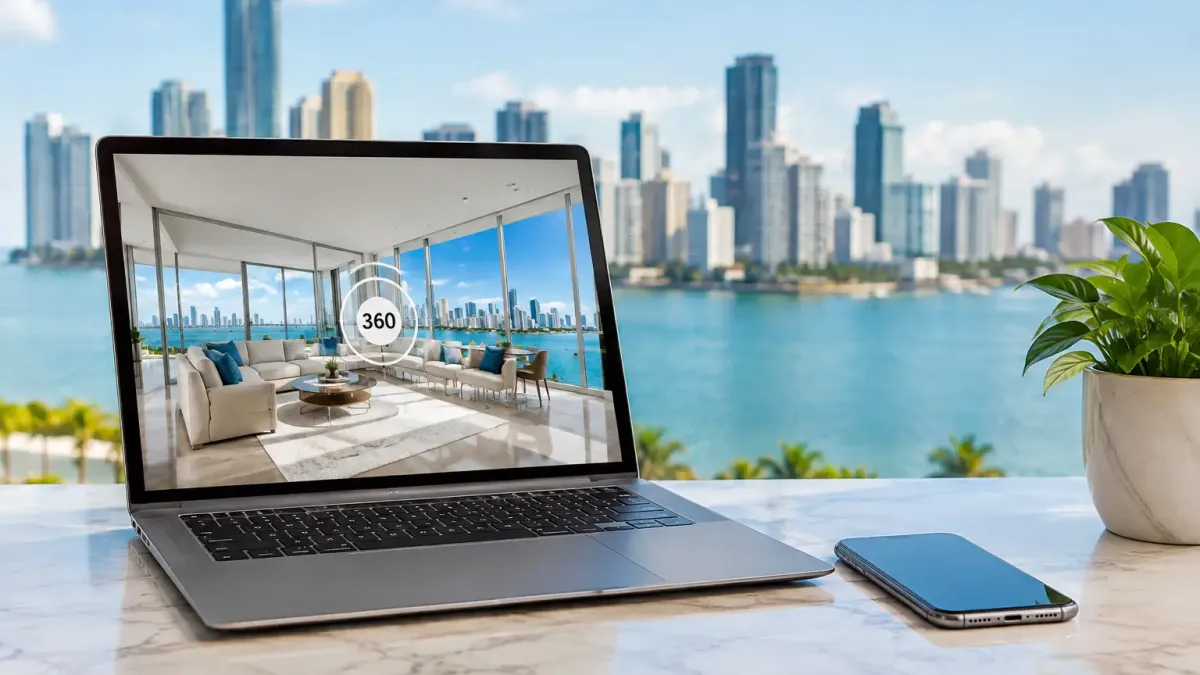
A 3D home tour creates an interactive, walk-through experience rather than a passive slideshow of panoramic images. Buyers can navigate room to room, look around at their own pace, and often switch between a first-person walkthrough, a floor-plan-style overview, and a dollhouse view of the home. Depending on the platform and capture setup, the tour may also include tags, property details, measurements, and links to key listing features.
The practical benefit is simple: buyers do not have to guess how the kitchen connects to the living area, whether the bedrooms are separated from the main entertaining spaces, or what the view looks like from the primary suite. They can inspect the flow themselves. That makes the tour especially useful when a still image makes a room look appealing but cannot explain its position within the home.
For an agent, this creates a 24/7 open house that can be shared in the MLS, on a single-property site, in email campaigns, and across social media. It also gives your listing presentation more substance. Instead of promising better marketing, you can show prospective sellers how you market homes for the way people actually shop.
When a 3D Tour Is Worth Adding to a Listing
Not every property needs every media service. The right visual strategy depends on the home, the target buyer, and the way the listing will be marketed. A compact condo with a straightforward layout may benefit from a tour because it helps remote buyers understand scale and flow. A large luxury residence may benefit because buyers want time to explore its amenities, wings, outdoor areas, and sightlines before arranging a private appointment.
3D tours are particularly valuable for properties with features that are hard to communicate in photographs alone. Think split-bedroom plans, multi-story townhomes, renovated historic homes, unusual floor plans, separate guest quarters, or indoor-outdoor living spaces. They can also help property managers present rentals to prospective tenants without filling the calendar with visits from people whose needs do not match the layout.
There is a trade-off. An interactive tour rewards transparency. If a property is cluttered, poorly prepared, or has maintenance issues visible from every angle, a 3D capture will reveal them. That does not mean you should avoid the technology. It means preparation matters more. The goal is not to disguise the home. The goal is to present it accurately, cleanly, and at its best.
Prepare the Home Before the Camera Arrives
A strong tour starts before capture day. Because a buyer can look in any direction, the standard is higher than staging for a single photo angle. Open interior doors where it helps the path through the home, clear countertops, remove personal items, hide pet supplies, and put away cleaning tools, trash bins, cords, and loose papers.
Lighting should feel consistent from room to room. Turn on interior lights, replace burned-out bulbs, and use matching color temperatures whenever possible. Natural light is an asset in South Florida, but intense daylight can create uneven exposure near windows. A professional capture workflow is designed to manage that balance, yet the home still needs to be ready before the first scan begins.
Plan access as carefully as styling. Residents, cleaners, contractors, and pets should be out of the property during capture. Doors that must remain closed, private areas that should not be included, and features worth highlighting should be discussed in advance. If a rooftop terrace, gym, dock, or community amenity is part of the buyer appeal, decide whether it belongs in the tour, in separate photography, or in video. The answer depends on access and what will make the listing easier to understand.
Build the Tour Around Buyer Questions
The best 3D tours follow the logic of a real showing. A buyer should enter through a clear starting point, understand the main living spaces early, and be able to find bedrooms, bathrooms, outdoor areas, and major amenities without getting lost.
That does not mean every closet or utility room has to be included. A tour should be complete enough to establish trust, but selective enough to keep attention on the selling features. In some homes, including a finished garage, laundry room, or storage area adds useful context. In others, those spaces add little marketing value. This is where a media partner with real sales experience can help determine what supports the listing story and what simply adds visual noise.
Matterport and CloudPano-style tour platforms can support different presentation needs, from immersive walkthroughs to branded tour pages and informational tags. The technology matters, but the capture quality and marketing strategy matter more. A tour with poor alignment, rushed navigation points, or distracting visual clutter can make a strong property feel less polished than it is.
Pair the Tour With the Right Listing Assets
A 3D tour should work as part of a complete visual package, not carry the listing by itself. HDR photography creates the high-impact images buyers see first in search results. Cinematic video builds emotion and lifestyle. Drone photography and video establish location, lot context, water access, nearby skyline views, and outdoor features that cannot be understood from inside the home.
Floor plans solve another buyer question: dimensions and spatial relationships. While a tour makes the home feel navigable, a 2D or 3D floor plan helps buyers compare rooms and understand the overall footprint quickly. Virtual staging can also be useful in vacant properties, but it should be used carefully and disclosed where required. The objective is to show the possibilities, not create confusion about what is physically present.
When these assets are organized on a custom single-property website, the buyer has one focused destination instead of a scattered collection of files and social posts. That can make it easier for agents to share the listing with out-of-market buyers, referral partners, and sellers who want to see the full marketing presentation.
Promote the Tour Instead of Treating It as an Attachment
Many agents order a tour, add it to the MLS, and leave it there. That misses the point. Mention the virtual walkthrough in the listing remarks when permitted, feature it in social captions, include it in property emails, and use a short video clip or screen recording to show buyers what they can explore.
The message should focus on a real buyer benefit. “Explore the layout before your showing” is more useful than “Check out our new 3D tour.” For a relocation buyer, emphasize the ability to view the home from another city or country. For a waterfront condo, point viewers toward the balcony, amenity floor, and relationship between the interior and the view.
Track engagement where the platform provides data, but interpret it carefully. A long tour visit can suggest serious interest, yet it is not a substitute for a buyer conversation. Use engagement signals to inform follow-up, not to assume intent.
Avoid the Mistakes That Weaken Virtual Tours
The most common mistake is treating a 3D tour as a technical add-on rather than a marketing asset. A poorly prepared home, missing outdoor areas, confusing navigation, or an unbranded link with no supporting context will limit its value.
Another mistake is using the tour to compensate for weak photography. Buyers still encounter the hero image first. If the photography does not create an immediate reason to click, fewer people will reach the interactive experience. Likewise, a tour cannot replace candid, accurate agent guidance when buyers have questions about condition, HOA rules, renovations, or neighborhood details.
Finally, do not overload the experience with tags and labels. One or two useful callouts can draw attention to a smart-home feature, premium appliance package, or recent renovation. Too many labels make the home feel like a product catalog and interrupt the natural walkthrough.
Use the Tour to Improve the Buyer Conversation
A 3D tour gives you a better starting point when a buyer reaches out. Instead of opening with general questions, ask what they noticed. Did the primary suite location work for them? Did they explore the terrace? Did the floor plan answer their questions about the home office or guest room?
Those answers help you qualify interest without pressuring the buyer. They also reveal which features are doing the most work in your marketing. Over time, that feedback can sharpen how you position future listings and which assets you prioritize.
The strongest 3D home tours do not try to replace the agent. They make the agent more useful by giving buyers enough clarity to arrive at the next conversation informed, interested, and ready to see whether the property fits their life.
Shooting a listing in South Florida?
Flat prices by square footage, drone aerials included, photos back in 24–48 hours.