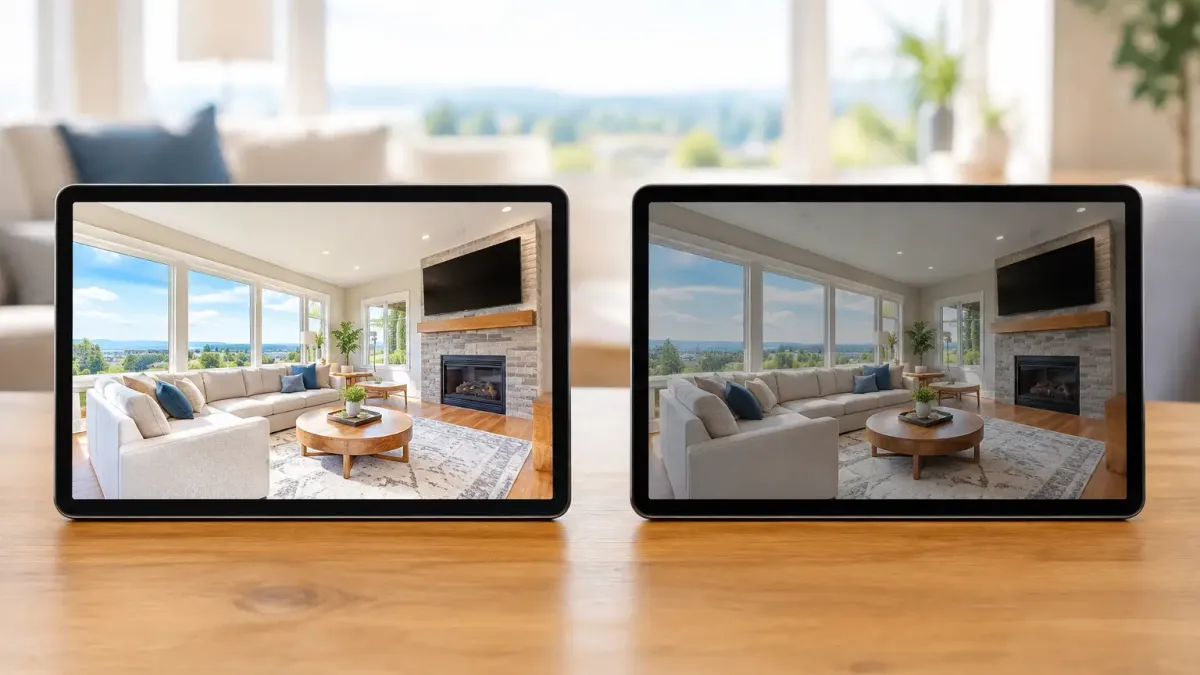
7 HDR Listing Benefits That Drive More Showings

A buyer scrolling Miami listings can decide in seconds whether a property deserves a closer look. That is where HDR listing benefits become practical, not technical. When interior windows are blown out, dark corners hide finishes, or a room feels smaller online than it does in person, the listing loses attention before the agent has a chance to tell the property’s story.
HDR photography helps solve that first-impression problem by showing a home with balanced light, accurate detail, and a more natural sense of space. For agents competing across MLS, listing portals, social media, and property websites, those details can influence which listings earn the click, the save, and the showing request.
What HDR Photography Actually Does
HDR stands for High Dynamic Range. In real estate photography, it usually means capturing multiple exposures of the same composition: one for the brightest areas, one for midtones, and one for shadows. Those exposures are then carefully blended into a final image that holds detail across the room.
The result is not simply a brighter photograph. Done well, HDR allows buyers to see the view through the windows while still seeing the cabinetry, flooring, furniture, and architectural details inside. It is particularly useful in South Florida, where strong sun, waterfront views, glass walls, and bright white interiors can create extreme contrast in a single frame.
The key word is carefully. Overprocessed HDR can make a home look artificial, with gray skies, glowing edges, and colors that do not match the property. Effective listing photography should feel clean and inviting, not digitally exaggerated.
1. HDR Listing Benefits Start With Better First Impressions
A listing photo is often the buyer’s first visit to the property. If the living room is dark or the exterior view is a featureless block of white, buyers may assume the space is less appealing than it really is.
Balanced HDR images help a room read quickly on a small phone screen and hold up when viewed full size. Buyers can understand the relationship between indoor living areas and a balcony, pool, skyline, golf course, or water view. That clarity matters because those features often justify the buyer’s interest in a South Florida property.
For the agent, stronger first impressions create a more credible listing presentation. The photos signal that the property has been prepared and marketed with intention, which can also support the agent’s reputation with sellers.
2. Window Views Become Part of the Selling Story
In many homes, the view is not an extra. It is a major reason the buyer is considering the listing. A downtown skyline, Biscayne Bay, ocean horizon, tropical landscape, or oversized backyard should not disappear because the camera exposed for the interior.
HDR photography can preserve that visual connection. Instead of choosing between a properly exposed room and a properly exposed view, the final image can show both in balance. This makes the photograph more useful as a sales asset because it communicates lifestyle as well as square footage.
There is a trade-off. Not every window needs to become a dramatic focal point, and a modest view should be represented honestly. The goal is to show what a buyer will experience when standing in the room, not create a scene that sets unrealistic expectations at the showing.
3. Buyers Can Read the Layout More Easily
Good real estate photos are not just about individual rooms. They help buyers build a mental map of the home before they visit. When shadows swallow a hallway, a kitchen island, or the far end of a great room, that map becomes harder to form.
HDR brings usable detail into those darker areas without flattening the image. It can reveal the depth of an open-concept living space, the transition from kitchen to dining area, and the circulation around key features such as islands, staircases, and sliding doors.
This does not replace a floor plan or 360° virtual tour. Those tools answer different questions. But HDR photography gives the buyer a clearer visual starting point, making the rest of the listing media work harder.
4. It Shows Condition and Finishes With More Confidence
Homes are sold on details as much as room count. Buyers want to inspect countertop materials, tile, appliances, millwork, lighting, and the condition of flooring. Dark, uneven, or poorly balanced photos make those details difficult to evaluate.
With professional HDR processing, finishes remain visible without looking overly sharpened or saturated. White kitchens can retain dimension. Dark cabinetry can show its grain. Bright bathrooms can reveal tile pattern and fixture placement rather than turning into a flat wash of light.
That level of clarity helps attract more informed prospects. It may also reduce some of the mismatch between what buyers think they are seeing online and what they encounter in person. No photograph can answer every question, but accurate visual information helps set the right expectations.
5. HDR Helps Listings Compete Across Every Marketing Channel
A listing is rarely marketed in one place. The same images may appear in the MLS, on major property portals, in email campaigns, on social posts, in broker presentations, and on a dedicated single-property website. Every channel puts pressure on the visual assets to stand out quickly.
HDR photography creates a consistent visual foundation for that campaign. A bright, balanced hero image can stop a scroll. A clear kitchen or living-room image can keep a viewer moving through the gallery. Well-exposed exterior and amenity images can reinforce the lifestyle message in social media posts and video thumbnails.
This is why professional photo selection matters alongside the capture itself. More photos are not automatically better. The strongest sequence should lead with the property’s real advantages and move through the home in a way that makes sense to a buyer.
6. It Makes Bright South Florida Properties Easier to Photograph Well
South Florida properties present a specific lighting challenge. High sun, reflective water, floor-to-ceiling glass, polished stone, white walls, and shaded outdoor areas can all appear in the same listing. A single exposure often cannot represent that range accurately.
HDR is especially valuable in condos with expansive glazing, waterfront homes, and properties with indoor-outdoor living. It helps preserve the brightness buyers expect while keeping the interior from feeling underexposed. It can also show covered terraces and shaded patios without losing the sunlit landscape beyond them.
Timing still matters. The right time of day, proper interior lighting, clean windows, and a prepared property make a meaningful difference. HDR is a tool, not a substitute for staging, decluttering, or thoughtful composition.
7. Better Visuals Support a More Productive Showing Schedule
Agents do not need more random traffic. They need buyers who arrive with a realistic understanding of the property and a reason to see it in person.
Clear HDR images help prospects assess the home’s light, finishes, room relationships, and views before requesting a showing. When photos answer basic visual questions, buyer conversations can move beyond, “Does it really look like this?” and toward fit, financing, timing, and the features that matter most to that client.
That can be particularly helpful for out-of-town buyers, relocation clients, and second-home shoppers who may be narrowing options from a distance. Combine HDR photography with a floor plan, virtual tour, drone coverage where appropriate, and video, and the listing becomes closer to a 24/7 open house than a static gallery.
When HDR Is the Right Choice
HDR is a strong fit for most residential listings, but it should match the home and the marketing strategy. A sun-filled waterfront condo needs a different approach than a moody luxury interior, a vacant investment property, or a home with limited natural light. In some cases, a more restrained edit or a flash-assisted image may better preserve the intended atmosphere.
The best approach is not to apply one visual formula to every property. It is to assess what buyers need to see first, what the seller needs the photos to communicate, and where the listing will be marketed. That sales-first perspective is central to how Digitall Media plans a shoot.
Before your next listing goes live, look at the photos as a buyer would on a phone. Can they see the view, understand the room, and recognize what makes the home worth a visit? If the answer is not immediate, the visual strategy needs more than brighter pictures - it needs images built to move the listing forward.
Shooting a listing in South Florida?
Flat prices by square footage, drone aerials included, photos back in 24–48 hours.