HDR Photos Versus Standard Photos for Listings
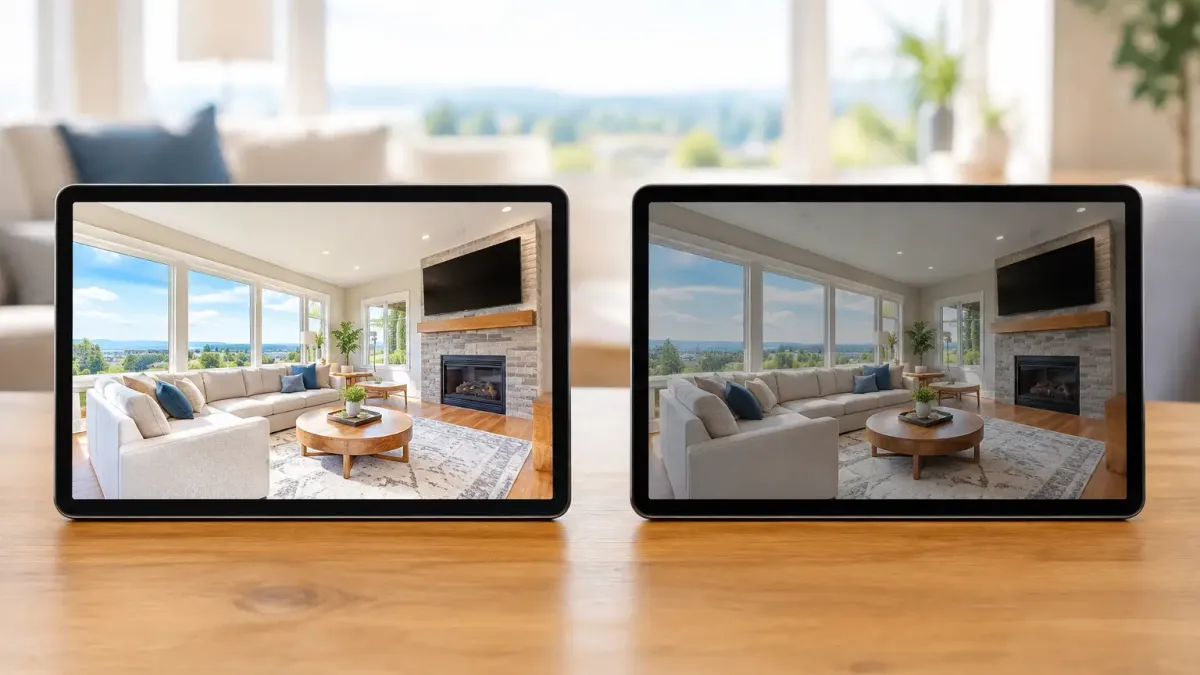
A Miami condo with floor-to-ceiling windows can look dramatically different depending on how it is photographed. In a single standard exposure, the room may be properly lit while Biscayne Bay becomes a blank white rectangle. Expose for the view, and the interior falls into shadow. That is where HDR photos versus standard photos becomes more than a technical camera discussion. It affects whether buyers can immediately understand the space, the light, and the lifestyle your listing offers.
For agents, the goal is not simply a prettier image. The goal is to earn the click, create a stronger first impression, and give qualified buyers enough visual confidence to schedule a showing. HDR photography is often the better tool for that job, especially in South Florida homes where bright sun, water views, glass walls, and high-contrast interiors are common.
What Standard Real Estate Photos Capture
Standard photos generally refer to images made from one exposure. The photographer sets the camera for the available light and captures the scene in a single frame. With a skilled photographer, a well-lit room, and thoughtful composition, a standard image can be clean, accurate, and effective.
Single-exposure photography works particularly well in spaces with even lighting: an exterior on an overcast day, a shaded patio, a bedroom with soft window light, or a room with limited contrast between its brightest and darkest areas. It can also be the right creative choice when a natural, editorial look matters more than showing every detail outside a window.
The limitation is dynamic range. Cameras cannot always record the deepest interior shadows and the brightest outdoor highlights in the same frame the way the human eye can perceive them. In a listing photo, that often means blown-out windows, dark corners, harsh ceiling lights, or a room that feels less inviting than it does in person.
For a property marketed online, those compromises matter. Buyers scrolling through MLS, Zillow, social media, or a property website make quick judgments. If they cannot see the kitchen clearly, read the room dimensions visually, or recognize the view, they may move on before they ever learn what makes the home valuable.
HDR Photos Versus Standard Photos: The Core Difference
HDR stands for high dynamic range. Rather than relying on one exposure, an HDR photographer captures multiple exposures of the same composition, usually ranging from darker frames that preserve bright windows and skies to brighter frames that reveal interior shadows. Those images are then blended and refined into one balanced final photograph.
The result should show a room as buyers experience it when they walk in: clear interior details, controlled highlights, readable finishes, and a visible view through the glass. A properly produced HDR image does not need to look artificial. It should look bright, polished, and believable.
That distinction is critical. Poor HDR processing can create gray windows, glowing edges around furniture, strange colors, or an overly flattened look where every surface has the same brightness. Those images may grab attention for the wrong reasons. They can make an upscale property feel edited rather than premium.
Professional HDR photography is not an automatic filter. It is a controlled production process involving stable capture, careful exposure selection, color correction, window balancing, vertical line correction, and restrained finishing. The photographer still needs to understand composition, natural light, interior lighting, and what buyers need to see first.
Why HDR Usually Performs Better for Listings
Real estate marketing is visual triage. A buyer should be able to identify the main selling features of a room in seconds. HDR helps remove the visual barriers that make a space harder to evaluate online.
In a waterfront condo, balanced window exposure lets the buyer see both the living area and the water view. In a modern kitchen, HDR can retain cabinet detail, backsplash texture, and the depth of the room without turning pendant lights into harsh bright spots. In a home with covered terraces, it can reveal the transition from interior living space to outdoor entertaining area.
That clarity supports better engagement. Listings with professional, well-balanced images are more likely to feel complete and credible at first glance. Buyers can spend less time guessing what a room looks like and more time imagining themselves in it. For agents, that can lead to more productive inquiries and showings from people who have already connected with the property online.
HDR also improves consistency across a listing. Homes often include rooms with very different lighting conditions: a dark media room, a sunny primary suite, a bathroom with mirrors, and a balcony facing direct afternoon light. A consistent HDR approach helps the gallery feel intentional rather than like a collection of unrelated snapshots.
When Standard Photography May Be the Better Choice
HDR is not mandatory for every image or every property. The right approach depends on the architecture, the lighting, the marketing strategy, and the specific feature being photographed.
A twilight exterior, for example, is often photographed with a more controlled single-exposure approach or a refined blend that prioritizes mood. The purpose is not to make every dark area visible. It is to show warm interior light, landscaping, pool illumination, and curb appeal in a way that feels natural.
A detail photograph may also benefit from a standard exposure. If the focus is a sculptural staircase, a luxury fixture, or a carefully designed vignette, more directional shadows can add dimension and drama. The image does not need to carry the full informational burden of a primary listing photo.
The same is true for very bright, evenly lit spaces. If the light is already balanced, adding multiple exposures may offer little practical benefit. An experienced real estate photographer chooses the method that best represents the room rather than forcing every frame into the same workflow.
Accuracy Matters More Than Visual Drama
The strongest listing photography presents a property at its best without misrepresenting it. HDR should reveal what exists, not invent it.
That means windows should still look like windows, not pasted-in postcard views. Walls should retain their true color. Outdoor areas should reflect the actual conditions of the shoot. A bright room can be polished without being made unrealistically sunlit, and a compact room should not be stretched or distorted to appear larger than it is.
This is especially relevant for agents who want to reduce avoidable disappointment at showings. When a buyer arrives after seeing honest, polished visuals, the property has a better chance to meet the expectations created online. When photographs are overprocessed, the first in-person visit can become a correction rather than a confirmation.
Good visual marketing builds interest. Accurate visual marketing helps protect that interest through the showing process.
HDR Is Part of a Larger Listing Strategy
Photography carries most of the early marketing load, but it performs best when it is part of a complete property presentation. HDR stills establish the first impression. Aerial imagery can show a home’s relationship to the beach, marina, golf course, or neighborhood. A 360-degree tour gives remote buyers a stronger sense of flow. Floor plans answer practical layout questions that photographs cannot answer alone.
Each asset solves a different buyer question. Photos answer, “Does this place feel right?” Video answers, “What is it like to move through it?” Floor plans answer, “Will this layout work for me?” Together, they can turn a listing into a 24/7 open house that gives serious prospects more reasons to engage before they request a showing.
For higher-end homes and competitive South Florida inventory, that full presentation can also support the agent’s listing pitch. Sellers notice when an agent has a clear plan to market the property beyond a few quick photos and an MLS upload.
What Agents Should Look for in HDR Delivery
Do not judge HDR photography solely by how bright the images look on a phone screen. Look for clean vertical lines, realistic color, consistent white balance, crisp but natural detail, and windows that still feel believable. The composition should guide attention toward the room’s best feature, whether that is a view, ceiling height, renovated kitchen, or indoor-outdoor connection.
Also consider operational reliability. A great gallery delivered too late misses the point in a fast-moving market. Your media partner should understand listing timelines, communicate clearly, and deliver a finished visual package that is ready for MLS, social channels, property websites, and buyer outreach.
Digitall Media approaches every shoot from both sides of the transaction: what photographs well and what helps buyers understand why a property deserves their attention. That is the standard worth applying to every listing image.
The practical question is not whether HDR is more impressive than a standard photo. It is whether each image makes the home easier to understand, easier to remember, and more compelling to see in person. When the answer is yes, the photography is doing its job.
Shooting a listing in South Florida?
Flat prices by square footage, drone aerials included, photos back in 24–48 hours.


