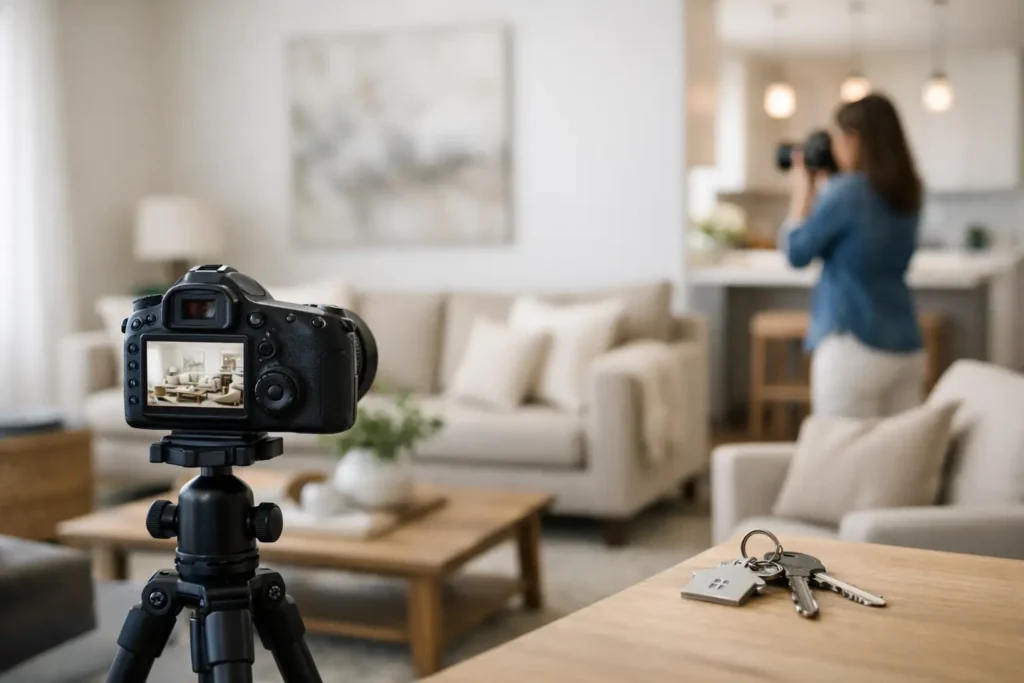
A beautifully renovated kitchen can still underperform online when the counters are crowded, the stools block the island, and the photos give buyers nowhere to look. Knowing how to stage listing photos is not about making a home feel artificial. It is about removing distractions and presenting the space in a way that makes its value immediately clear on MLS, Zillow, social media, and every buyer’s phone.
In South Florida, that first impression has to work harder. Buyers are comparing high-rise condos, waterfront homes, new construction, and investment properties within seconds. Your listing photos need to communicate more than square footage. They need to show light, flow, condition, and the lifestyle that justifies the asking price.
How to Stage Listing Photos Before the Camera Arrives
Photo staging begins before furniture gets moved. Start by identifying the property’s strongest selling points. In a Miami condo, that may be a skyline or water view. In a Broward family home, it may be an open kitchen connected to the living area. In Palm Beach, buyers may respond most to outdoor entertaining space, mature landscaping, or a refined primary suite.
Once you know what needs to lead, stage the home to protect those sightlines. A room should have one clear purpose and one obvious focal point. If buyers cannot tell whether a spare room is an office, nursery, or storage area, the photo will create uncertainty instead of interest.
The goal is not to fill every empty area. It is to make the home feel easy to understand. That means clear walking paths, visible windows, and furniture placement that shows the scale of the room.
Start With a Seller-Ready Photo Checklist
Sellers often hear “declutter” and assume that means moving a few items off the kitchen counter. For listing photography, the standard needs to be higher. Personal items pull attention away from the home and can make a professionally photographed space feel less polished.
Before the shoot, remove refrigerator magnets, family photos, pet beds, visible cords, trash cans, cleaning supplies, and overly specific decor. Clear bathroom counters except for a simple, intentional accent. In kitchens, store small appliances, dish racks, paper towels, and food packaging unless they contribute to a carefully styled scene.
This is also the time to handle the details buyers notice in photos: replace burned-out bulbs, straighten blinds, hide remote controls, make beds tightly, and clean glass doors and mirrors. A camera is less forgiving than an in-person showing, especially in bright South Florida light.
Make Each Room Look Larger Without Misrepresenting It
The best staging supports the lens, but it should never mislead buyers. Overly wide angles and furniture that is too small can create unrealistic expectations. The stronger strategy is to show a room at its best while keeping the layout believable when a buyer walks through the door.
Scale matters most in compact condos, townhomes, and older homes with defined rooms. Remove extra chairs, side tables, and decorative pieces that crowd the frame. A living room may photograph better with one strong seating arrangement than with every piece of furniture the seller owns.
Pull furniture slightly away from walls when possible. This creates dimension and helps the room feel intentional rather than boxed in. Keep pathways open to balconies, patios, closets, and adjoining rooms so the images communicate flow.
Stage the Living Room for Conversation and Flow
The living room often carries the emotional weight of the listing. It should feel like a place where buyers can picture relaxing, entertaining, or spending time with family. Arrange seating around a natural focal point such as a view, fireplace, feature wall, or television wall.
If the room has a standout window or sliding glass door, avoid placing a large chair directly in front of it. South Florida buyers often place real value on natural light and indoor-outdoor living. Show it clearly.
Use a restrained color palette. Neutral foundations with a few coordinated pillows, greenery, or artwork photograph well without becoming a distraction. Avoid busy patterns that can compete with tile, cabinetry, or architectural details.
Make the Kitchen Feel Clean, Useful, and Premium
Kitchens sell lifestyle, but only when buyers can see the surfaces and layout. Clear nearly everything from countertops. A small bowl of citrus, a tray with glassware, or a simple vase can add warmth, but the counter should still look spacious.
For properties with large islands, use the island to establish scale. Two or three stools may be enough. Overfilling it with place settings, cookbooks, and accessories can make a generous kitchen look smaller than it is.
Open shelving and glass-front cabinets need special attention. Keep them neat, coordinated, and only partially filled. The photo should suggest storage and style, not show every dish the seller owns.
Turn Bedrooms Into Calm, Not Storage
Bedrooms should look restful and spacious. Make the bed the visual anchor, using crisp bedding and a limited number of pillows. Nightstands should be simple, and clothing should be fully stored away.
For a secondary bedroom, clarity matters more than decoration. If it is intended as a bedroom, stage it as one. If the property is likely to appeal to remote professionals and the room works better as an office, a clean desk setup can help buyers see the possibility. Do not try to make one room serve two competing purposes in the same photo.
Stage Outdoor Areas as Usable Living Space
Outdoor photos can separate a South Florida listing from comparable properties, particularly when the home has a pool, balcony, terrace, dock, or covered patio. Yet these areas are often photographed as empty concrete or cluttered storage zones.
Treat exterior areas as additional rooms. Straighten patio furniture, uncover the grill if it presents well, remove pool equipment and hoses, and keep cushions clean. On a balcony, a small bistro setup can communicate morning coffee or sunset views without blocking the railing.
Timing matters. Bright midday sun can flatten a patio scene and create harsh shadows, while late-afternoon light may add depth and warmth. For homes with exceptional exterior lighting, landscaping, or water views, twilight photography may be worth the additional investment. It depends on the property and price point. A standard daytime shoot is often enough for a clean condo, while a luxury waterfront home may benefit from both daytime and twilight coverage.
Know When Physical Staging Is Worth It
Physical staging is not necessary for every listing, but empty rooms are difficult for many buyers to read online. Without furniture, a large room can feel cold and a small room can feel confusing. In competitive markets, vacant properties often benefit from at least partial staging in the living room, dining area, primary bedroom, and outdoor space.
The budget decision should reflect the listing’s price, condition, target buyer, and marketing plan. Full staging may make sense for a high-end home where presentation supports a premium position. For a smaller condo or a property that needs a faster launch, virtual staging can be a practical alternative.
Virtual staging works best when it is realistic, consistent, and used selectively. It can show the potential of a vacant living room or office without delaying the listing. However, the images should accurately reflect the room’s dimensions, windows, finishes, and layout. Buyers should never arrive expecting features that do not exist.
For occupied homes, professional styling may be the better move. A few strategic adjustments can often improve the visual result without the cost or logistics of bringing in full inventory.
Coordinate Staging With Your Photography Plan
Staging and photography should work as one marketing decision. Before the shoot, discuss the home’s strongest features, the likely buyer, and any details that require special attention. A photographer can plan compositions around a dramatic stairway, a view corridor, a renovated bath, or an unusual lot feature. That conversation prevents missed opportunities.
It also helps to think beyond still photos. If you are using a Matterport tour, video walkthrough, drone capture, or social media reels, the property needs to remain camera-ready throughout the appointment. A room that looks good from one angle may look cluttered in a 360-degree tour.
Keep the staging consistent from room to room. If the main spaces feel elevated and polished but the primary closet, laundry room, or patio looks neglected, buyers may question the level of care throughout the property. You do not need to style every corner heavily. You do need every photographed space to look deliberate.
The strongest listing photos do not ask buyers to imagine past clutter, dim rooms, or awkward layouts. They let buyers see a home that is ready for its next chapter. Prepare the space with that standard in mind, and every image can do more than earn a click – it can earn a showing.