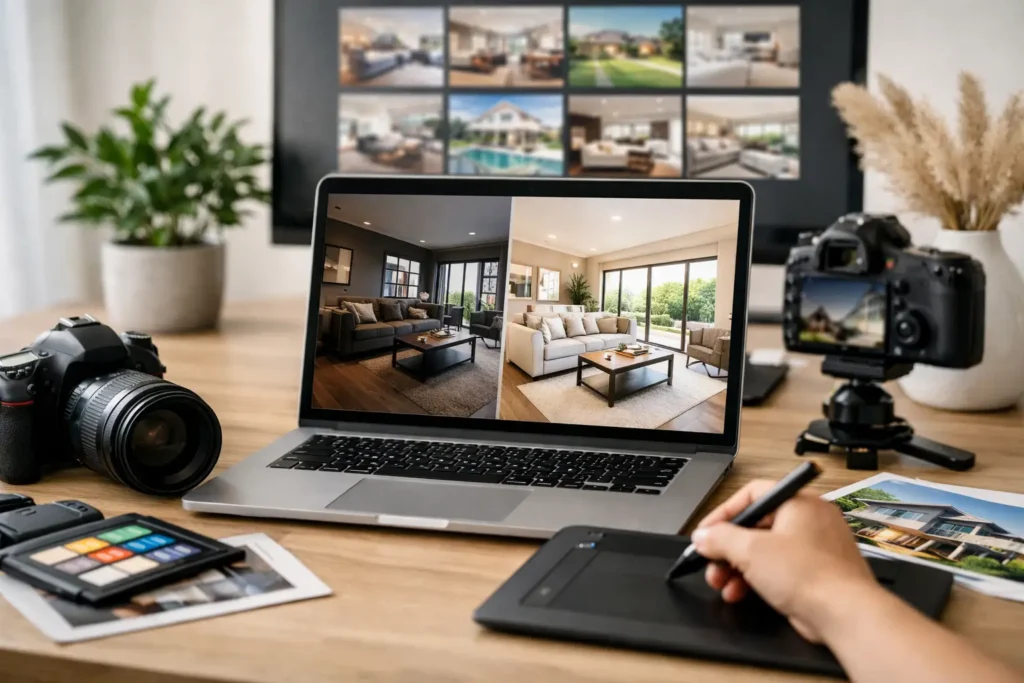
A bright living room can still photograph dark. A waterfront view can disappear behind blown-out windows. And a beautifully staged listing can look flat online if the images are not finished properly. That is why agents keep asking what is real estate photo editing and why it matters so much once the shoot is over.
Real estate photo editing is the process of improving property photos after they are captured so the home looks accurate, clean, bright, and market-ready. It is not about turning a bad property into a fake one. It is about correcting the limits of the camera, removing distractions, and presenting the space the way a buyer would want to experience it.
For agents in South Florida, this matters even more. You are marketing homes in a highly visual, highly competitive market where buyers scroll fast and sellers expect polished presentation. Clean, professionally edited photography helps a listing look premium on the MLS, stronger on social media, and more persuasive across every marketing touchpoint.
What Is Real Estate Photo Editing and What Does It Include?
At the most practical level, real estate photo editing takes raw images and prepares them for marketing use. A photographer may capture excellent source material, but raw files rarely look finished straight out of camera. Interior rooms can have mixed lighting. Exterior shots can lose sky detail. Vertical lines can lean. Colors can shift. Small distractions can pull attention away from the home itself.
Editing corrects those problems so the final set feels consistent and professional. That often includes exposure correction, white balance adjustment, color correction, straightening, perspective correction, window enhancement, sky replacement when appropriate, lawn touch-ups, and removal of minor distractions. In some cases, it also includes object removal, TV screen replacement, fireplace enhancement, or virtual staging.
The key point is that editing supports the marketing goal of the images. A listing photo should not just document a room. It should make the room feel inviting, usable, and worth seeing in person.
Why Raw Photos Usually Are Not Enough
A camera does not see space the way a buyer does in person. It compresses dynamic range, exaggerates certain color casts, and can make rooms feel smaller or darker than they actually are. That gap between reality and the camera file is where editing becomes essential.
Take a common South Florida example. A condo with large windows and ocean light can be difficult to expose correctly in a single frame. If you expose for the interior, the windows may blow out. If you expose for the view, the room may go dark. Editing balances those elements so the image shows both the room and the lifestyle value outside the glass.
That difference affects performance. Buyers often decide within seconds whether a listing feels worth their time. If the photos look dim, crooked, or inconsistent, the property can feel lower value before anyone reads a single description.
The Main Goals of Real Estate Photo Editing
The first goal is clarity. Buyers should be able to understand the room quickly, including layout, scale, and flow. A good edit makes the image easier to read without making it feel artificial.
The second goal is consistency. A listing should feel cohesive from the first image to the last. If one room is too blue, another too yellow, and another too dark, the presentation feels sloppy. Consistent editing makes the entire property look professionally marketed.
The third goal is appeal. Real estate is not just about square footage. It is about emotional response. Bright, balanced, polished photography helps buyers imagine themselves in the home, and that emotional connection can increase clicks, showings, and perceived value.
Common Real Estate Photo Editing Techniques
Exposure balancing is one of the most important steps. It helps recover detail in shadows and highlights so rooms look natural and open. This is especially useful in homes with strong daylight, reflective surfaces, or darker interior finishes.
Color correction matters just as much. Mixed lighting can make walls look green, yellow, or blue depending on lamps, window light, and camera settings. Editing brings those tones back under control so the property looks clean and believable.
Perspective correction straightens vertical and horizontal lines. Without it, walls and cabinets can appear to tilt backward, which makes rooms feel distorted. This is a subtle fix, but it has a major effect on professionalism.
Window pulls are another common technique. They allow the exterior view through the window to remain visible rather than turning into a white block of light. In luxury and waterfront listings, that detail can carry real marketing value.
Retouching can also remove distractions such as cords, small wall marks, sensor dust, minor lawn imperfections, or reflections that do not help sell the property. The standard here should always be reasonable presentation, not deception.
Editing vs. Misleading Manipulation
This is where the conversation needs some honesty. Good real estate photo editing improves presentation, but it should not misrepresent the home. There is a line between polishing a listing and creating false expectations.
Correcting brightness, color, or perspective is standard. Removing a car from the driveway may be fine. Replacing dead grass with a healthy lawn can be acceptable if it reflects a temporary condition the seller will address. But changing permanent features, hiding visible defects, or making a room look significantly larger than it is creates problems.
That kind of editing may win the click, but it can also lead to disappointed buyers, wasted showings, and damaged trust. Serious agents know that strong marketing works best when it sets the right expectation and gets the right buyers through the door.
Why It Matters for South Florida Listings
In Miami-Dade, Broward, and Palm Beach, visual quality is not optional. Buyers are comparing your listing against professionally marketed condos, waterfront homes, new developments, and investor-grade properties all day long. If your photography does not look sharp, balanced, and polished, the listing can lose attention before it has a fair chance.
South Florida also presents unique visual challenges. Bright sun, reflective water, glass-heavy architecture, tropical landscaping, and mixed indoor-outdoor spaces require careful handling. Editing helps keep skies believable, interiors balanced, and outdoor amenities attractive without making the property look overprocessed.
For agents competing for listings, this matters on the front end too. Sellers notice presentation quality. When you can show polished before-and-after examples and explain how editing supports faster engagement, you look more prepared and more serious than the agent relying on basic snapshots.
How Real Estate Photo Editing Helps Sell the Listing
Better editing does not sell a bad property by itself. But it can absolutely improve how a good property performs online. Strong edited images help increase click-throughs from search results, hold buyer attention longer on listing pages, and create a stronger first impression on social media and email campaigns.
They also help reduce friction in the sales process. When buyers can clearly understand the space from the photos, they are more likely to self-qualify before booking a showing. That can mean fewer wasted appointments and more relevant traffic.
For luxury, lifestyle, and design-driven properties, editing is even more valuable because the sale often depends on atmosphere as much as function. The right image treatment can highlight light, finish quality, outdoor living, and view lines in a way that makes the property feel worth its asking price.
Should Every Listing Use the Same Level of Editing?
Not necessarily. It depends on the property, price point, and marketing strategy. A standard suburban listing may only need clean correction, straight lines, and basic retouching. A luxury waterfront home may benefit from more advanced window work, twilight enhancement, detailed exterior retouching, and tighter image consistency across the full gallery.
The right question is not whether editing should happen. It is how much editing makes sense for the listing’s goals. Overediting can make a property feel unrealistic. Underediting can make it look overlooked. The strongest approach is usually tailored, accurate, and focused on the buyer experience.
What Agents Should Look for in an Editing Partner
Speed matters, because listing timelines move fast. Consistency matters, because your brand is on every image. And judgment matters, because not every edit that is technically possible is a smart marketing decision.
A strong editing workflow should protect realism while still making the home look its best. It should also account for the platform. MLS photos, property websites, brochures, and social content may all require slightly different treatments or crops.
That is why many high-performing agents treat photography and editing as part of one larger marketing system. The goal is not just nice images. The goal is a listing package that helps the property stand out, builds seller confidence, and creates momentum as soon as it hits the market. That is the standard a results-focused media partner should deliver.
If you are still asking what is real estate photo editing, the simplest answer is this: it is the step that turns a photo session into a sales tool. And in a market where buyers judge fast, that step can make all the difference.