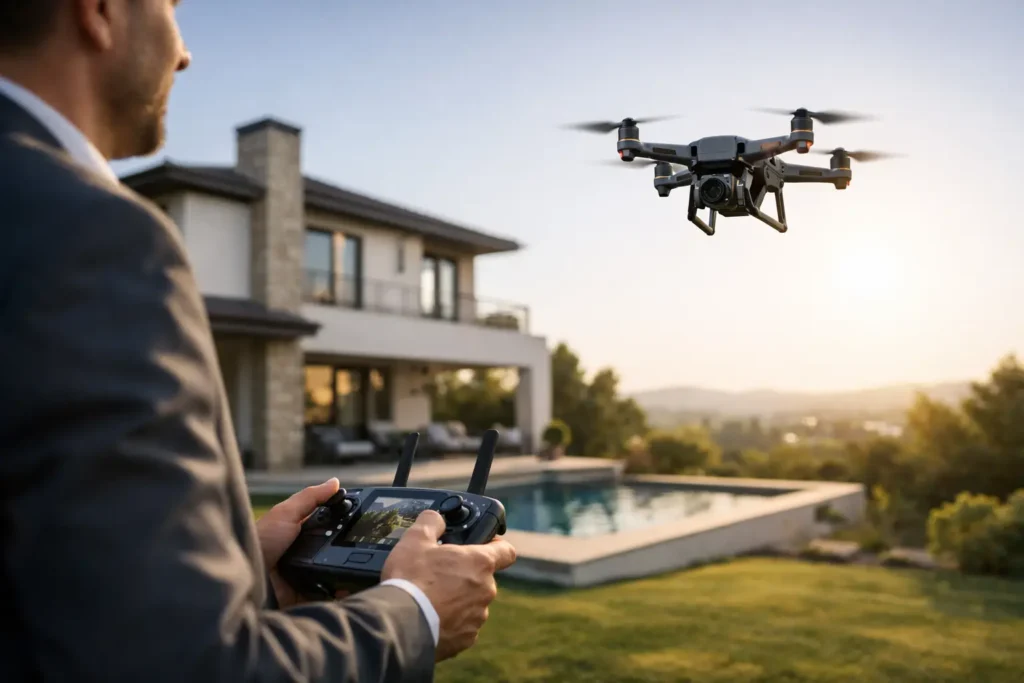
A waterfront listing can look ordinary from the driveway and unforgettable from 150 feet up. That difference is exactly why agents keep asking what is real estate drone photography and whether it actually helps listings perform better.
Real estate drone photography is the use of a small unmanned aircraft to capture aerial photos and video of a property. Instead of showing only what a ground-level camera sees, drone media reveals the lot, roofline, backyard, canal access, nearby amenities, and the surrounding neighborhood in a single frame. For agents in South Florida, where location, water frontage, lot shape, and lifestyle features often drive value, that added perspective can be a serious advantage.
This is not just about getting a dramatic hero shot. Good drone photography helps buyers understand the property faster. It gives context that standard listing photos cannot, and that context can reduce confusion, increase interest, and improve the quality of inquiries coming in.
What is real estate drone photography used for?
At the most practical level, drone photography is used to market a property more clearly and more competitively. Aerial stills can show the full footprint of a home, the size of the lot, the relationship between the house and the water, and the distance to surrounding features like golf courses, parks, beaches, or downtown areas. Drone video adds movement and can present a property in a more polished, high-end way across social media, listing sites, and branded marketing materials.
For some homes, aerial media is a nice upgrade. For others, it is almost essential. A gated estate, an Intracoastal property, a home on acreage, a corner lot, or a residence with a resort-style backyard often loses part of its story when it is photographed only from eye level. Drone coverage fills that gap.
The best use case is simple: if the setting helps sell the property, aerial media should probably be part of the marketing plan.
How real estate drone photography works
A licensed drone operator visits the property and plans the flight based on the home, weather conditions, local airspace, and the marketing goals for the listing. The operator captures a mix of wide overhead images, angled exterior shots, and sometimes cinematic video passes that highlight key selling points.
After the flight, the raw images and footage are edited for color, exposure, framing, and consistency with the rest of the listing media. In a strong package, drone images are not treated as a separate extra. They are integrated into the full visual presentation so the listing feels cohesive and professional.
This part matters more than many agents realize. Anyone can send a drone up. What actually helps a listing is knowing which angles answer buyer questions and which shots make the property easier to understand. Aerial media should support the sale, not just show off the pilot.
Still photos vs. drone video
Still photos are usually the first priority because they fit directly into MLS galleries and are easy for buyers to scan. A strong aerial still can instantly communicate lot size, waterfront exposure, privacy, or proximity to major landmarks.
Video is often where the emotional impact comes in. A smooth approach shot over the front elevation or a reveal of the backyard and water can create stronger attention on social media and property websites. That said, video is not automatically necessary for every listing. If the home is entry-level and the main goal is speed and clean presentation, stills may be enough. For luxury, lifestyle-driven, or architecturally unique homes, video often earns its place.
Why drone photography matters in South Florida
South Florida is a visual market, and buyers here are not just shopping for square footage. They are buying proximity, lifestyle, privacy, outdoor living, and access. Aerial media helps show all of that quickly.
A waterfront home in Miami-Dade, Broward, or Palm Beach can gain immediate clarity from drone shots that show dock length, canal width, neighboring properties, and route to open water. A suburban listing benefits when buyers can see cul-de-sac placement, green space, or the scale of the yard. Even condos and townhomes can benefit when drone media shows building position, nearby coastlines, or walkable surrounding features.
This matters because better context can attract better-matched buyers. When buyers understand the property sooner, agents often spend less time answering basic questions that could have been addressed visually. That can mean fewer unqualified showings and a smoother sales process.
What makes good real estate drone photography good
The difference between average and effective drone media usually comes down to strategy. Good aerial photography is clean, accurate, and purposeful. It highlights the assets that affect perceived value without creating a misleading impression.
Lighting matters. So does altitude. Too high, and the property gets lost in the frame. Too low, and the aerial advantage disappears. Composition matters just as much. The goal is to show where the property sits, what surrounds it, and why that matters to the buyer.
Editing also plays a role, but restraint is important. Sky replacements, boosted colors, and dramatic effects can easily push a listing into looking artificial. For real estate marketing, the best drone work feels polished and credible. Buyers should be impressed, not skeptical.
Compliance and professionalism
Drone work for real estate is not just creative. It is regulated. Commercial drone operators in the US need to follow FAA rules, and in some locations there may be additional restrictions around airports, coastal areas, and dense urban corridors. In South Florida, that can be especially relevant given the amount of controlled airspace.
For agents, the practical takeaway is simple: hire a professional who understands both image quality and legal flight requirements. A cheap operator who cuts corners can create delays, poor visuals, or compliance issues that are not worth the risk.
When drone photography is worth it and when it is not
Drone photography is often worth it when the exterior setting is part of the sale. That includes waterfront homes, large lots, luxury properties, homes with major outdoor upgrades, and listings in visually distinct neighborhoods. It is also useful when the home’s layout on the lot is a selling point, such as a long driveway, detached guest house, tennis court, or private backyard orientation.
It may be less important for properties where the surroundings do not add much and the budget is tight. A small interior-focused condo, for example, may get more value from strong interior photography, floor plans, or a 3D tour than from aerial media. The right decision depends on what will actually help a buyer say, I get this property.
That is the real standard. Every visual asset should earn its place by improving clarity, interest, or perceived value.
What agents should expect from a drone shoot
A professional drone shoot should be fast, organized, and built around listing performance. You should expect pre-shoot planning, safe flight execution, edited deliverables, and files that are ready to use across MLS, social media, and property marketing campaigns.
You should also expect judgment. Not every property needs the same aerial package, and not every angle deserves to be used. A dependable media partner will know how to tailor coverage to the listing instead of applying the same formula to every home. That is where results come from.
For teams competing in a fast market, this matters beyond one listing. Better visual presentation helps win more seller conversations too. When you can show homeowners how you market a property from every relevant angle, your listing presentation gets stronger.
So, what is real estate drone photography really buying you?
At its best, real estate drone photography buys clarity. It helps buyers understand the property, helps sellers feel their home is being marketed at a higher level, and helps agents present listings with more authority in a crowded market.
It is not a magic fix for every property, and it should never replace strong interior photography or good pricing strategy. But when the location, lot, or lifestyle features matter, aerial media can turn a listing from flat to compelling very quickly.
If your listing has something worth seeing from above, showing it well is not an extra. It is part of selling the property the way it deserves to be sold.