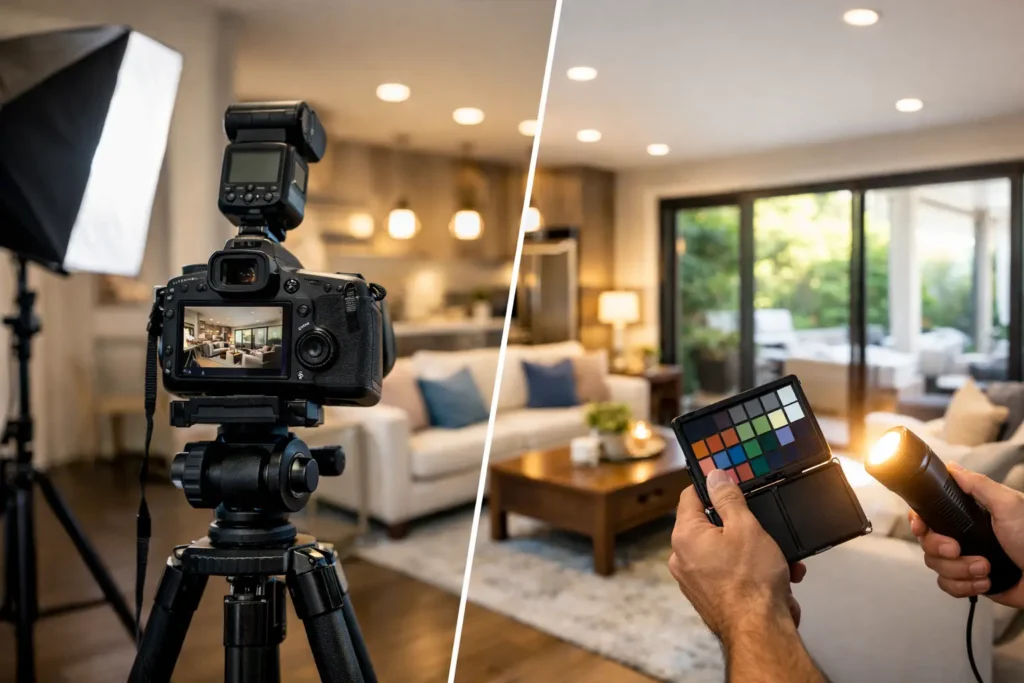
A bright window and a dim living room can make a million-dollar listing look flat in one click. That is exactly why agents ask, what is flambient real estate photography, and whether it actually makes a difference on the MLS. In a competitive market like South Florida, where natural light, water views, and interior finishes all need to read clearly, the answer matters.
Flambient real estate photography is a shooting and editing method that combines flash exposure with ambient light exposure to create polished interior photos. The ambient frame captures the natural feel of the room, while the flash frame adds clean color, shape, and definition. Blended together, they produce images that look bright, balanced, and realistic without the muddy shadows, orange color casts, or blown-out windows that often show up in basic interior photography.
For agents, the value is straightforward. Better photos help a property look more expensive, more cared for, and easier to understand at a glance. That can mean more clicks, stronger first impressions, and fewer wasted showings from buyers who were misled by poor visuals.
What is flambient real estate photography doing differently?
At a technical level, flambient photography solves a problem every interior photographer runs into. Rooms rarely have one clean light source. You might have daylight pouring through windows, recessed ceiling lights adding warmth, lamps throwing yellow tones, and darker corners that disappear on camera even when the room looks fine to the eye.
If you shoot only with available light, the photo can feel soft but often ends up uneven. Whites drift yellow or gray, windows turn pure white, and architectural lines lose crispness. If you rely too heavily on flash alone, the image can look sterile, harsh, or overly artificial.
Flambient splits the difference. The photographer captures an ambient image for the room’s natural atmosphere and one or more flash images to control color and reveal detail. In post-production, those exposures are blended carefully so the final result feels natural but still clean and market-ready.
That balance is why flambient is so common in high-quality real estate media. It gives you a more controlled final image without making the property feel fake.
Why agents use flambient real estate photography
Real estate photography is not art for art’s sake. It is sales media. The goal is to present the property clearly, attract the right buyer, and support the home’s perceived value.
Flambient helps with that because it makes rooms easier to read. Buyers can see into the shadows. Kitchen cabinetry shows its true color. Window lines stay defined instead of turning into a bright block of white. Flooring, countertops, and wall texture hold up better on screen, especially on phones where people make fast judgments.
This matters even more in homes with mixed lighting conditions. Think condos with strong ocean light, homes with deep covered patios, or interiors with warm designer fixtures that can throw strange color on camera. A flambient approach gives the photographer more control over those problem areas.
For listing agents, that control can translate into three practical wins. The home photographs closer to its real in-person appeal, the gallery looks more premium next to competing listings, and buyers get a clearer sense of quality before they ever book a showing.
How the flambient process works
The process starts on site. The photographer composes the shot and captures an ambient exposure using the existing light in the room. Then a flash exposure is made from the same angle, often with the flash bounced to keep the light soft and directional rather than obvious.
Depending on the room, there may be several flash frames. Large living areas, reflective kitchens, and luxury bathrooms often need more control than a simple bedroom. The photographer is not just trying to make the room brighter. They are shaping the light so surfaces look clean, verticals stay natural, and finishes show accurately.
In editing, the ambient and flash frames are layered together. The ambient keeps the room’s natural mood. The flash corrects color contamination, restores detail, and adds clarity. A skilled editor also manages window pulls, glare, and contrast so the image looks believable.
That last part is where quality varies. Flambient is not just pressing a preset. Poor blending can create odd halos, unnatural shadows, or a glossy overprocessed look. Done well, you barely notice the technique. You just notice that the room looks better.
Flambient vs HDR for real estate photography
A lot of agents hear flambient and HDR in the same conversation, and they are not the same thing.
HDR photography blends multiple bracketed exposures to capture a broader range of brightness. It can be fast and effective, especially for high-volume shoots. But when HDR is overdone, it often produces muddy color, grayish whites, and that processed look buyers and agents both recognize immediately.
Flambient uses flash as part of the capture process, not just exposure bracketing. That gives the photographer more control over color accuracy and cleaner separation between surfaces. Walls tend to look truer, cabinetry has more depth, and the whole image feels crisper.
That does not mean flambient is automatically better for every situation. HDR can be efficient for certain property types, tight timelines, or exterior-heavy shoots. But for premium interiors, luxury listings, and homes where finish quality matters, flambient is often the stronger choice.
If your listing depends on conveying texture, brightness, and design value, flambient usually gives you the more refined result.
Where flambient makes the biggest impact
Not every room needs advanced lighting control, but some spaces benefit immediately.
Living rooms with large windows are a common example. Without blending, the room can go too dark or the exterior view disappears. In kitchens, mixed lighting from pendants, under-cabinet lights, and daylight can create heavy color shifts. Bathrooms with mirrors, glossy tile, and small footprints are another challenge where flambient helps keep the image sharp without looking harsh.
It is also valuable in homes where the lifestyle appeal is part of the sale. South Florida properties often lean heavily on brightness, indoor-outdoor flow, and architectural finishes. If the photo set does not preserve those qualities, the listing loses a major advantage before a buyer even clicks through.
What flambient real estate photography is not
It is not a trick to make a bad property look like a different property. Strong real estate photography should elevate presentation, not misrepresent the space.
Flambient should keep proportions honest, colors believable, and window views consistent with reality. It is about showing the home at its best possible standard under controlled lighting, not inventing features that are not there.
That distinction matters. Buyers can forgive good lighting. They do not forgive a listing that feels deceptive in person.
Is flambient worth it for every listing?
It depends on the property, price point, and marketing strategy.
For entry-level listings where speed and budget are the main priority, a simpler workflow may be enough. But when the home has upgraded finishes, strong natural light, premium views, or design details that influence perceived value, flambient usually earns its place. The better the property, the more obvious the difference becomes.
It is also worth considering how the images will be used beyond the MLS. If you are pushing the listing through social campaigns, property sites, brochures, and presentation materials, cleaner images have a longer shelf life and a stronger impact across every channel.
For agents who are trying to win more listings, this matters beyond one property. The quality of your media becomes part of your pitch. Sellers notice when your marketing looks sharper than the competition.
How to know if your photographer uses flambient well
Ask to see interior examples with windows, kitchens, and mixed-light rooms. Those images tell the truth quickly. Look for clean whites, realistic shadows, visible exterior detail, and surfaces that look defined without appearing crunchy or fake.
A strong flambient image feels polished but believable. The room should still feel like a real place, not a rendered space. If every image looks overly bright, flattened, or strangely glossy, the technique is probably being pushed too far.
The right photographer understands that real estate media has two jobs at once. It needs to grab attention fast, and it needs to hold up when buyers look closer. That is where a disciplined flambient workflow stands out.
In a market where listings compete visually before anyone steps through the door, details like lighting are not small details. They shape how buyers perceive price, quality, and desirability. If you want photography that shows the possibilities, not just the space, flambient is one of the clearest ways to get there.