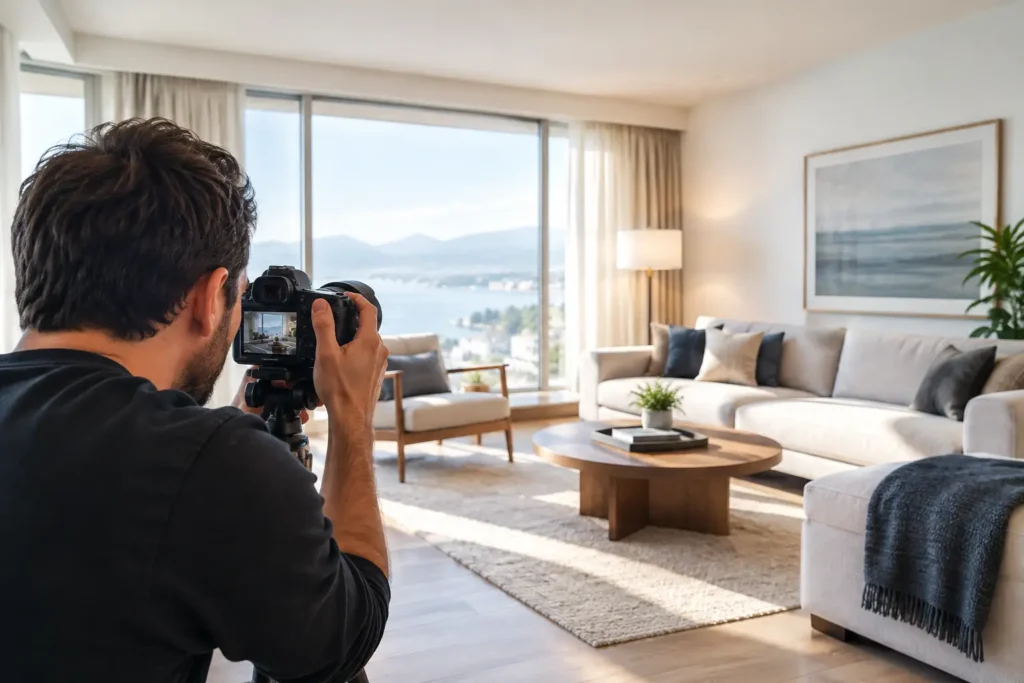
A guest can scroll past a vacation rental in less time than it takes to read its headline. The photos have to stop that scroll, explain the stay, and create enough confidence for a traveler to check availability. That is why an Airbnb photographer is not simply documenting rooms. They are building the visual case for why this property deserves a closer look.
For South Florida hosts, property managers, and real estate professionals marketing short-term rentals, that job is especially demanding. Guests are comparing waterfront condos, design-forward homes, resort-style buildings, and ordinary listings in the same search results. A clean exposure is the baseline. What moves a listing forward is a visual strategy that makes the home feel clear, credible, and worth booking.
An Airbnb Photographer Must Sell the Stay
Traditional real estate photography is designed to support a purchase decision. Vacation rental photography has a different assignment: it needs to help a guest imagine a specific experience. Where will they have coffee? Can the group gather comfortably? Is the beach, pool, balcony, or neighborhood lifestyle actually part of the stay?
That does not mean every image should be overly styled or cinematic. Guests still need an honest view of the layout, room sizes, sleeping arrangements, and condition of the property. The strongest listings balance aspiration with clarity. They show the possibilities without hiding the practical details that affect a booking decision.
A photographer who understands real estate marketing approaches a rental with that balance in mind. Wide images establish the space. Detail images create atmosphere. Exterior, amenity, and aerial visuals establish context. Together, they answer the questions guests would otherwise ask before booking – and reduce the chance of attracting inquiries from people who were never the right fit.
Start With the Booking Audience, Not the Camera
Before a shoot, define who is most likely to book the property. A compact Brickell condo aimed at business travelers needs a different visual story than a four-bedroom home built for family groups or a waterfront property positioned for luxury weekend stays.
For a business-oriented rental, show the workspace if it is genuinely useful, the quality of the bedroom, building access, parking options when applicable, and proximity to the location’s strongest practical advantage. For a family property, guests need to understand bedroom distribution, dining capacity, outdoor living areas, pool safety features, and the flow between shared spaces. For a higher-end rental, the lifestyle assets often lead: water views, architecture, outdoor entertaining, private dock access, or a polished building amenity package.
The objective is not to invent a lifestyle the home cannot support. It is to identify the strongest real reason a guest would choose this listing and make that reason visible early in the photo sequence.
What the Photo Set Should Include
The exact shot count depends on the property, but a complete rental listing should usually cover these distinct parts of the guest experience:
- The exterior approach, entry, and any curb appeal that helps guests recognize the property.
- Every main living space, photographed to show scale, natural light, and connection between rooms.
- Each bedroom, with sleeping capacity and bed configuration easy to understand.
- Bathrooms, kitchen, dining area, laundry, and other practical spaces that influence longer stays.
- Outdoor areas, views, pools, balconies, community amenities, and location-specific features.
Not every room needs several versions of the same angle. Repetition creates a longer gallery without giving a guest better information. One strong image of a secondary bedroom is often more useful than three nearly identical shots of the living room.
A professional also considers the order of the gallery. The first five images carry disproportionate weight because they determine whether the viewer stays engaged. Lead with the property’s strongest feature, then quickly establish the primary living area, bedroom quality, kitchen or dining function, and the amenity or view that differentiates the stay. A photo collection should feel like a logical walkthrough, not a folder of attractive individual frames.
Why Preparation Changes the Result
Photography can enhance a prepared property. It cannot reliably correct clutter, poor maintenance, mismatched furniture, or a room that is trying to serve five functions at once. Hosts and managers get better results when they prepare the rental as if guests are arriving that afternoon.
Clear counters, remove personal items, straighten bedding, open shades when the view and weather support it, and make sure every bulb works. Towels, pillows, and simple table settings can add polish, but restraint matters. Too much staging can look artificial and may set expectations the unit cannot meet between turnovers.
Timing is another practical decision. A bright daytime shoot is typically best for clear interior images and accurate views. Twilight photography can add impact for homes with exceptional exterior lighting, city skylines, pools, or water frontage, but it is an enhancement, not a replacement for a strong daytime gallery. It depends on the property and the way it will be marketed.
Use 360 Tours and Floor Plans When Clarity Is the Selling Point
Photos generate attention, but some properties need additional tools to explain their layout. A 360° virtual tour is particularly useful for larger homes, multi-level residences, unusual floor plans, or rentals where remote guests need greater confidence before booking. It turns the listing into a 24/7 open house and lets viewers move through the space on their own terms.
A 2D or 3D floor plan solves a different problem. It gives guests a quick understanding of room relationships, bedroom placement, and overall scale. This is valuable for families, groups traveling together, and longer-stay renters who care about privacy and daily function as much as design.
These assets are not necessary for every studio or standard one-bedroom unit. For a simple, well-laid-out property, excellent photos may do the job. But when the layout is a competitive advantage – or a possible point of confusion – visual clarity can improve the quality of inquiries and help guests make decisions with fewer assumptions.
Drone and Video Should Have a Job to Do
Aerial photography and video are powerful when they establish something the interior cannot show. Waterfront position, walkability to the beach, a large lot, proximity to a marina, a rooftop setting, or a resort-style community are all examples. In South Florida, location often carries real booking value, and a properly planned aerial image can communicate that value immediately.
The trade-off is relevance. Drone footage of a property with no meaningful exterior story can feel decorative rather than useful. It should clarify setting, not add production for its own sake. Aerial capture must also be handled by an FAA-certified drone pilot who understands local airspace restrictions and safe operating practices.
Video works best when it has a clear role as well. A short cinematic walkthrough can create emotional momentum on a property website, social platforms, and direct marketing campaigns. Unlike still photography, video shows transitions: how the kitchen opens to the terrace, how the primary suite relates to the view, or how a pool area feels at the end of the day. It is most effective when the property has movement and atmosphere worth showing.
Avoid Images That Create the Wrong Expectations
The fastest way to undermine a rental listing is to make it look better in photos than it feels on arrival. Extreme wide-angle distortion, heavily altered views, or editing that changes finishes and colors may earn initial clicks, but they can also lead to disappointed guests and difficult reviews.
Professional editing should correct exposure, perspective, and distracting minor elements while preserving the property’s actual condition. Windows should show the real view. A bedroom should not appear substantially larger than it is. Virtual staging can be useful for an empty or under-furnished space, but it should support a truthful presentation of how the room can function.
Accuracy is not less persuasive. It is more persuasive because it builds trust with the right guest.
Choose a Media Partner Who Understands Listing Performance
When evaluating an Airbnb photographer, look beyond a portfolio of attractive interiors. Ask whether they can explain the purpose of the first image, the right sequence for the gallery, when a floor plan adds value, and whether drone or video will materially improve the marketing. Those are listing strategy questions, not just photography questions.
Digitall Media approaches every property from both sides of the transaction: what catches a buyer or guest’s attention, and what information helps them take the next step with confidence. With HDR photography, 360° tours, floor plans, aerial capture, virtual staging, and cinematic walkthrough video available through one coordinated process, agents and property managers can build the right media package for the property rather than forcing every listing into the same template.
A vacation rental does not need more content just to fill a gallery. It needs the right visual evidence: clear rooms, credible scale, a compelling reason to stay, and enough context for the right guest to picture themselves there. That is what turns a listing from another option in the search results into a property worth booking.