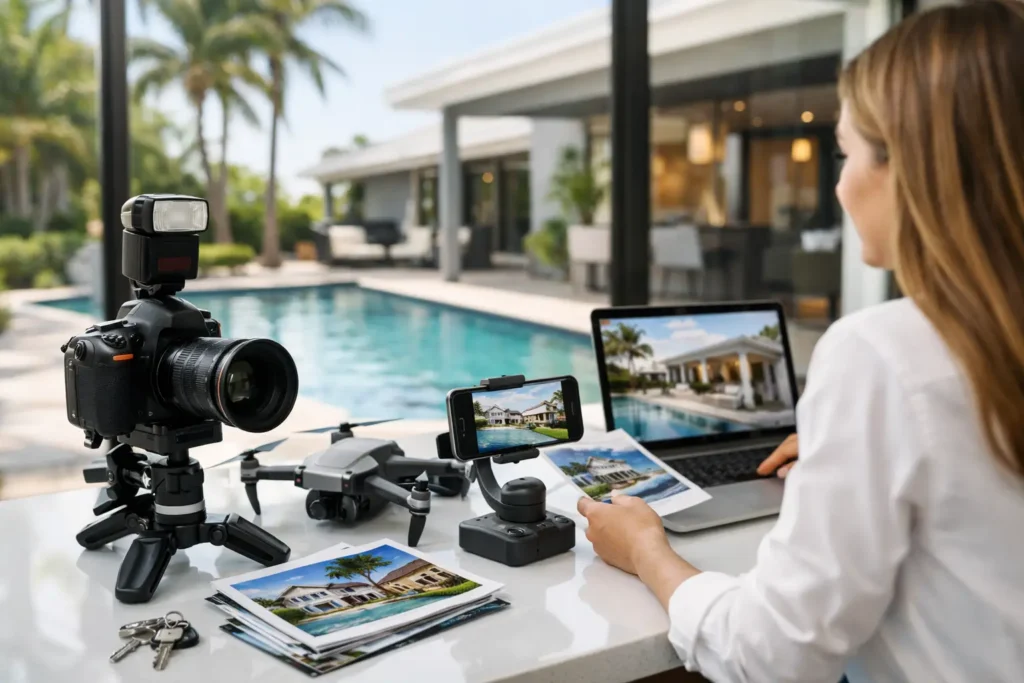
A waterfront condo can earn a second look in seconds. A home with poor interior photos, dark rooms, or no clear sense of layout gets skipped just as quickly. This South Florida listing media guide is built for agents who need every listing to compete across MLS, property portals, email campaigns, and social media without wasting budget on media that does not fit the property.
In Miami-Dade, Broward, and Palm Beach, buyers are comparing lifestyle as much as square footage. They want to see the view, understand the flow, picture the outdoor space, and know whether a home feels move-in ready before they request a showing. Your media needs to answer those questions clearly.
Start With the Listing Strategy, Not the Camera
The right media package depends on the property, price point, buyer profile, and strongest selling features. A 900-square-foot condo with a dramatic bay view needs a different approach than a five-bedroom home in Weston, a new construction property in Boca Raton, or a waterfront estate in Miami Beach.
Start by identifying the reason a buyer would stop scrolling. It may be a renovated kitchen, a backyard built for entertaining, walkability, a wide water view, a golf course setting, or a floor plan that works for multigenerational living. That feature should shape the shot list, video story, and order in which assets appear online.
Media is not about documenting every corner equally. It is about directing attention to the features that support the asking price and help the right buyer self-qualify.
Professional Photography Is the Non-Negotiable Base
Professional real estate photography is the baseline for nearly every listing. It creates the first impression on the MLS and gives you polished assets for flyers, email, social posts, and listing presentations. Bright, properly composed images make a home feel cared for, spacious, and worth a closer look.
For most homes, a complete photo set should show the exterior, primary living areas, kitchen, bedrooms, bathrooms, outdoor areas, and meaningful community or lifestyle features. The goal is coverage with purpose. Twenty strong images are more valuable than fifty repetitive angles that force buyers to work to understand the home.
Preparation matters as much as photography. Ask sellers to clear counters, remove pet items, hide cords, replace burnt bulbs, and reduce personal clutter. In South Florida, open shades when the view is an asset, but manage harsh sun and reflections with the photographer’s direction. A clean, prepared home gives the visual team more room to create images that feel premium rather than merely accurate.
When Photos Alone May Be Enough
Photos can be enough for an entry-level listing, a straightforward rental, or a property where speed and budget are the primary concerns. But “enough” is not always the same as competitive. If the layout is unusual, the home has a strong indoor-outdoor connection, or out-of-area buyers are likely, photography should be paired with media that adds movement or spatial context.
Use Video to Sell Atmosphere and Lifestyle
Listing video gives buyers something still photos cannot: a sense of arrival. It can show how the entry opens into a living space, how light moves through the home, and how the pool, terrace, kitchen, and view connect. For lifestyle-driven South Florida properties, that context can be the difference between a passive view and a showing request.
A strong video is not a slideshow with music. It has a clear sequence and a reason for each shot. For example, a condo video may begin with the building, lobby, and view before moving into the unit. A family home may lead with curb appeal, then show the kitchen, living areas, bedrooms, and backyard in the natural order a buyer would experience them.
Short-form vertical clips are particularly useful for Instagram Reels, Stories, and paid social campaigns. A longer horizontal video can support YouTube, property websites, and email marketing. The best choice depends on your distribution plan. If you will not promote a two-minute cinematic video, a sharper 30- to 45-second social edit may produce more value.
3D Tours Turn Curiosity Into Better Showings
A 3D tour gives buyers control. Instead of trying to piece together a floor plan from photos, they can move through rooms, revisit the kitchen, inspect the primary suite, and understand how spaces connect. That makes 3D tours especially effective for vacant properties, larger homes, relocation buyers, and listings with distinctive layouts.
Matterport and CloudPano-style tours can also reduce low-intent showings. Buyers who have already explored the property virtually tend to arrive with more informed questions. That does not replace the in-person experience, particularly for homes where finishes, views, and neighborhood atmosphere matter. It simply makes the showing process more efficient for everyone.
There is a trade-off. A 3D tour can reveal awkward transitions, small rooms, or dated areas just as clearly as it reveals strengths. That is not a reason to avoid it. It is a reason to prepare the property properly and use the tour when transparency will build confidence with the right buyer.
Floor Plans Answer the Question Buyers Keep Asking
“Where is the laundry?” “How does the primary bedroom connect to the bath?” “Is there a separate dining area?” These questions can derail interest when a listing has no clear floor plan.
A measured floor plan gives buyers a practical understanding of room relationships and scale. It is one of the highest-value additions for homes with multiple levels, split-bedroom layouts, additions, or flexible spaces that could function as an office, gym, nursery, or guest suite. It also complements a 3D tour by providing the quick overview buyers want before they explore further.
For condos, confirm what can be accurately shown. Balcony dimensions, storage spaces, and common areas may require careful labeling. Accuracy protects your credibility and helps prevent confusion later in the transaction.
Drone Media Should Show Context, Not Just Height
Drone photography and video are powerful in South Florida because location often carries real value. Aerial media can show waterfront access, lot size, proximity to parks, golf courses, downtown districts, marinas, beaches, and major roads. For estates and new developments, it can communicate scale far better than ground-level images alone.
But drone footage should have a job. A high aerial shot is useful when it clarifies the property’s relationship to the water or neighborhood. It is less useful when it only creates dramatic movement without showing a meaningful advantage. Aerial capture also depends on weather, airspace restrictions, and safe operating conditions, so build flexibility into the production schedule.
Virtual Staging Should Clarify Potential, Not Mislead
Vacant rooms can feel smaller and harder to interpret online. Virtual staging helps buyers understand how a living room can be furnished, where a dining table fits, or how an empty den can become a home office. It is also useful when a seller has moved out before launch or when existing furniture distracts from the home.
Use virtual staging selectively. Stage the rooms where it adds clarity, then disclose that the image has been virtually staged according to local MLS rules and advertising standards. Avoid changing permanent features, hiding flaws, or presenting renovations that do not exist. The objective is to show the possibilities, not create a version of the property a buyer will never see.
Virtual twilight edits can be effective for a strong exterior hero image, particularly when landscaping, lighting, pools, and water views are central to the listing. Use them as an enhancement, not a substitute for a well-shot daytime exterior.
Build a Media Package Around the Property
For a typical resale home, professional photography, a floor plan, and a short video often create a strong foundation. For a luxury waterfront listing, add aerials, a cinematic video, a 3D tour, and twilight imagery if the property’s evening atmosphere supports the story. For a vacant condo, photography, virtual staging, a floor plan, and a 3D tour can help buyers understand both scale and livability.
Timing matters. Schedule media after the home is cleaned, staged, repaired, and photo-ready. Do not rush a shoot because the listing appointment is complete while the property is still half-prepared. A delayed launch is frustrating; a weak first impression can be more expensive.
A dependable media partner should help you make these calls before shoot day. Digitall Media approaches each asset as part of the listing strategy, not as a standalone deliverable. That means planning for where the content will appear and what buyer question it needs to answer.
Make the Assets Work After They Are Delivered
The media package is only valuable when it is used consistently. Lead your MLS photo order with the strongest visual reason to buy. Add the tour and video wherever your platform allows. Pull short clips for social posts, use aerial images in neighborhood-focused campaigns, and bring the floor plan into follow-up conversations with interested buyers.
Do not treat delivery day as the finish line. It is the moment your listing becomes a 24/7 open house for buyers who are researching after work, from another state, or between showings. Give them a clear, accurate reason to take the next step, and your in-person appointments are more likely to be the ones that matter.