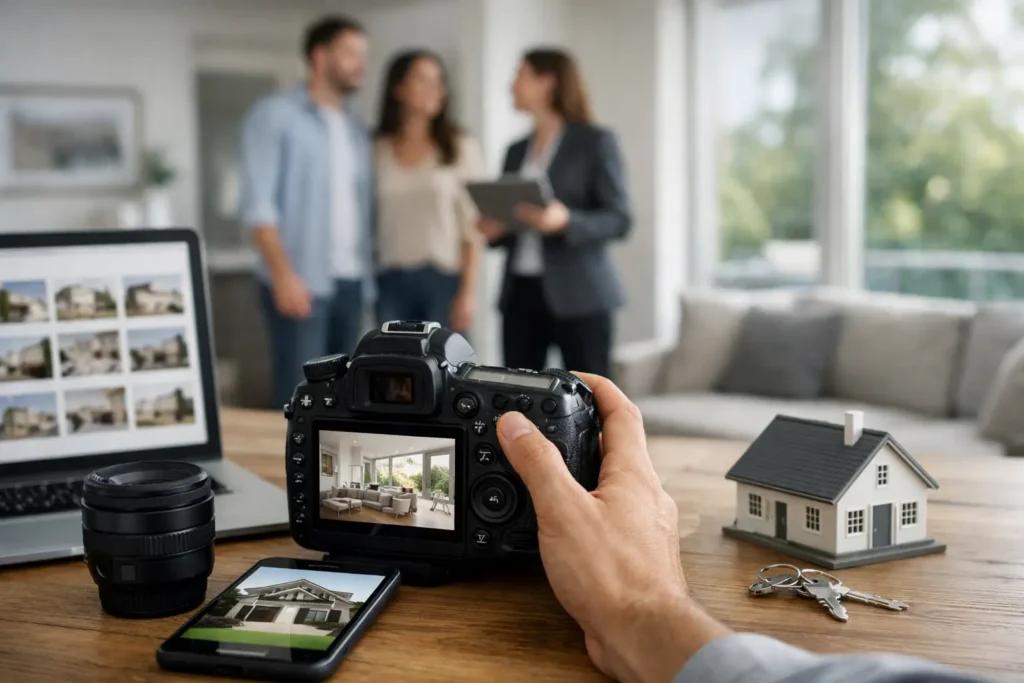
A listing can lose momentum before the first showing if the photos look flat, dark, or incomplete. When agents search for real estate photography near me, they are not just looking for someone with a camera. They are looking for a media partner who can make a property feel worth visiting, worth saving, and worth offering on.
In South Florida, that standard is even higher. Buyers scroll quickly, sellers expect premium presentation, and competing listings often come with polished interiors, twilight edits, drone shots, and virtual tours. If your media does not hold up against the market, the listing can look weaker than it actually is.
What real estate photography near me should actually deliver
Good listing media does more than document rooms. It creates a stronger first impression and helps buyers understand how the home lives. That means clean composition, balanced light, accurate color, and angles that show flow instead of just square footage.
For agents and brokers, the real value is performance. Better visuals can increase click-throughs, generate more qualified interest, and reduce wasted showings from buyers who arrive confused about layout or condition. Strong media also helps with listing presentations. When sellers see that your marketing looks sharper than the competition, that can be the difference between winning and losing the appointment.
This is why the cheapest option is not always the lowest-cost decision. If poor images make a property look smaller, darker, or less updated than it is, the listing may sit longer or require price reductions that cost far more than the photo shoot.
How to evaluate real estate photography near me
The fastest mistake agents make is choosing based on price alone. The smarter move is to compare photographers the same way buyers compare listings – by presentation, consistency, and whether the details support the promise.
Review full galleries, not hero shots
Almost every photographer has a few strong portfolio images. What matters is whether they can deliver an entire listing at that standard. Ask to see complete property galleries across different price points and property types. A luxury waterfront condo, a suburban family home, and a small investment property all require different judgment.
Look for straight vertical lines, natural window balance, clean editing, and room coverage that feels intentional. If kitchens look muddy, bathrooms look cramped, or exterior shots are blown out, that is a warning sign. Consistency matters more than one dramatic image.
Pay attention to turnaround time
In a fast-moving market, slow delivery can hurt. If a property is ready to hit the MLS, waiting too long on media delays the entire campaign. Ask how quickly photos are delivered, whether rush options exist, and how reliable that timeline is during peak periods.
Speed matters, but so does control. Same-day delivery is useful only if the final product still looks polished. The goal is efficient production without sacrificing the quality that gets buyers to stop scrolling.
Check what is included in the service
Some providers offer only still photography. Others build a full visual package around the listing. Depending on the property, that can include drone capture, video walkthroughs, 3D tours, virtual staging, floor plans, and twilight editing.
It depends on the listing strategy. A standard home in a tight inventory market may perform well with excellent photos and a floor plan. A high-end property, new development, or unique waterfront home may need a more complete media stack to justify attention and price. The right provider should be able to explain what adds value and what is unnecessary for that specific listing.
What agents should ask before booking
A strong photographer should make your job easier, not add another layer of uncertainty. Before scheduling, ask practical questions that affect execution.
Find out how the property should be prepared, whether the team can advise on staging adjustments, and how they handle weather issues for exteriors and drone work. Ask about licensing, insurance, and whether the final files are optimized for MLS, print, and social use. You should also ask how revisions are handled if something is missed.
These questions reveal more than logistics. They show whether the company understands the pressure agents are under. A provider who works with real estate professionals every day will usually have a clear system, fast communication, and a service flow built around listing deadlines.
The difference between a photographer and a real estate media partner
There is a gap between someone who takes property photos and a team that helps listings perform. The second option thinks beyond the shoot itself.
A true media partner understands that every asset has a job. Photos need to attract attention on the MLS. Drone images should establish lot position, neighborhood context, and lifestyle appeal. A 3D tour should help remote buyers or busy prospects narrow interest before booking a showing. Virtual staging should help buyers visualize use without creating misleading expectations.
That kind of strategy matters in South Florida, where location, view corridors, outdoor living, and building amenities often shape buyer decisions as much as the interior finishes. Media should highlight those selling points clearly and credibly.
Why local market knowledge matters
Searching for real estate photography near me is partly about convenience, but local experience matters for a deeper reason. Real estate media is not shot in a vacuum. The market shapes what needs emphasis.
In Miami-Dade, Broward, and Palm Beach, natural light, water views, high-rise amenities, and exterior lifestyle features often carry major weight. Timing the shoot for the right sun exposure can change how a balcony, pool, or waterfront angle reads. Drone framing needs to understand what buyers care about seeing and what should stay out of frame. Even editing choices can affect whether a property looks current and premium or overly processed.
Local specialists also tend to understand access issues, building rules, weather patterns, and the pace agents need. That translates into fewer surprises and smoother production.
When more media is worth it – and when it is not
Not every listing needs every add-on. Smart marketing is about fit, not excess.
For entry-level or rental inventory, strong photography may be enough to do the heavy lifting. For architecturally distinct homes, large estates, waterfront properties, or luxury condos, richer media usually earns its keep. Video can help tell the lifestyle story. A 3D tour can act like a 24/7 open house. Floor plans can answer layout questions before buyers ask them. Virtual twilight or item removal can improve presentation without delaying launch.
The trade-off is budget and speed. More assets take more coordination, and not every seller wants a premium package. But under-marketing a strong listing can be just as costly as overspending on a weak one. The best approach is to match the media plan to the property, the target buyer, and the expected sales strategy.
Red flags to avoid
If a provider cannot show complete galleries, gives vague delivery timelines, or communicates slowly before the booking, expect bigger issues after the shoot. Low pricing with no process often means inconsistent quality, missed angles, or editing that needs correction later.
Be cautious with heavily stylized images that no longer feel true to the property. Buyers notice when wide-angle distortion makes rooms look unrealistic or when skies, views, and lighting look artificial. Good real estate photography sells the best version of the home without creating disappointment at the door.
Another red flag is a service menu with no strategic thinking behind it. If every listing gets the same package regardless of price point, location, or target buyer, that is a production business, not a marketing-minded one.
Choosing the right fit for your listings
The best choice is usually the provider who combines visual quality, reliable turnaround, and a clear understanding of what helps listings move. That may be a solo specialist with sharp execution or a full-service team that can handle photography, drone, video, virtual tours, and post-production under one roof. What matters is that their process supports your sales process.
For serious agents, good media is not cosmetic. It is part of pricing strategy, lead generation, and brand positioning. Every listing you launch tells future clients what they can expect from your marketing. That is why many top producers treat visual assets as part of the listing presentation, not an afterthought once the sign is in the yard.
If you are comparing options, focus on the provider who makes the home easier to understand, more compelling to view, and faster to bring to market. That is where real estate photography starts paying for itself.
The right visuals do more than make a listing look good. They help buyers picture a life there, and that is what gets the phone ringing.