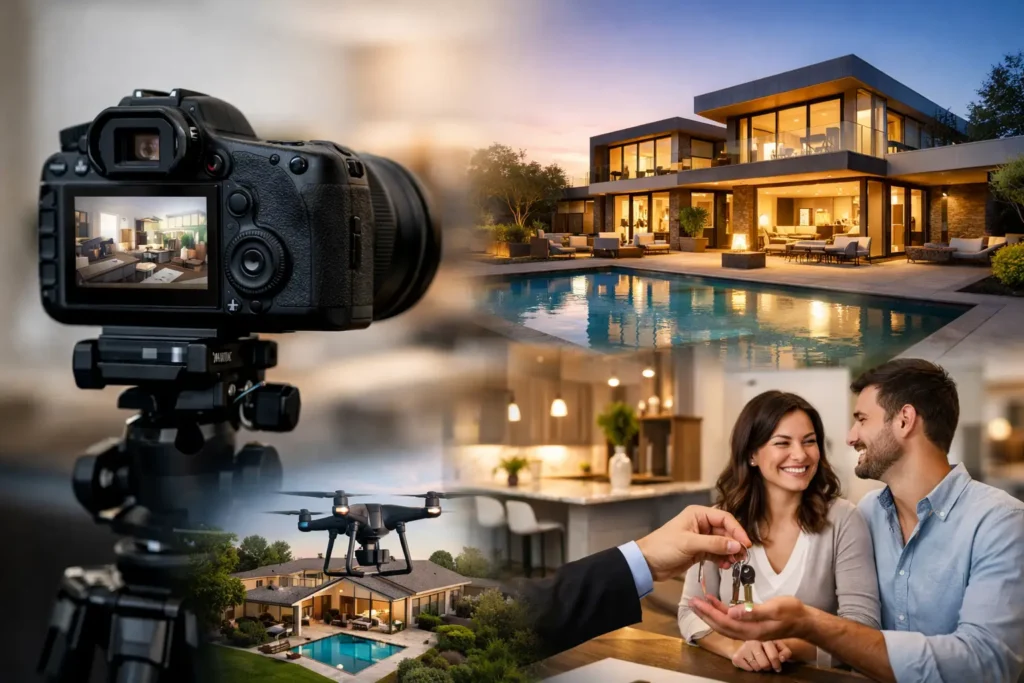
A bright exterior at the right time of day can make a listing feel worth seeing before a buyer reads a single word. That is why real estate photography examples matter so much. They do more than show a property – they shape first impressions, filter for serious buyers, and help agents present value before the first showing is scheduled.
In South Florida, where buyers compare luxury condos, waterfront homes, investment properties, and renovated suburban listings in minutes, average visuals disappear fast. Strong photography does not mean every home needs to look like a magazine spread. It means every image should do a job. It should highlight layout, light, condition, upgrades, and lifestyle in a way that supports the asking price and reduces guesswork.
What strong real estate photography examples actually show
The best examples are not just technically clean photos. They show strategy. A wide living room image should make the space feel open without distorting reality. A kitchen photo should lead the eye to the finishes that justify pricing. A backyard shot should sell how the property lives, not just document that a pool exists.
This is where many listing galleries fall short. They show rooms, but they do not build a case. Buyers scroll through disconnected images with no sense of flow, scale, or priority. Great real estate photography examples solve that by guiding attention in the same way a strong in-person showing does.
For agents, that has a practical impact. Better visuals can increase click-throughs from MLS, improve time spent on the listing page, and create stronger expectations before buyers walk in. That often means fewer low-intent showings and better conversations with qualified prospects.
12 real estate photography examples that make listings stronger
1. The hero exterior shot
This is the image that carries the listing on MLS, portals, and social media. It should be clean, balanced, and timed for the property. Sometimes that is a bright daytime frame. Sometimes twilight creates more impact, especially for luxury homes with landscape lighting, pool features, or dramatic glass lines.
The trade-off is simple. Daylight usually feels more honest and crisp. Twilight can feel more aspirational and premium. The right choice depends on the home, the target buyer, and how competitive the price point is.
2. The wide living room image
A strong living room photo does not just prove the room exists. It establishes scale and flow. Buyers should understand how the seating area connects to the dining room, patio, or waterfront view. Good composition here reduces confusion and helps buyers imagine furniture placement.
Too wide, and the room starts to look warped. Too tight, and it feels smaller than it is. The best example hits the middle – spacious, but believable.
3. The kitchen angle that sells upgrades
In many listings, the kitchen is where price justification happens. Buyers want to see cabinetry, countertops, appliances, lighting, and overall condition in one clear frame. A good example is usually shot from a corner or entry point that shows both depth and finishes.
This matters even more in competitive neighborhoods where multiple homes may have similar square footage. If one gallery makes the kitchen feel bright, functional, and current, it gains an edge fast.
4. The primary bedroom with breathing room
Bedroom photography often gets rushed, but a primary suite can influence perceived value more than agents realize. The best example gives the room space to breathe. It shows bed placement, windows, ceiling height, and access to a balcony or bath if that connection adds value.
What should not happen is overstyling through camera tricks. If the room only looks large because the lens pushed past reality, buyers will feel that disconnect on arrival.
5. The bathroom detail shot
Not every image needs to be wide. A sharp detail photo of a frameless shower, soaking tub, floating vanity, or upscale fixtures can elevate the gallery and support the home’s finish level. These images are especially effective in higher-end properties where material quality matters.
Used well, detail shots add texture to the story. Used too often, they waste image count on surfaces instead of space. Balance matters.
6. The dining-to-living transition photo
Open floor plans sell when buyers can understand them quickly. One of the most useful real estate photography examples is a transition shot that shows how dining, living, and kitchen zones connect. This gives buyers a stronger sense of layout than three isolated room photos ever could.
For condos and smaller homes, this type of image is even more valuable. It helps the space feel intentional rather than compressed.
7. The view shot that proves lifestyle
South Florida buyers care about views. Ocean, Intracoastal, golf course, skyline, lake, preserve, or even a clean backyard outlook can change how a listing is perceived. A strong example frames the view in a way that connects it to the property, such as from the balcony, primary suite, or main living area.
A standalone photo of the water can help, but the better sales image often shows the relationship between interior and exterior. That is what turns scenery into usable lifestyle value.
8. The outdoor living image
Patios, lanais, summer kitchens, docks, and pool decks are not bonus spaces in this market. They are part of the main sales story. A good outdoor image shows how the area functions for entertaining, relaxing, or everyday living.
This is where timing and styling matter. Harsh midday sun can flatten texture and create distraction. The right light makes the space feel usable and inviting, which is what buyers respond to.
9. The pool photo that feels premium
A pool should never be photographed as a checklist item. It should feel like an asset. The best example is clean, symmetrical when possible, and framed to show surrounding features such as waterline tile, deck space, spa elements, or water views.
For luxury listings, pool photography often performs better when paired with twilight coverage. For family-oriented suburban homes, a bright daytime image may feel more practical and relatable. Again, it depends on the buyer profile.
10. The office or flex space shot
Today, buyers notice flexibility. A spare room staged as an office, gym, or media space can add real marketing value if photographed clearly. The key is to make the use case obvious without making it look cramped or overly niche.
This type of image can be especially useful when a property competes on functionality rather than raw square footage.
11. The aerial image with context
Drone photography becomes powerful when it answers questions standard photos cannot. How close is the property to the water? How large is the lot? What does the roofline look like? How does the home sit within the neighborhood? Aerial examples work best when they provide context, not just novelty.
For waterfront, golf, estate, or acreage listings, this can be one of the most persuasive images in the gallery. For a standard inland tract home, the value may be more limited. Not every listing needs every media add-on.
12. The front-to-back flow image
One of the strongest examples in any gallery is a photo that pulls the eye through the home – from entry to living area to outdoor space, or from kitchen through dining to windows and light. This creates a sense of movement. Buyers begin to understand how the house feels, not just how each room looks.
That difference matters. People do not buy a collection of rooms. They buy a living experience.
Why some photography examples outperform others
The strongest listing galleries usually do three things well. First, they prioritize the home’s best selling points instead of giving every room equal weight. Second, they keep color, brightness, and vertical lines consistent, which creates a more polished, premium impression. Third, they tell the story in a logical order, so buyers can mentally walk the property.
Weak galleries often fail in quieter ways. They include too many redundant angles, skip the features that justify price, or rely on editing to fix poor composition. Buyers may not know why the photos feel off, but they feel it.
That is why results-driven media work is not just about owning a good camera. It is about knowing what buyers need to see first, what agents need to emphasize, and what details help a listing compete in a crowded market. For South Florida professionals, that can mean the difference between a listing that gets saved and shared and one that gets skipped.
How to use these examples when planning your next shoot
If you are preparing a listing, start by identifying the three features most likely to win attention online. That could be the kitchen, the waterfront view, and the pool. Or it could be the renovated primary bath, open layout, and walkable location. The image plan should support those priorities, not treat every property the same.
It also helps to think beyond MLS. The best real estate photography examples are versatile enough to work across listing platforms, social posts, email marketing, and presentation materials when pitching future sellers. A strong gallery does not just market one property. It can support your brand as the agent who presents listings professionally and prices them with confidence.
When the visual strategy matches the property, the audience, and the market, photography stops being a line item and starts becoming leverage. That is the standard serious agents should expect. If a listing has something worth selling, make sure the images prove it before the first buyer ever steps through the door.