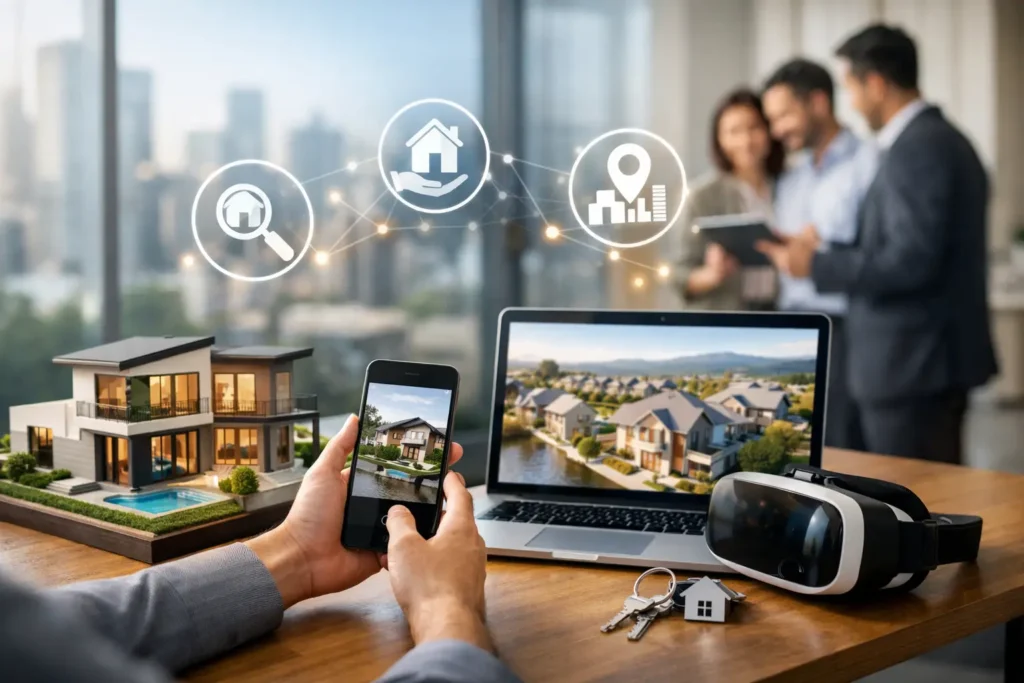
If your listing presentation still sounds the same as it did two years ago, that gap will show fast. The agents who win in real estate marketing trends 2026 will not just promise exposure. They will prove how their marketing creates urgency, filters weak buyers, and helps sellers see a direct path to stronger offers.
For South Florida agents, that shift matters even more. Miami-Dade, Broward, and Palm Beach are crowded, visual, and fast-moving. Buyers scroll first, compare instantly, and decide within seconds whether a property feels worth their attention. That means marketing is no longer the support piece after a listing is signed. It is the product sellers are buying when they choose an agent.
Real estate marketing trends 2026 start with sharper visuals
Professional photography is no longer the differentiator by itself. It is the minimum standard. In 2026, the edge comes from how well visual assets work together to tell a complete story across MLS, social, email, paid campaigns, and listing presentations.
That means cleaner photo sequencing, stronger edits that still feel truthful, and visuals planned around the likely buyer profile. A downtown condo marketed to a relocating professional should not be shot and packaged the same way as a waterfront family home or a luxury property aimed at international buyers.
The trade-off is simple. More visual production takes more planning, and in some cases more budget. But weaker visuals cost more in the long run through lower click-through rates, less showing activity, and more time on market.
Video becomes the first showing
Short-form property video is moving from nice extra to core listing asset. Not because every buyer wants cinematic storytelling, but because video answers questions photos cannot. It shows flow, scale, lighting changes, and how spaces connect.
In practical terms, agents are using video in three ways. First, to stop the scroll on social. Second, to pre-qualify buyers before they book a showing. Third, to strengthen listing presentations by showing sellers exactly how their home will be marketed.
The strongest agents in 2026 will not rely on one generic walkthrough. They will use different cuts for different jobs. A vertical teaser for Instagram and TikTok. A polished walkthrough for the listing page. A neighborhood or lifestyle edit when the location itself is part of the value.
This is where many agents still miss the mark. They think video is about looking modern. Sellers care more about whether it helps the home feel desirable and easier to understand.
Short-form content is now part of the listing package
Short-form video works because it matches how buyers actually discover homes. They do not begin with a full research session. They begin with fragmented attention. One clip, one room, one pool shot, one skyline view. If that first impression lands, they keep going.
For agents, this creates a competitive advantage beyond a single listing. Consistent short-form content builds local visibility, keeps your name active in the market, and gives future sellers a clear example of your marketing process before they ever call.
3D tours and virtual walkthroughs keep gaining ground
The next wave of real estate marketing trends 2026 is about reducing friction. Buyers want better information before they invest time. Sellers want fewer unnecessary showings. Agents want stronger interest from people who already understand the property.
That is why 3D tours and virtual walkthroughs continue to grow. They help buyers understand layout, room relationships, and overall flow in a way static images cannot. For out-of-area, relocation, and international buyers, that value is even higher.
There is still some nuance here. Not every property needs the same level of immersive media. A lower-price-point listing with expected fast local traffic may benefit more from strong photos and video than from a full 3D tour. But for luxury listings, unusual floor plans, large homes, new construction, and properties with destination appeal, immersive tools can save time and improve lead quality.
AI changes speed, targeting, and follow-up
AI will shape 2026 less through flashy gimmicks and more through operational advantage. Agents and brokers who use AI well will create more content faster, personalize outreach more effectively, and respond to leads with less delay.
That does not mean buyers want AI-generated everything. Over-automated marketing still feels generic when it lacks market knowledge or human judgment. The value is in using AI to support execution, not replace strategy.
In practice, that looks like faster ad copy testing, smarter email segmentation, listing description variations for different platforms, automated lead response frameworks, and quicker reporting on what content is driving attention. The agents who benefit most will be the ones who combine AI speed with strong visual assets and local expertise.
Generic AI content will get ignored
As more agents use the same writing tools, bland marketing language will become easier to spot. Buyers and sellers can tell when a description says a lot without saying anything. The same goes for social captions filled with clichés and recycled phrases.
In 2026, the better approach is specific, local, and buyer-aware. Mention the covered terrace that actually changes how the home lives. Call out the split floor plan that matters to a multigenerational buyer. Explain why a certain neighborhood pocket carries premium demand. AI can help draft faster, but the final message still needs a professional who understands the market.
Neighborhood branding matters more than property branding
A listing does not compete in isolation. It competes against every nearby option and against the buyer’s assumptions about the area. That is why local market storytelling is becoming a bigger part of the marketing mix.
For South Florida agents, this is especially relevant. Buyers are not only comparing square footage and finishes. They are comparing commute patterns, walkability, school access, waterfront lifestyle, privacy, rental potential, and seasonal use. Strong marketing in 2026 will connect the property to the life it supports.
That does not mean creating inflated lifestyle claims. It means packaging a listing with enough context to help buyers understand why the location justifies the price. When done well, neighborhood branding strengthens perceived value before a showing happens.
Sellers will expect proof, not promises
One of the most important real estate marketing trends 2026 is rising seller sophistication. More owners are paying attention to how listings are promoted. They have seen polished campaigns online. They know drone footage exists. They know some agents are using 3D tours, virtual staging, and targeted social distribution. That changes the standard.
Winning listings will depend more on showing a real process. Sellers want to know what gets done, how fast it gets done, where the content will appear, and why each asset matters. They also want confidence that the marketing will make the property look premium without misrepresenting it.
This is where a complete visual stack becomes a practical sales tool. When an agent can present photography, video, aerials, floor plan visibility, virtual enhancements, and immersive tours as part of a clear launch strategy, the conversation shifts. The pitch is no longer “I work hard.” It becomes “Here is exactly how I position your home to attract serious buyers.”
Paid social gets more selective
Running ads will not be enough. Better targeting, stronger creative, and faster iteration will matter more than budget alone. Platforms are crowded, and weak listing creative disappears instantly.
In 2026, paid social performs best when it is built around assets designed for the platform from the start. Vertical video, concise copy, a sharp opening visual, and a clear audience strategy tend to outperform repurposed MLS content. Luxury, relocation, and niche buyer segments often benefit the most from this approach.
There is an important caveat. Paid reach can amplify strong content, but it rarely fixes weak positioning. If the photos are average, the video drags, or the property story is unclear, more spend just exposes the problem to a larger audience.
Speed becomes part of the marketing itself
Fast turnaround is no longer just an operational benefit. It is part of the value proposition. In a market where attention moves quickly, delays between signing, shooting, and launching can cost momentum.
That is one reason serious agents are leaning on dependable media partners that can produce polished assets on schedule. The faster a listing gets to market with complete, high-quality visuals, the faster it can start working as a 24/7 open house.
For teams trying to scale, this matters even more. A repeatable visual production process protects brand consistency and reduces the scramble that often leads to mediocre launches.
The agents who win will market the experience, not just the address
By 2026, the strongest real estate marketers will be the ones who understand a simple shift. Buyers are not reacting to square footage alone. Sellers are not hiring agents for exposure alone. Both are responding to clarity, confidence, and presentation that makes the decision feel easier.
That is why the next year belongs to agents who pair sharp visuals with smart distribution, local insight, and a process sellers can believe in. If your marketing helps people see the space, understand the lifestyle, and act faster with more confidence, you are not following trends. You are building the standard your market will compare everyone else against.