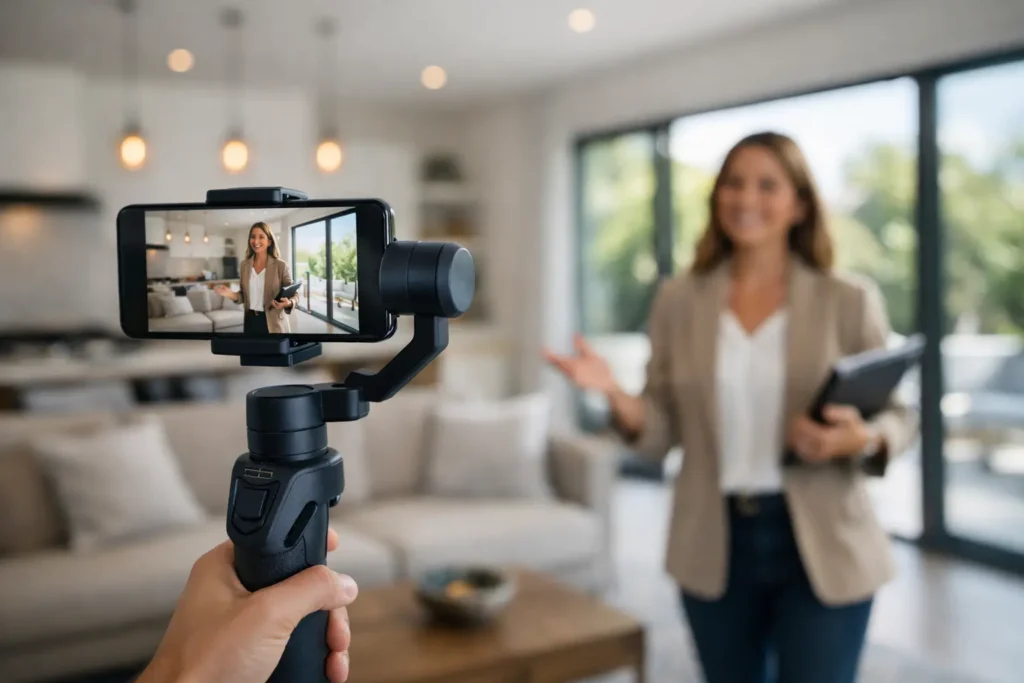
A buyer can scroll past twenty still photos in under a minute. A strong real estate agent video walkthrough changes that behavior. It slows the scroll, puts the buyer inside the property, and answers the question photos often leave open: what would it actually feel like to live here?
For South Florida agents, that distinction matters. Buyers are comparing waterfront condos, renovated family homes, investment properties, and luxury estates from across town, across the country, and sometimes across the world. Your listing needs to communicate more than square footage. It needs to show flow, light, finishes, outdoor living, and the lifestyle that justifies the price.
What a Real Estate Agent Video Walkthrough Should Do
A walkthrough is not simply a camera moving from room to room. It is a guided visual sales presentation built around the strongest reasons to see a home in person. Done well, it gives a buyer enough context to imagine daily life there while giving them a reason to schedule a showing.
That means the opening matters. Start with the property’s best visual hook: a dramatic exterior, water view, open living space, chef’s kitchen, resort-style pool, or skyline terrace. In a crowded MLS feed or social media reel, the first few seconds determine whether the viewer stays.
From there, the video should follow a logical path. Buyers should understand how the entry connects to the main living areas, how the kitchen relates to entertaining space, where bedrooms sit in relation to each other, and how the interior leads outdoors. The goal is not to show every closet or hold a shot on every wall. The goal is to remove uncertainty about the home’s layout and highlight the moments that create emotional pull.
A good walkthrough also manages expectations. It should present the property honestly, with polished framing and professional lighting rather than misleading angles. Overpromising with distorted wide shots can produce disappointing showings. A clear, premium presentation brings better-qualified buyers through the door.
Why Video Helps Listings Move With More Intent
The value of video is not limited to views. Its practical job is to help buyers pre-qualify the property emotionally and functionally before they request a tour. When they arrive with a clearer picture of the home, conversations are more productive and unnecessary showings are reduced.
For agents, that creates several advantages. A professional walkthrough gives you an asset that works well beyond the listing launch. It can be used on property websites, social media, email campaigns, broker outreach, paid advertising, and presentations for prospective sellers. One shoot can support the listing from its first day on market through open houses, price adjustments, and retargeting campaigns.
It also strengthens the listing presentation. Sellers want evidence that you have a marketing plan beyond uploading photos and waiting. Showing examples of high-quality video helps position you as an agent prepared to market their home at a higher level. In competitive Miami-Dade, Broward, and Palm Beach markets, that can be a meaningful differentiator when several agents are competing for the same listing.
There is a trade-off, of course. Video cannot compensate for poor pricing, weak property preparation, or an unclear selling strategy. It is a force multiplier, not a substitute for fundamentals. But when the home is properly staged, priced, and photographed, video gives the listing the motion and narrative static images cannot provide on their own.
Build the Story Around the Buyer, Not the Floor Plan
The most effective real estate video walkthroughs are planned before the camera arrives. A videographer should know what makes the listing distinctive, who is most likely to buy it, and which spaces support the story.
A downtown condo may be sold through convenience, views, building amenities, and an easy lock-and-leave lifestyle. A family home in Coral Springs or Weston may need to emphasize bedroom separation, a functional kitchen, backyard space, schools, and room to grow. A waterfront property may lead with the dock, outdoor kitchen, sunset exposure, and direct water access. The same camera approach should not be used for every listing.
Before production, identify the property’s three to five strongest selling points. This keeps the final edit focused. If the home has a beautiful primary suite, a newly renovated kitchen, abundant natural light, and an exceptional outdoor area, those features deserve the most screen time. A video becomes more persuasive when it has priorities.
The pace should match the property. Luxury homes often benefit from slower, more cinematic movement that gives finishes and scale room to register. A well-priced starter home may perform better with a tighter, more energetic edit designed for social media attention spans. Neither approach is universally better. The right choice depends on price point, audience, platform, and the agent’s wider campaign.
Production Details Buyers Notice
Buyers may not describe the technical reasons a video looks premium, but they feel the difference. Stable movement, balanced exposure, clean composition, and intentional editing signal that the listing has been professionally represented.
Natural light is especially important in South Florida. Bright windows, white interiors, and reflective water views can be difficult to capture without blowing out highlights or leaving interior spaces too dark. A professional production team balances those conditions so a room feels bright and true to life.
Audio and music deserve the same consideration. Many property walkthroughs use music only, which can work well when the visuals are strong and the edit is concise. A voiceover can be valuable for larger homes, distinctive architecture, or listings where neighborhood context adds real selling power. It should sound informative, not like a hard sell. Buyers want help understanding the property, not a scripted commercial that competes with what they are seeing.
Drone footage can add context when it reveals something meaningful: proximity to the beach, a golf course setting, waterfront position, lot size, roof condition, or neighborhood character. It should not be added simply because drone footage is available. Aerial video that does not support the property’s story can make an edit feel longer without making it stronger.
Match the Walkthrough to Where Buyers Will Watch It
A full property walkthrough and a social media teaser serve different jobs. The full version gives serious prospects a fuller sense of the home. Short-form vertical clips are designed to earn attention quickly and send viewers toward the complete listing experience.
For that reason, agents should plan for multiple edits from one production. A polished main walkthrough can sit on the property website and be shared with buyer inquiries. Short clips can spotlight the kitchen, primary suite, pool area, views, or a compelling before-and-after renovation detail. Vertical versions are better suited to Instagram Reels, Stories, and other mobile-first placements.
Do not assume the same file works everywhere. Horizontal video remains useful for websites, YouTube-style viewing, and presentations, while vertical framing is usually stronger for social feeds. Capturing and editing with both formats in mind protects the investment and gives your team more options during the campaign.
Captions are also worth considering. Many viewers watch social content with sound off, especially when browsing at work or in public. Clear on-screen text can reinforce key facts such as location, bed and bath count, waterfront access, or a standout feature. Keep it restrained. The home should remain the focus.
Prepare the Home for the Camera
Video reveals movement and perspective, which means it can also reveal clutter, poorly placed furniture, mismatched lighting, and unfinished details that still photos may hide. Preparation is not optional.
Before filming, turn on interior and exterior lights, open blinds when the view and sunlight support the shot, clear countertops, hide personal items, and remove small distractions from patios and pool areas. Ceiling fans should usually be turned off unless their movement supports the scene. Vehicles, trash bins, hoses, pet supplies, and visible cords can pull attention away from a high-value listing.
Staging does not have to mean furnishing every room from scratch. Sometimes the right move is editing what is already there. A dining table styled for a casual gathering, crisp bedding in the primary bedroom, and a clean outdoor seating area can help buyers picture the lifestyle without making the home feel artificial.
Coordinate timing carefully. Golden-hour exterior footage may elevate a listing with water, pool, or strong architectural lighting, but it requires scheduling around weather and access. In South Florida’s rainy season, flexibility matters. A reliable media partner plans for conditions rather than treating weather as an afterthought.
Use Video to Start Better Conversations
The best walkthrough does not replace your follow-up. It gives you a stronger reason to follow up with engaged prospects. When a buyer watches most of the video, saves a clip, or asks about a feature shown in the edit, you have a more relevant starting point than a generic check-in.
Share the video with your sphere, local agents, relocation contacts, and buyers searching in the area. Use the footage to create a campaign, not a single post. A listing that stays visually active after launch has more chances to reach the right person at the right moment.
Treat every walkthrough as proof of how you market. A polished video does more than show a property. It shows sellers that you know how to create attention, guide buyer interest, and give a listing the professional presence it deserves.