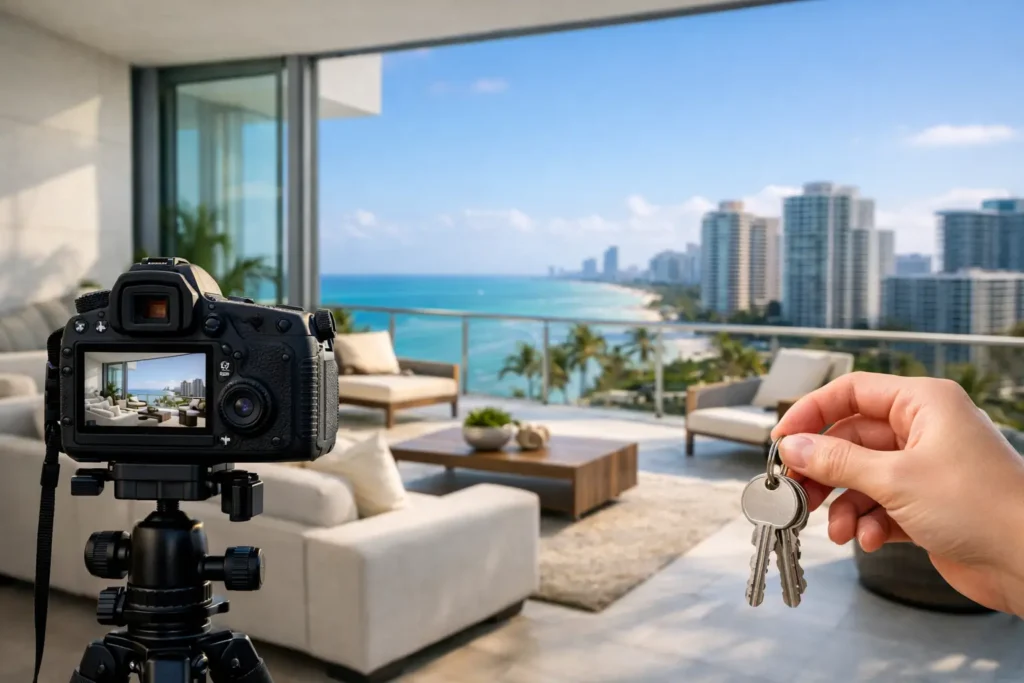
A Miami condo can have a million-dollar view, a newly renovated kitchen, and a prime address, then lose buyer attention because the photography feels dark, cramped, or generic. Listing photos for Miami condos need to do more than document rooms. They need to communicate a buyer’s next chapter: morning light over Biscayne Bay, an easy walk to the pool, a polished lobby, and a layout that works in real life.
In a market where buyers often compare dozens of listings from another city, visual quality determines which properties earn a showing. Strong media helps agents establish perceived value before the first call, filter out poorly matched prospects, and create a listing presence that supports the asking price.
Why Miami Condo Photography Has Different Rules
Condo marketing is not the same as marketing a single-family home. Buyers are evaluating the residence, but they are also assessing the building, the view corridor, the amenities, the neighborhood, and the overall lifestyle. A beautiful living room matters. So does the angle of the balcony, the quality of the natural light, and whether the photos make it clear that the unit is two blocks from the beach rather than overlooking a parking lot.
Miami also presents technical challenges that average real estate photography can mishandle. Intense sunlight can blow out windows. Glass, mirrors, and polished stone create reflections. Compact floor plans can look distorted when a photographer relies too heavily on ultra-wide lenses. High-rise interiors may have limited light on one side of the unit while the water-facing rooms are flooded with brightness.
The right approach balances those conditions. Windows should retain the view without making the interior look artificially dark. Vertical lines should stay straight. Rooms should feel open, but not stretched beyond recognition. The result is polished and aspirational while remaining credible to buyers who will soon walk through the door.
What Buyers Need to See Before They Book a Showing
Every image should answer a question a serious buyer is already asking. Is the home bright? How does the living area flow into the kitchen? Is there usable outdoor space? What does the view actually look like? Does the building offer a lifestyle that fits the price point?
The hero image carries the most weight. For a bayfront or oceanfront unit, that may be a wide but natural view from the living room or balcony. For a design-forward condo in Brickell, it may be the cleanest composition of the main living space, with the kitchen, dining area, and skyline working together. For a boutique building in Coral Gables, architectural character or refined finishes may deserve the lead position.
After that first image earns attention, the rest of the photo sequence should tell a clear visual story. Start with the strongest common areas, move through the kitchen and primary suite, then show the bathroom, secondary spaces, balcony, and meaningful building amenities. The order matters because it helps remote buyers understand the experience of moving through the property rather than scrolling through disconnected rooms.
The View Is an Asset, Not Background Scenery
A waterfront, skyline, golf course, or sunset view can justify a major part of a condo’s perceived value. It should be photographed intentionally, not left as an overexposed rectangle behind furniture.
Timing is critical. A west-facing balcony may photograph best later in the day, while an east-facing residence often benefits from a morning shoot. Some units need twilight coverage to show city lights and create a stronger emotional finish. It depends on the exposure, floor height, season, and what the listing needs to emphasize.
A good photographer also knows when not to oversell the view. If the balcony angle includes a neighboring tower, construction site, or partial obstruction, accurate composition matters. Buyers will notice the difference at the showing. Strong photos frame the best aspects of the property without creating a false expectation.
Prepare the Condo for the Camera, Not Just the Open House
Photography exposes details buyers may overlook in person. A single cluttered counter, visible cord, wrinkled bedding, or personal collection can pull attention away from premium finishes. Preparation is not about making a condo look empty. It is about making the value easy to see.
Before the shoot, clear kitchen and bathroom counters, remove personal photos and pet items, hide trash bins, and simplify furniture surfaces. Open blinds where the view is an advantage, but keep window treatments controlled when direct sun creates harsh patches of light. Replace burned-out bulbs, turn on lamps with matching color temperatures, and make sure every ceiling fan is off.
For occupied condos, the goal is lived-in but edited. A few intentional accessories can make a space feel warm. Too many objects make it feel smaller. For vacant properties, thoughtful virtual staging can help buyers understand scale and use, especially in an empty living room, den, or second bedroom. It works best when the staging style fits the unit’s price range and the building’s buyer profile.
The Visual Assets That Add Value Beyond Still Photos
Professional stills are the foundation, but some Miami condo listings benefit from a broader visual package. The right mix depends on the property, the building, and how buyers are likely to shop.
A Matterport or CloudPano tour is particularly useful for out-of-state buyers, busy professionals, and units with a layout that needs explanation. It gives prospects time to explore at their own pace and can reduce showings from buyers who would quickly realize the floor plan is not a fit. For a well-designed residence, that tour can function like a 24/7 open house.
Drone photography and video can be valuable when they reveal something that ground-level images cannot: proximity to the water, a rooftop amenity deck, marina access, walkability, or a distinctive position within the neighborhood. Drone capture is not automatically necessary for every unit. In a dense downtown corridor, exterior footage may add little unless it clearly shows the building’s context and nearby lifestyle assets.
Video creates another layer of engagement, especially on social media and agent marketing channels. The strongest condo videos are paced with purpose. They establish the building or neighborhood, move into the residence, emphasize the best rooms and view, then end on a memorable lifestyle moment. A shaky walk-through with no visual plan will not create the same result.
Common Mistakes That Lower Perceived Value
Poor listing photography does not always look obviously bad. Sometimes it simply fails to create confidence. Buyers may not articulate why they skipped a listing, but dark images, inconsistent editing, awkward angles, and weak composition all signal that the property may not be worth prioritizing.
Four mistakes show up repeatedly in condo listings:
- Overusing wide-angle lenses until cabinets, balconies, and furniture look warped.
- Letting windows wash out, which removes the very view buyers are paying for.
- Photographing only the unit while ignoring the lobby, pool, gym, rooftop, or other meaningful amenities.
- Publishing too few images, leaving buyers unsure about the layout, finishes, and overall condition.
Another mistake is treating every condo as interchangeable. A waterfront luxury residence, a turnkey Brickell investment unit, and a family-friendly condo near Coconut Grove require different visual emphasis. The photography should reflect the likely buyer, not just the room count.
Build a Shot Plan Around the Listing Strategy
Before scheduling the shoot, identify the property’s strongest sales argument. Is this a view-driven listing? A renovation story? A rare corner unit? A building with exceptional amenities? A lock-and-leave second home for a seasonal buyer? That answer should shape the shot list, timing, and production choices.
For example, a smaller one-bedroom condo may need images that clarify flow and storage rather than trying to make every room appear oversized. A large penthouse may need more editorial compositions that showcase materials, architectural lines, and outdoor entertaining areas. A unit with a dramatic terrace deserves enough coverage to show how the space functions, not just one distant exterior shot.
This is where a dependable media partner becomes a competitive advantage. Digital L Media approaches listing production as marketing, not a checklist of rooms. The goal is to give buyers a clear reason to stop scrolling, understand the opportunity, and take the next step.
The best condo photography does not ask buyers to imagine why a property is special. It shows them, frame by frame, why this residence belongs at the top of their showing list.