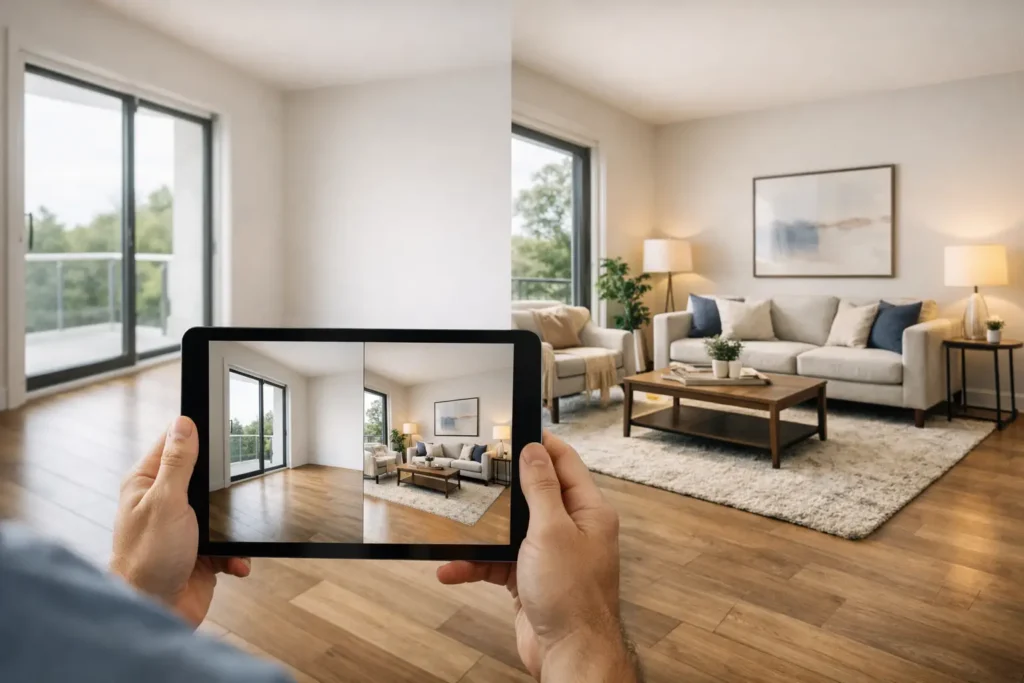
An empty living room rarely wins the scroll. In South Florida, where buyers compare dozens of listings in minutes, a vacant space can feel smaller, colder, and easier to skip. That is exactly why agents ask how to use virtual staging effectively – not as a gimmick, but as a way to help buyers picture scale, function, and lifestyle before they ever book a showing.
Virtual staging works best when it solves a real marketing problem. Maybe the condo is vacant after a tenant move-out. Maybe the seller already relocated. Maybe the property has great bones but the photos do not communicate how the rooms actually live. In those cases, virtual staging can turn confusion into clarity and give your listing stronger first-impression power across MLS, social media, and property websites.
How to Use Virtual Staging Effectively From the Start
The biggest mistake agents make is treating virtual staging like decoration. The goal is not to fill every room with trendy furniture. The goal is to make the buyer understand the space faster.
Start by identifying which rooms truly need staging. Usually that means the living room, primary bedroom, dining area, and occasionally a home office or den. Not every room needs a digitally furnished version. If you stage everything, the result can feel overproduced and distract from the property itself. If you stage only the rooms that help buyers read layout and function, the marketing feels more credible.
The next step is choosing the right style for the property and price point. A sleek Brickell condo, a coastal home in Fort Lauderdale, and a family house in western Palm Beach County should not all be staged the same way. The furniture, color palette, and decor need to match both the architecture and the likely buyer. Good virtual staging supports the story of the home. Bad virtual staging makes buyers feel like the images belong to a different property.
That is where local market awareness matters. In South Florida, buyers are especially responsive to clean, bright, lifestyle-driven visuals. But there is a line between aspirational and unrealistic. If the room dimensions only support a compact sectional, do not place oversized luxury furniture that would never fit in real life. Buyers notice when scale is off, and once trust drops, the rest of the listing works harder.
Use Virtual Staging to Clarify, Not Hide
The most effective staged images still respect the real condition of the home. If the flooring needs work, if the walls need paint, or if the kitchen is dated, virtual staging should not try to cover those issues with visual tricks. It should present the room cleanly and attractively while staying grounded in reality.
This matters for both ethics and performance. MLS rules, brokerage standards, and consumer expectations all lean toward transparency. You want buyers excited when they walk in, not disappointed that the room looked bigger, brighter, or newer online than it does in person.
That means your original photography still has to be strong. Virtual staging is not a fix for poor lighting, bad angles, cluttered composition, or low-resolution images. It builds on quality photography. If the base photo is flat, the staged version will still feel flat. If the room is captured with clean lines, accurate exposure, and natural perspective, the staging has a much better chance of looking polished and believable.
Choose Rooms With the Highest Marketing Return
Not every image needs digital furniture to do its job. Some rooms sell themselves better empty, especially if they have standout finishes, dramatic views, or obvious purpose. A luxury kitchen, a spa-style bath, or a waterfront balcony usually does not need staging to communicate value.
Focus your staging budget where buyers hesitate. Large open-concept living areas often photograph as undefined boxes unless you show where the seating, dining, and traffic flow belong. Spare bedrooms can also benefit when they are turned into a realistic office or guest room. This is especially useful now that buyers continue to care about work-from-home flexibility.
There is also a strategic advantage in staging awkward spaces. A small nook, bonus room, or oddly shaped corner can create uncertainty online. A thoughtfully staged image answers the buyer’s question before they ask it. That reduces friction and helps the listing feel more complete.
How to Use Virtual Staging Effectively in Marketing
Once the images are ready, placement matters. The staged photos should support the listing, not overwhelm it. In most cases, your lead image should still be the strongest real photo of the exterior, view, or main living space, depending on the property. Virtual staging becomes more persuasive when it appears as part of a well-rounded visual package rather than the whole strategy.
For MLS, follow disclosure rules carefully and label virtually staged images where required. This is not just a compliance issue. It is a trust issue. Serious buyers and buyer’s agents appreciate clarity. If the property is vacant, saying so while also showing staged versions helps people understand both the opportunity and the current condition.
On social media, virtual staging can do even more work. Before-and-after slides, carousel posts, and short reels showing an empty room transformed into a functional living space tend to stop the scroll because they make the value obvious in seconds. That kind of content also helps sellers understand your marketing approach, which can support listing presentations and future business.
If you use staged photos on property websites, brochures, or digital ads, keep the visual story consistent. Mixing radically different styles from room to room makes the home feel disjointed. Cohesion matters. Buyers may not say it outright, but they respond to listings that feel professionally planned.
Match the Design to the Buyer Profile
Virtual staging should reflect who is most likely to purchase the property. That sounds simple, but it is often where listings lose momentum.
A downtown condo aimed at young professionals might benefit from streamlined furniture, light contrast, and a flexible dining-work setup. A suburban family home may need warmer textures, practical seating arrangements, and a secondary bedroom shown as a kid’s room or office. A luxury listing needs restraint more than excess. Expensive-looking does not always mean effective. Clean, editorial-style staging often performs better than rooms loaded with decor.
It also helps to think about international and relocating buyers, who are common across Miami-Dade, Broward, and Palm Beach. These buyers may rely heavily on online visuals before visiting in person. The clearer the room function and flow, the easier it is for them to move from curiosity to inquiry.
What Virtual Staging Should Never Do
There are a few shortcuts that cost more than they save. One is over-editing. Windows that glow unrealistically, furniture that floats, shadows that do not match, and accessories placed with no regard for perspective all make the listing feel less premium. If the image looks fake, buyers assume something else about the property may be misleading too.
Another mistake is using virtual staging to create renovations that do not exist unless they are clearly labeled as renovation concepts. Showing a fully remodeled room when the room is not remodeled is a different category from staging a vacant space. That can create avoidable friction once buyers arrive.
The last mistake is relying on staging alone. Virtual staging is one tool in a stronger listing system. It performs better when paired with sharp photography, video, floor plans, and in many cases a 3D tour. Buyers do not just want pretty images. They want confidence in what they are seeing.
The Real Payoff
Used well, virtual staging does more than make a room look finished. It helps buyers understand value faster. It can reduce the “I can’t tell what fits here” objection. It can make a vacant listing feel warmer online. And it can give agents a stronger presentation when they are competing for sellers who expect more than basic photos.
For a fast-moving market, that matters. Attention is expensive, and confusion is costly. If you treat virtual staging as a strategic sales tool instead of a visual extra, it becomes one more way to show the possibilities, not just the space.
The best test is simple: if the staged image helps the right buyer picture living there without feeling misled, you are using it the right way.