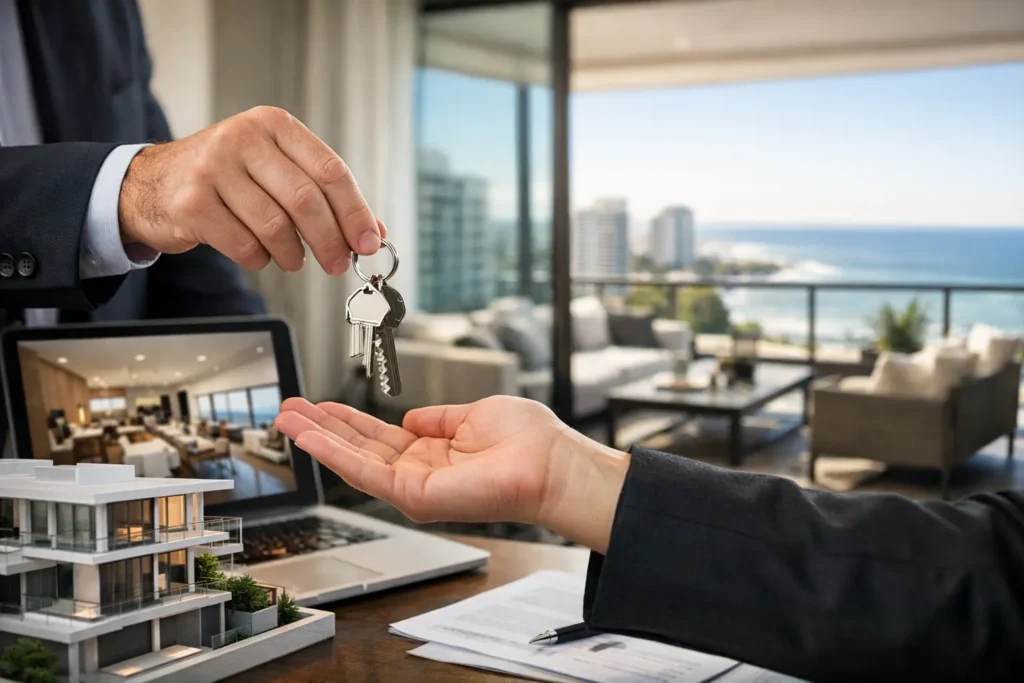
A luxury condo can have panoramic water views, a designer kitchen, and a respected address, yet still disappear in a crowded South Florida feed if the marketing feels ordinary. Buyers at this price point are not only evaluating square footage. They are evaluating access, privacy, service, design, and the version of their life the property makes possible. Knowing how to market luxury condo listings means presenting all of it with precision from the first image to the final showing.
Start With the Lifestyle, Not the Feature Sheet
A standard listing description can tell buyers there are three bedrooms, 3.5 baths, and 2,400 square feet. That information matters, but it does not create desire. Luxury condo marketing starts by defining the experience of ownership.
Is the buyer waking up over Biscayne Bay, walking to private beach access, entertaining after sunset on a deep terrace, or arriving at a full-service building where every detail is handled? The answer shapes the visual direction, copy, audience, and channels you use.
This is especially important in Miami-Dade, Broward, and Palm Beach, where buyers often compare multiple buildings with similar finishes and price points. A residence is rarely competing on appliances alone. It is competing against a lifestyle promise, a building reputation, and an emotional first impression.
Before booking photography, identify the condo’s strongest story. It may be the view, the architecture, a rare floor plan, a private elevator entry, upgraded interiors, or access to a sought-after club, marina, or beach. Choose one primary story and support it with proof. Trying to sell every amenity at once usually makes a listing feel unfocused.
Build a Visual Package That Matches the Price Point
Luxury buyers expect to see the home clearly before they commit time to a showing. Low-light phone photos, rushed video, or a partial view of the building can quietly signal that the property is not being represented at the level it deserves.
Professional listing media should make the buyer feel oriented and interested. Still photography establishes polish and scale. A cinematic video adds mood and movement. A 3D tour lets out-of-market and international buyers explore the layout on their schedule. Drone footage places the residence within its neighborhood, shoreline, golf course, or skyline context.
For most luxury condo listings, the core visual stack should include:
- Editorial-quality interior and exterior photography, including twilight images when the view or lighting warrants it
- A property video that connects the residence, building, and surrounding lifestyle
- A Matterport or interactive 3D tour for qualified buyers who need confidence before traveling or scheduling
- Drone photography or video when it meaningfully shows location, proximity, views, or building scale
The goal is not to add every tool by default. A drone flight may add limited value for a lower-floor unit with no meaningful exterior outlook. Virtual staging can be useful in an empty unit, but it should be realistic and clearly used to help buyers understand potential. The right mix depends on what makes the property easier to understand and harder to forget.
Prepare the Condo for the Camera and the Buyer
Luxury marketing begins before the shoot. A beautifully renovated unit can still photograph poorly if counters are crowded, balcony furniture blocks the view, or window coverings prevent natural light from doing its job.
Stage for the camera first, then for showings. Remove personal photos, excess decor, pet items, cleaning products, and anything that competes with the architecture. Keep surfaces intentional. In a condo, this matters because rooms may be designed around carefully framed views, custom millwork, or open sightlines that clutter can quickly diminish.
Do not overlook the building. Confirm access to the lobby, porte cochere, pool deck, fitness center, resident lounge, rooftop, beach club, or marina before media day. Buyers are purchasing the full ownership experience. If the amenities are a major reason to choose the building, they deserve more than a single MLS sentence.
Timing can also change the final product. A west-facing terrace may look best late in the day. Ocean views often benefit from early morning clarity. For skyline residences, twilight can create the most dramatic contrast between interiors and city lights. A professional media partner such as Digitall Media can help plan the shoot around the property’s strongest visual moments rather than treating every listing the same.
How to Market Luxury Condo Listings Across Every Channel
The MLS is necessary, but it should not be the entire campaign. Luxury condo buyers often begin their search on major real estate portals, social platforms, search engines, agent networks, and building-specific conversations. Your marketing should give each channel a version of the story that fits how buyers use it.
On the MLS and property websites, lead with your strongest hero image and a headline that delivers a clear reason to care. Instead of opening with generic language such as “beautiful condo,” describe the differentiator: a high-floor corner residence, direct bay views, a fully renovated unit, or a private elevator entry in a full-service building.
Your listing description should balance aspiration with useful details. Cover the floor plan, views, finishes, balcony, parking, storage, and building services. Then explain proximity to the places buyers care about, whether that means Brickell dining, a walkable Las Olas lifestyle, Bal Harbour shopping, or Palm Beach waterfront access. Avoid inflated claims. Sophisticated buyers can spot vague luxury language immediately.
On social media, use short-form video to create curiosity, not to cram every detail into 30 seconds. Start with the view, arrival sequence, or one unmistakable design feature. Follow with a clear prompt to request a private showing, floor plan, or complete property package. Vertical clips work well for reach, while a longer property film can support serious buyers, referral partners, and your email database.
Email remains valuable when it is targeted. Segment your audience by building, neighborhood, price range, and buyer profile. A waterfront condo should not receive the same message as a pied-a-terre near downtown. Send the full asset package to agents with active buyers, past clients who may be considering an upgrade, and contacts likely to share the listing with a qualified decision-maker.
Sell the Building as Carefully as the Residence
A luxury condo’s value is tied to factors outside the unit: financial health, reserve requirements, rental rules, pet policies, concierge standards, renovation plans, assessments, and the quality of management. These are not glamorous details, but they can determine whether an interested buyer moves forward.
Make the buying process easier by preparing a concise building profile. Include key amenities, HOA information, parking, storage, pet and leasing policies, security features, and any relevant membership or service details. If there is a special assessment, disclose it accurately and be ready to explain the context. Hiding friction does not protect a deal. Clear information protects your credibility and filters out poor-fit inquiries.
For certain properties, the building itself is the headline. A residence in a branded tower, a boutique oceanfront building, or a building with a private club experience should show those advantages early. For others, the unit is the star because it has uncommon renovations, a superior line, or a more compelling view. Let the actual value driver determine where the campaign puts its emphasis.
Create Access Without Creating Chaos
Luxury buyers value privacy, and sellers expect it. That does not mean limiting exposure. It means qualifying interest before opening the door.
Use the 3D tour, video, floor plan, and detailed listing materials to answer early questions. Buyers who request a showing after viewing the full package are more likely to be serious about the property. For high-profile residences, consider private appointment windows, proof-of-funds requirements where appropriate, and agent-to-agent communication that sets expectations before arrival.
The showing itself should feel controlled and intentional. Make sure the unit is presented at its best, lights are set, shades are positioned for the view, and building access is arranged in advance. A delayed elevator, missing amenity access, or an unprepared unit can undermine the premium experience you worked to create online.
Measure Interest and Adjust Fast
A luxury listing campaign should not run on assumptions. Track which images generate saves, which videos hold attention, where showing requests originate, and what objections repeat after tours. If buyers love the residence but hesitate on building fees, your messaging may need stronger context around included services and comparable value.
If a listing gets views but no qualified inquiries, revisit the first image, pricing position, or initial description. If agents request more information, create a cleaner property package. If out-of-state buyers engage heavily with the tour, follow up with a live video walkthrough rather than asking them to wait until their next visit.
The best luxury marketing does more than create attention. It gives the right buyer enough confidence to take the next step. Present the residence with the same level of care the buyer expects to receive after they own it, and every asset becomes part of the sales experience.