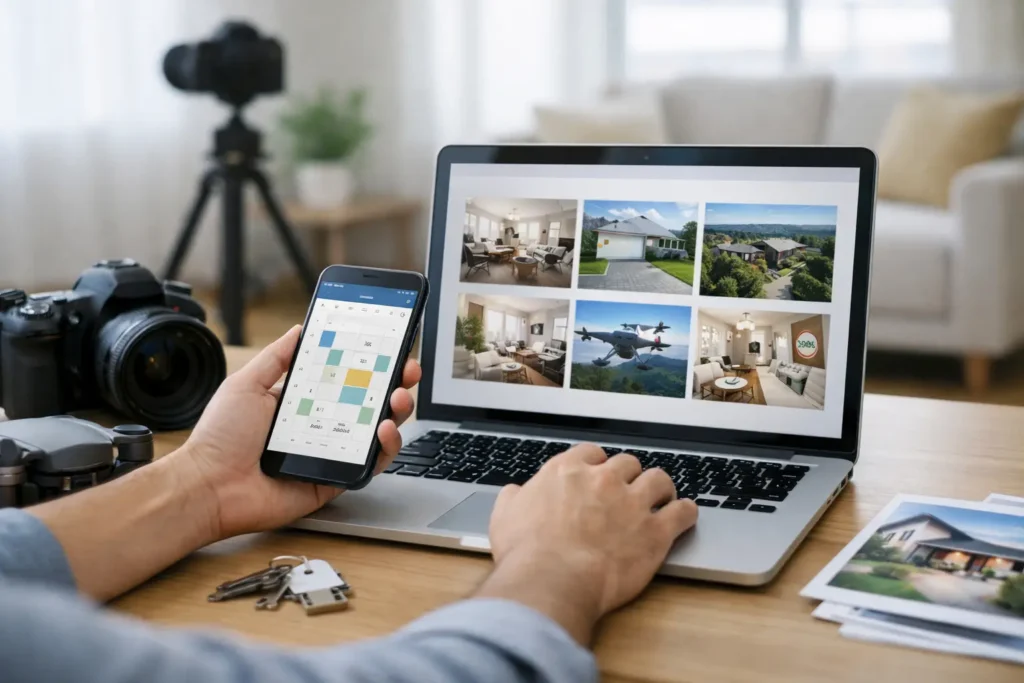
A listing can be ready for the MLS by Friday and still miss the moment if the media is not scheduled until next week. In South Florida, where buyers compare homes, condos, and waterfront properties within minutes, knowing how to book listing media is part of your listing strategy, not an administrative task.
The goal is simple: secure the right visual assets early enough to launch with confidence, while giving the property enough time to look its best. That means booking with a clear scope, a realistic timeline, and a plan for property preparation.
Start With the Listing Launch Date
Before selecting photos, video, drone, or a 3D tour, work backward from the day the listing needs to go live. Your launch date should account for property prep, the media appointment, editing time, MLS input, signage, and any pre-marketing you plan to run.
For a standard listing, booking media several days before launch gives you breathing room. Luxury properties, occupied homes, estates with large outdoor areas, or listings that need virtual staging often require more lead time. If you wait until the seller confirms every small detail, you may end up marketing the property after the strongest initial window has passed.
A smart rule is to schedule the shoot as soon as you have a signed listing agreement and a dependable target date. You can refine the package later if needed, but holding the appointment protects your launch timeline.
Choose Listing Media Based on the Property
Not every home needs every service. The best package depends on the price point, layout, location, buyer profile, and the story that will make the listing competitive.
Professional photography is the baseline for nearly every property. It gives buyers a clean, accurate first impression and gives you polished content for the MLS, brokerage channels, social posts, and email marketing. For a compact condo with a strong renovation, high-quality still photography may be the priority.
Video becomes more valuable when a property has flow, scale, lifestyle appeal, or a location that needs context. A cinematic walkthrough can show how a great room connects to a terrace, how a backyard functions for entertaining, or what it feels like to arrive at a waterfront home. It is especially useful when you need content that performs beyond the MLS.
A 3D tour is a practical choice for homes with complex layouts, larger square footage, or out-of-area buyers. It helps serious prospects understand the floor plan before scheduling a showing. That can reduce unnecessary traffic while making qualified buyers more prepared to act.
Drone capture is not automatic. It earns its place when the aerial view communicates real value: proximity to the beach, water access, golf frontage, a large lot, skyline views, or a community setting that cannot be understood from ground level. For a home surrounded by close neighbors with no visual advantage from above, drone footage may add less than a strong twilight exterior or a better video package.
Virtual staging, decluttering, renovation renders, and virtual twilight images can also be strategic. They are helpful when an occupied property has distracting furniture, a vacant home feels cold, or buyers need help seeing the possibilities. Use them thoughtfully and disclose enhancements where required. The objective is to clarify potential, not create expectations the property cannot meet.
How to Book Listing Media With the Right Details
The fastest way to avoid rescheduling is to provide complete information at the time of booking. A media team needs more than an address and a preferred date. Share the property type, approximate square footage, occupancy status, access instructions, gate codes, and the services you need.
Be specific about features that deserve attention. Mention the dock, rooftop terrace, pool, designer kitchen, guest house, elevator, panoramic view, or recent renovation. These details help shape the shot plan and ensure the finished assets support the listing’s strongest selling points.
You should also identify who will prepare and open the home. For occupied properties, confirm that the seller understands the appointment time and preparation expectations. For vacant properties, make sure utilities are on, lights function, pool areas are accessible, and the property is clean before the photographer arrives.
If the home is tenant-occupied, build in more coordination. A tenant may need adequate notice, and the property may not be styled or available on short notice. In those cases, booking early is even more important.
Schedule for Light, Weather, and Access
South Florida offers beautiful natural light, but it also brings heat, afternoon storms, seasonal rain, wind, and intense sun. Timing can affect both the look of the property and the reliability of the schedule.
For interiors, the best appointment time depends on window direction and the home’s primary living areas. A property with spectacular west-facing water views may benefit from later-day light, while a bright east-facing condo can look best earlier. Exterior and drone capture may need a different window than interior photography, particularly when the goal is to feature a view or avoid harsh shadows.
Twilight photography requires even more planning because it depends on a narrow window of usable light. It can create a premium mood for homes with strong exterior lighting, pools, outdoor kitchens, or dramatic architecture. It is less useful when the exterior has limited lighting or when the home’s main value is entirely indoors.
Weather is a trade-off, not always a reason to cancel. A bright overcast day can be excellent for interiors and produce balanced exterior images. Heavy rain, high winds, or unsafe drone conditions are different. Discuss weather contingencies before the appointment so everyone knows whether the full shoot, a partial shoot, or a rescheduled exterior session makes the most sense.
Prepare the Property Before the Camera Arrives
Media can elevate a well-prepared home. It cannot fully hide clutter, dirty surfaces, unfinished repairs, or rooms packed with personal items. Sellers do not need to make the home look unlivable, but they do need to make it easy for buyers to imagine themselves there.
Ask sellers to focus on visual distractions first. Kitchen counters should be mostly clear, bathroom products removed, beds made tightly, pet items stored, and floor surfaces opened up. Turn on lamps, replace burnt-out bulbs, hide trash bins, and move cars from the driveway when possible.
For exterior areas, mow the lawn, skim the pool, remove hoses, straighten outdoor furniture, and clear pool toys or delivery boxes. In condo buildings, confirm whether balconies, amenities, and common areas are available for capture. A blocked balcony view or closed pool deck can weaken the final story.
Small repairs matter. A missing outlet cover, crooked blind, water-stained ceiling, or loose cabinet handle may not affect a showing, but the camera sees it. If a repair cannot be completed in time, decide whether the room should be photographed, staged differently, or captured after the issue is addressed.
Plan for the Deliverables, Not Just the Shoot
Booking the appointment is only half the job. Decide in advance how you will use the finished media. MLS photos may need a different order than an Instagram reel. A vertical video clip can support social campaigns, while a horizontal property film may work better on a website, YouTube channel, or email campaign.
Ask for the formats and assets that match your plan. If you intend to promote the listing with paid social ads, short-form vertical content may be worth adding. If the home is likely to attract remote buyers, prioritize the 3D tour and floor plan. If you are pitching a luxury listing, a complete visual package can also support your presentation before the home ever hits the market.
This is where a dependable media partner earns its value. The right team does not simply show up with a camera. It helps you match the service level to the listing, capture the features buyers care about, and deliver assets that give you more ways to market the property.
Confirm the Day Before
A quick confirmation prevents expensive surprises. Verify the address, start time, point of contact, access method, service package, parking instructions, and any neighborhood or building rules. Remind the seller that the property should remain photo-ready throughout the appointment, since rooms are often photographed in a sequence that depends on light and access.
If you have a must-have shot, say so before the shoot begins. Maybe it is the sunset view from the primary suite, the marina behind the building, or a community amenity that sells the lifestyle. Clear direction is useful. Micromanaging every frame is not. Trust the visual specialist to capture the property professionally while keeping the listing strategy in view.
The best time to book is before you feel rushed. Set the appointment early, prepare the property with intention, and let every image give buyers one more reason to take the next step.