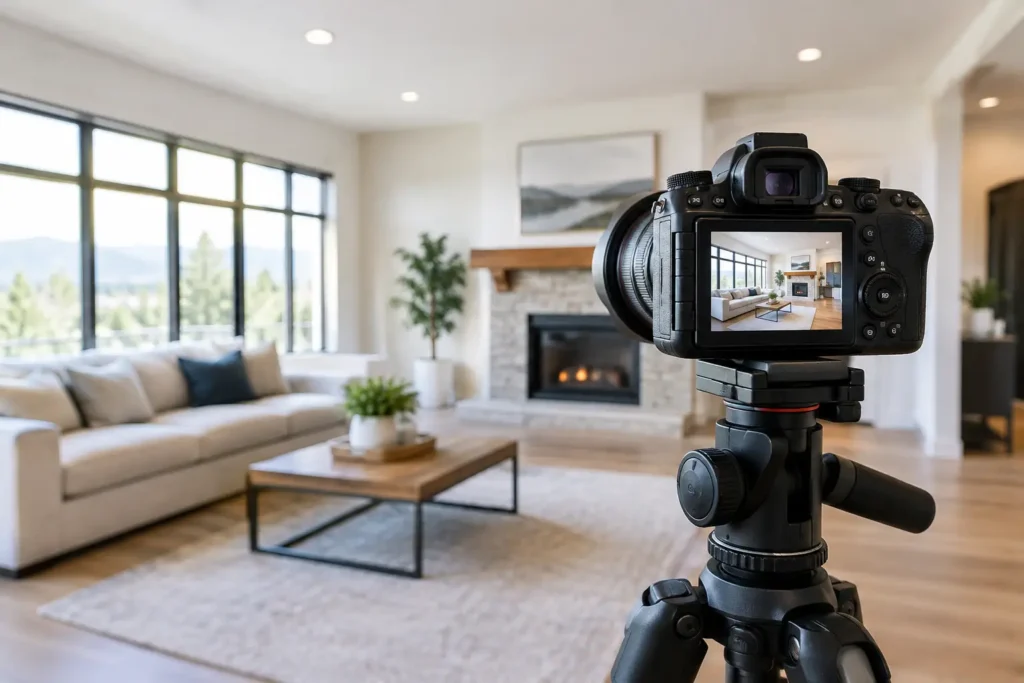
A Miami condo can have floor-to-ceiling glass, water views, and a beautifully finished interior, yet still look dark and flat in a standard photo. The issue is not the property. It is the camera’s limited ability to handle a bright window and a shaded room in one exposure. HDR photography solves that problem by showing buyers what they would actually notice when they walk through the space: the room, the light, and the view.
For agents, that difference has a direct marketing purpose. Listing photos are often the first showing a buyer receives. If the images make a home feel dim, cramped, or disconnected from its surroundings, the buyer may scroll past before reading the description. Well-produced HDR images help a listing earn attention, set accurate expectations, and bring better-informed prospects to the door.
What HDR Photography Actually Does
HDR stands for High Dynamic Range. In real estate photography, it usually means capturing multiple exposures of the same composition – from darker frames that preserve bright windows and exterior details to lighter frames that reveal shadowed areas inside the room. Those exposures are then blended and edited into one balanced final image.
A single exposure forces a compromise. Expose for the interior and the windows may turn into featureless white rectangles. Expose for the view and the interior may become too dark to read. HDR gives the photographer the source material needed to present both without making the image feel artificial.
That last point matters. HDR is not a filter, and it should not make a property look like a video game. Strong real estate HDR photography keeps whites clean, colors believable, vertical lines straight, and finishes true to life. It uses light control to make the home understandable, not to exaggerate it.
Why Balanced Images Generate Better Listing Activity
Buyers make fast judgments online, especially when they are comparing several homes in the same price range. Bright, balanced images make it easier to understand a property at a glance. They can see the scale of the living room, the relationship between the kitchen and dining area, the quality of natural light, and the value of a view or outdoor space.
That clarity supports stronger engagement across the places buyers actually browse: MLS feeds, property websites, broker portals, email campaigns, and social media. A polished hero image can earn the click. Consistent coverage throughout the listing gives the buyer a reason to keep looking.
HDR also helps agents present a home at its highest perceived value without misrepresenting it. In South Florida, buyers often place real value on water, skyline, golf, garden, and pool views. If those features disappear behind blown-out glass, the listing loses one of its strongest selling points. When the view and interior are both visible, the image communicates lifestyle as well as square footage.
The benefit is not simply more attention. Better visuals can help qualify attention. A buyer who has clearly seen the rooms, finishes, and outlook before scheduling a showing is more likely to arrive with realistic expectations. That can reduce avoidable appointments while giving serious prospects a fuller picture of the home.
Where HDR Photography Has the Biggest Impact
HDR is especially useful in rooms with significant contrast between light and shadow. Living rooms with large windows, kitchens with mixed lighting, primary bedrooms facing a balcony, and interiors that open to a pool deck are common examples. It is also valuable in condos, where window views may be a central part of the listing story.
A dark hallway, a windowless powder room, or a closet does not need the same visual treatment as a waterfront great room. Good coverage is strategic. The goal is not to photograph every corner equally. It is to show the spaces that influence a buyer’s decision and create a logical visual walkthrough of the property.
Exterior photography calls for the same judgment. A daytime front elevation may establish curb appeal and context, while an aerial image can show lot position, nearby water, or proximity to amenities. Twilight imagery can add mood when the architecture and lighting justify it. HDR interior photography works best when it is part of a complete visual plan rather than treated as an isolated deliverable.
The Difference Between HDR and Overprocessed Images
Some listings use HDR poorly. Colors become oversaturated, window views look pasted in, marble appears gray or blue, and every shadow is lifted until the image has no depth. Buyers may not know the technical reason an image feels wrong, but they can sense when it does.
Professional editing should preserve the atmosphere of the room. A warm wood floor should still look warm. A white kitchen should look clean without turning sterile. A shaded corner can retain some natural depth rather than being forced to match the brightest part of the room.
Accuracy is particularly important when marketing higher-end properties. Sophisticated buyers notice when glass reflections are sloppy, finishes are distorted, or the view has been altered beyond recognition. A refined HDR workflow respects the property while making it more legible on a screen.
There is also a practical standard to protect: verticals should be corrected. Walls, cabinetry, doors, and architectural lines should not appear to lean backward because of a wide-angle lens. Wide coverage is useful in real estate, but it needs skilled composition and perspective correction to avoid making rooms look stretched or misleading.
Preparing a Property for the Camera
HDR can improve how a space is captured, but it cannot replace preparation. The camera records what is present, including cluttered counters, tangled cords, personal photos, half-empty shelves, and mismatched lighting. A few minutes of preparation can materially improve the final gallery.
Before the shoot, agents and sellers should focus on clean surfaces, open blinds where the view is an asset, and remove items that distract from the room’s purpose. Kitchen counters should be cleared down to a few intentional details. Bathrooms benefit from fresh towels, closed toilet lids, and the removal of personal products. Exterior areas should be free of bins, hoses, parked vehicles, and pool equipment when possible.
Lighting requires judgment. Turning on practical lights can add warmth to a darker room, but mixed bulbs can create uneven color. Daylight-balanced bulbs generally photograph best. The photographer can advise on blinds, interior lights, and the best timing based on the direction of the sun and the property’s key views.
For occupied homes, preparation also protects the agent’s time. A ready property moves faster through the shoot and gives the photographer more opportunity to focus on the compositions that sell the home.
Building HDR Into a Complete Listing Strategy
HDR photography is the foundation of a strong listing package, but a photo gallery alone may not answer every buyer question. Large homes, unusual layouts, and remote buyers often benefit from 360-degree virtual tours, floor plans, or walkthrough video. Each format does a different job.
Photos create the first emotional response. Floor plans help buyers understand flow and dimensions. Virtual tours let them explore at their own pace. Drone photography and video establish location, surrounding lifestyle, and property context. Virtual staging can help an empty room show its intended use without requiring physical furniture.
The right mix depends on the listing. A compact condo with a remarkable bay view may need exceptional photography, aerial coverage, and a focused video sequence. A larger family home may benefit more from floor plans and a virtual tour that clarifies how the spaces connect. The media plan should follow the property’s selling points and the buyer profile, not a fixed checklist.
This is where sales experience matters. The best image is not always the most technically complicated one. It is the image that answers the buyer’s next question: What does it feel like to live here? Is the kitchen connected to the entertaining area? How private is the backyard? What exactly is outside those windows?
What Agents Should Expect From a Professional HDR Shoot
A professional HDR session starts before the shutter is pressed. The photographer assesses light direction, identifies the property’s strongest features, and plans a sequence that tells a coherent story from exterior approach to key interiors and outdoor areas.
During capture, stability and consistency are essential. Multiple exposures must align precisely, especially when photographing detailed interiors. Afterward, editing brings together the best information from each frame while correcting perspective, color balance, minor distractions, and uneven lighting.
Turnaround also matters in a fast-moving market. Agents need assets delivered reliably enough to launch a listing, refresh a campaign, or support a coming-soon strategy without unnecessary delay. Just as important, they need consistent quality across properties so their own marketing looks professional from listing to listing.
Digitall Media approaches HDR photography from both sides of the transaction: how a property should photograph and how buyers evaluate it before they ever request a showing. That practical perspective keeps the focus where it belongs – on visuals that help agents market with confidence.
A property only gets one first impression in the search results. Give buyers images that let them see the light, the layout, and the reasons to take the next step.