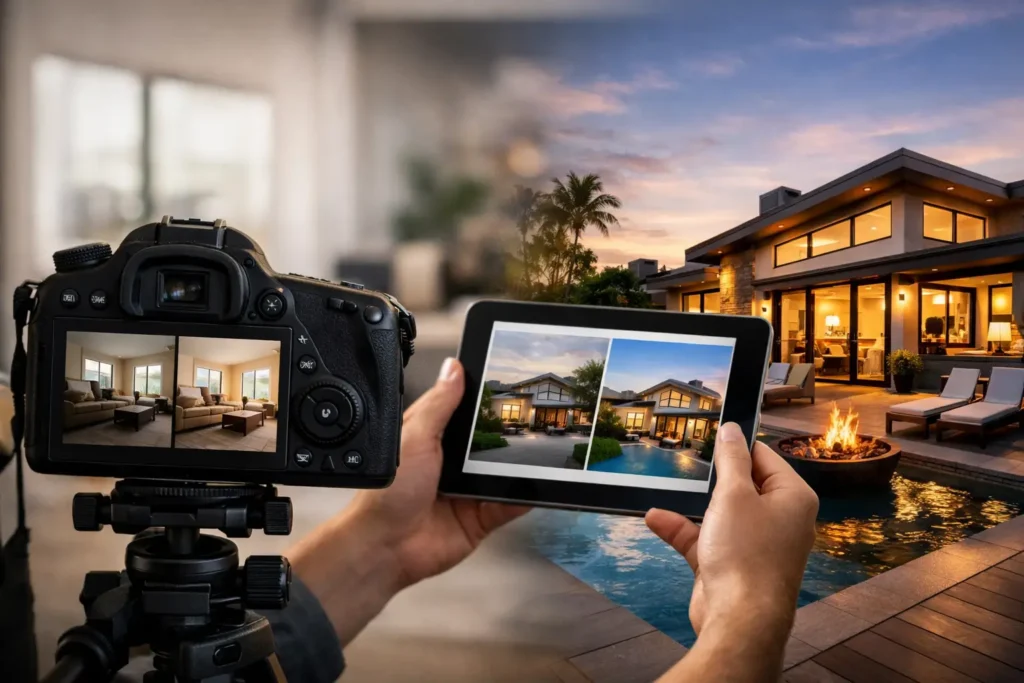
A bright Miami living room with floor-to-ceiling windows can look incredible in person and flat in a rushed photo. That gap is exactly why hdr examples matter in real estate marketing. When HDR is used well, it helps buyers see both the view outside and the detail inside, which makes a listing feel closer to what they will actually experience on show day.
For agents in South Florida, that matters. You are often marketing homes with intense sunlight, reflective surfaces, water views, white interiors, and open layouts that challenge a camera. Standard single-exposure photos can blow out windows, muddy shadow detail, or make rooms feel smaller than they are. HDR can solve that, but only if the result looks clean, natural, and believable.
What HDR means in real estate photography
HDR stands for High Dynamic Range. In practice, it usually means taking multiple exposures of the same scene – one darker, one balanced, one brighter, and sometimes more – then blending them into a final image. The goal is simple: hold detail in the highlights and the shadows at the same time.
In listing photography, that can be the difference between a dim interior with a visible backyard, or a bright room with a blown-out white window. It can also help preserve the color of a sunset, the texture of cabinetry, and the shape of a room without forcing one part of the image to suffer.
That said, buyers are not looking for technical perfection. They are looking for confidence. The photo needs to feel polished, accurate, and inviting. If HDR starts to look artificial, the image stops helping the sale.
HDR examples that work for property marketing
The best hdr examples are not dramatic for the sake of being dramatic. They make the property easier to understand and more appealing to serious buyers.
Interior rooms with strong window light
This is the classic use case. Think of a waterfront condo in Fort Lauderdale or a modern home in Boca with oversized sliders facing the pool. If you expose for the room, the outside goes white. If you expose for the view, the room turns dark. HDR blends those exposures so the space stays bright while the exterior still looks real.
When done right, this helps buyers read the full value of the room. They can see the furniture layout, the finishes, and the lifestyle feature outside the glass. That combination is often what gets the click, the showing, and the stronger first impression.
Kitchens with mixed light and reflective surfaces
South Florida kitchens often have glossy cabinets, stainless appliances, pendant lighting, and sunlight coming from more than one direction. Single exposures can struggle here because reflections throw off the balance fast. HDR can keep the counters clean, prevent dark corners, and hold detail around bright windows or under-cabinet lighting.
This is especially useful in renovated listings where the kitchen is a major selling point. Buyers want to see material quality and overall brightness, not a photo where the room feels uneven or overly contrasty.
Bathrooms with bright mirrors and smaller footprints
Bathrooms are easy to misrepresent. A basic photo can make them feel cramped, while poor lighting can make clean finishes look dull. HDR helps retain tile texture, fixture detail, and light consistency without crushing the shadows around vanities or showers.
A good bathroom HDR image should still feel crisp and realistic. If the whites turn gray or the chrome starts glowing unnaturally, the image crosses the line from helpful to distracting.
Exteriors at sunset or blue hour
HDR is not only for interiors. Exterior twilight photography often benefits from exposure blending because the sky, landscape lighting, and home exterior all sit at different brightness levels. The right blend can preserve sky color, show warm interior light through windows, and keep architectural details visible.
This works well for luxury homes where curb appeal is part of the story. But there is a trade-off. If the sky looks too saturated or the house appears brighter than it could ever look in real life, buyers notice. Real estate photography should elevate the home, not make promises the showing cannot keep.
What bad HDR examples usually look like
Plenty of hdr examples online show the problem, not the solution. They may have sharp detail everywhere, but they do not look like a place someone would walk into.
The biggest warning sign is the fake look. That usually shows up as glowing edges around windows, muddy gray shadows, oversaturated grass, or a scene where every surface feels equally bright. Real spaces have depth. They have light falloff. They have some contrast. If HDR removes all of that, the room stops feeling premium.
Another common mistake is using HDR to fix a composition problem. It cannot. If the angle is weak, the room is cluttered, or vertical lines are off, a wider dynamic range will not save the image. Technical processing is only one part of a strong listing photo.
When HDR helps a listing sell faster
HDR works best when the property has contrast-heavy scenes that would otherwise lose important detail. Homes with water views, golf course views, large windows, bright white walls, and transitional indoor-outdoor spaces are perfect examples. In those cases, HDR helps the buyer understand what makes the home valuable.
It also helps with consistency across the gallery. If one room is moody, another is washed out, and a third is too dark, the listing starts to feel less professional. A clean HDR workflow can produce a more balanced set of images, which makes the listing presentation feel tighter from the first photo to the last.
For agents, that consistency matters because presentation affects perception. A property that looks carefully marketed tends to feel more desirable before a buyer ever steps inside.
When HDR is the wrong choice
Not every scene needs HDR, and that is where experience matters. Some luxury interiors look better with more controlled lighting and manual blending rather than automated HDR processing. High-end architectural spaces with carefully designed ambiance can lose their mood if every corner gets lifted equally.
There is also the issue of movement. If palm trees are blowing outside, curtains are shifting, or people are moving through the frame, HDR blending can create ghosting. In those situations, a different technique may produce a cleaner final image.
The same goes for speed-sensitive shoots. If the home has difficult access, tight timing, or multiple marketing assets being captured in one visit, the photographer has to decide what method will deliver the strongest result efficiently. The right answer is not always the most technical one. It is the one that best supports the listing.
How to judge HDR examples before you book a shoot
If you are reviewing a photographer’s portfolio, look past the word HDR and study the result. The first question is whether the image feels believable. Can you clearly see the room and the exterior without either one looking forced? Does the color feel accurate? Are the lines straight? Does the room feel bright without looking flattened?
Then ask whether the photos support buyer decision-making. A strong image should reveal layout, finishes, and natural light in a way that reduces guesswork. It should help serious buyers understand the home before they ever schedule a showing.
This is where a polished media partner separates itself from someone simply running photos through a preset. At Digitall Media, the goal is not just brighter images. It is listing photography that helps agents compete harder in a market where presentation directly affects perceived value.
HDR examples should support trust, not just attention
Buyers will forgive a slightly less dramatic image before they forgive a misleading one. That is the real standard. Great HDR in real estate photography does not scream editing. It quietly removes the limitations of the camera so the property can speak for itself.
If you are choosing visuals for your next listing, look for HDR that keeps the space honest while making it easier to sell. The right photo does more than show a room. It helps the buyer picture the showing, the offer, and the life that could happen there.