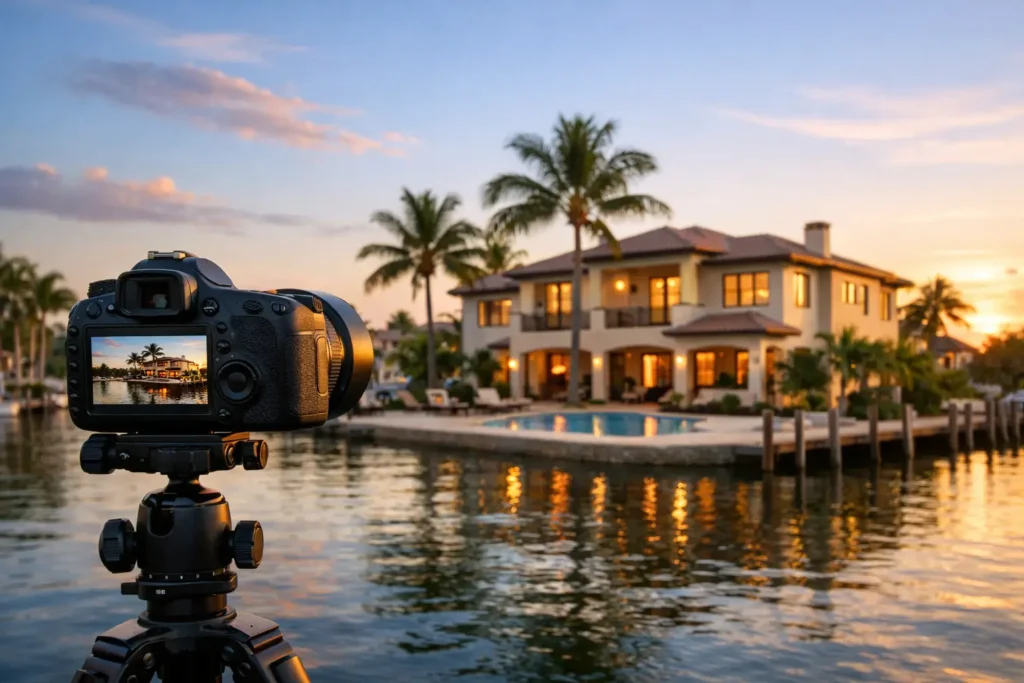
A waterfront home can look bright, open, and expensive at 10:00 a.m., then flat and harsh by noon. A lush backyard can lose its color under heavy cloud cover, while a west-facing facade may not look its best until late afternoon. The best time for exterior photos is not one universal hour. For South Florida listings, it is a strategic decision based on the home’s orientation, architecture, landscaping, weather, and the buyer lifestyle you need to sell.
Strong exterior imagery does more than document the property. It creates the first impression on MLS, stops the scroll on social media, and gives buyers a reason to book a showing. Getting the timing right helps an agent present the home at its highest perceived value from the very first image.
The Best Time for Exterior Photos Depends on the Home
For most residential listings, the most flattering daytime exterior photos happen in the early morning or late afternoon. At these times, the sun sits lower in the sky, creating softer shadows, warmer tones, and more dimension across the property. Stucco texture, rooflines, palms, pavers, and architectural details all read better when the light has direction.
The right choice between morning and afternoon comes down to where the home faces. An east-facing front exterior is usually strongest in the morning, when sunlight reaches the facade and avoids deep shadows. A west-facing property often benefits from a later shoot, when the front is naturally illuminated. North- and south-facing homes can be more flexible, but nearby trees, neighboring buildings, and covered entryways still affect the final result.
This is why a quick conversation before the shoot matters. A professional real estate photographer should assess the property rather than apply a one-size-fits-all schedule. The goal is not simply bright photos. The goal is light that makes the property look intentional, inviting, and ready for market.
Why Midday Light Can Hurt a Listing
South Florida sunshine is a selling point, but direct overhead sun is rarely the most flattering option for exterior photography. Between roughly 11:00 a.m. and 2:00 p.m., the light can be intense enough to create dark eye sockets under roof overhangs, blown-out driveways, sharp palm shadows, and bright white skies that compete with the home.
Midday sessions are sometimes unavoidable, especially when access windows are tight or a listing needs to go live immediately. They can also work well for aerial images where clear visibility of lot lines, canals, golf courses, and nearby amenities matters more than a soft facade. But for the hero image – the photo that carries the listing across MLS and marketing materials – early or late light usually produces a stronger result.
There are exceptions. A property with a heavily shaded front may need a higher sun angle to prevent the exterior from going too dark. Homes with white or light-colored finishes may also photograph well under slightly brighter conditions, provided the photographer can balance the highlights. Timing should serve the property, not a generic rule.
Golden Hour Gives Luxury Listings More Atmosphere
Golden hour is the period shortly after sunrise or before sunset, when daylight becomes warmer and softer. It is especially effective for high-end homes, properties with strong landscaping, and listings where lifestyle is central to the sale. The glow can make exterior finishes feel richer, water features more reflective, and outdoor spaces more comfortable.
For a Miami waterfront home, a Boca Raton estate, or a Fort Lauderdale property with a resort-style pool, late-day light can help buyers picture themselves using the space. Warm light on a patio, subtle reflections on the pool, and a clean view toward the water create emotional pull that a standard daytime shot may not deliver.
Golden hour is also short. The best light may last 20 to 40 minutes depending on the season, cloud cover, and the property’s surroundings. That means the home must be ready before the photographer arrives. Cars should be removed, pool equipment hidden, landscape crews finished, and exterior lights checked. Last-minute staging during the best light costs the listing its strongest visual window.
Sunset Is Not Always the Right Choice
A west-facing backyard often shines near sunset, particularly when the pool, outdoor kitchen, or water view is a major selling feature. But sunset light behind the home can leave the front facade underexposed. If both front curb appeal and rear lifestyle spaces are important, a photographer may schedule the front in daylight and reserve the backyard for later.
The sunset itself is not guaranteed to be colorful. Clear skies can produce a clean, elegant transition into twilight, while scattered clouds may create dramatic color. Heavy storm clouds can add mood, but they can also make a property look darker than it feels in person. The right team watches conditions and builds a plan around the listing’s priorities.
Twilight Photos Are Built for the Hero Shot
Twilight photography takes place after sunset, when the sky still holds blue color and the home’s interior and exterior lights begin to glow. This is one of the most effective ways to make a premium listing stand apart, especially when it includes a pool, water view, dramatic landscape lighting, or modern architectural features.
A twilight image can turn your listing into a 24/7 open house. It gives buyers a sense of how the property lives after work, during dinner outdoors, or on a relaxed weekend evening. For homes competing in a crowded South Florida market, that emotional advantage can be the difference between another saved listing and a showing request.
Twilight should be selected strategically, not automatically. It delivers the most value when there are features worth illuminating: clean exterior fixtures, large windows, pool lights, fire features, dock lighting, or a polished entry. A home with weak exterior lighting or unfinished landscaping may be better served by excellent daylight imagery first.
Before a twilight shoot, every bulb should work and match in color temperature where possible. Warm lights typically look more welcoming than a mix of cool white, yellow, and burned-out fixtures. Interior lights visible from the exterior should also be turned on, while clutter near windows should be removed. Small details become more noticeable when the home is photographed against a darker sky.
Weather in South Florida Requires a Flexible Plan
Florida weather can change quickly. A forecast that starts clear can turn into a rain shower, and a bright afternoon can become overcast within minutes. That does not mean every cloudy day is a problem. Light cloud cover often creates soft, even illumination that reduces harsh shadows and helps saturated landscaping hold its color.
The concern is not simply clouds. It is wet driveways, windblown palms, muddy landscaping, dark storm fronts, and hazy views. For properties selling a skyline, ocean, Intracoastal, or golf course view, visibility should carry real weight in scheduling. A reshoot may be worthwhile if the view is one of the listing’s primary value drivers.
During hurricane season and the summer rainy period, agents should avoid scheduling exterior photography too close to the launch deadline. Give the media team enough flexibility to move the session if necessary. A rushed shoot in poor conditions can cost more in lost listing impact than a one-day delay planned in advance.
Schedule Around the Features That Sell the Property
The best exterior photo schedule follows the buyer’s attention. A typical home may need a strong daytime front exterior, backyard and pool coverage at the most flattering angle, aerial photos while visibility is clear, and one twilight image for a premium marketing piece. Those elements do not always happen at the same time of day.
For larger homes, estates, or listings with multiple exterior zones, split scheduling can be the smart investment. Capture the front when it receives clean light, then return for sunset or twilight at the rear. This approach is particularly useful for homes where the curb appeal and outdoor lifestyle both need to carry equal weight.
Drone capture should be planned with the same care. Morning air can be calmer, which may help with stable footage and cleaner water surfaces. Later in the day can provide warmer color and stronger shadows that define the lot. The better option depends on whether the marketing focus is location, land, water access, proximity to amenities, or architectural scale.
Prepare the Exterior Before the Light Arrives
Photography timing only works when the property is camera-ready. The most common issue is not bad light. It is a great light window wasted on avoidable distractions.
Before the scheduled shoot, agents and sellers should confirm that:
- Vehicles, trash bins, hoses, and loose yard items are out of view.
- Landscaping is trimmed, leaves are cleared, and pool surfaces are clean.
- Exterior lights, pool lights, and water features are working.
- Patio furniture is arranged with purpose, not pushed against walls.
- Gates, garage doors, blinds, and window treatments are positioned consistently.
These details tell buyers that the home has been cared for. More importantly, they allow the photographer to focus on composition and light instead of spending valuable minutes correcting preventable issues.
Turn Timing Into a Listing Advantage
The best-performing exterior images are rarely accidental. They come from reading the property, anticipating the sun, respecting weather conditions, and planning the shoot around the features buyers will remember. A bright front exterior may win the MLS click, while a twilight pool image may be what earns the showing.
When you schedule exterior photography, think beyond the next available appointment. Give the home the light it deserves, and the listing will have a better chance to show its value before a buyer ever steps through the door.