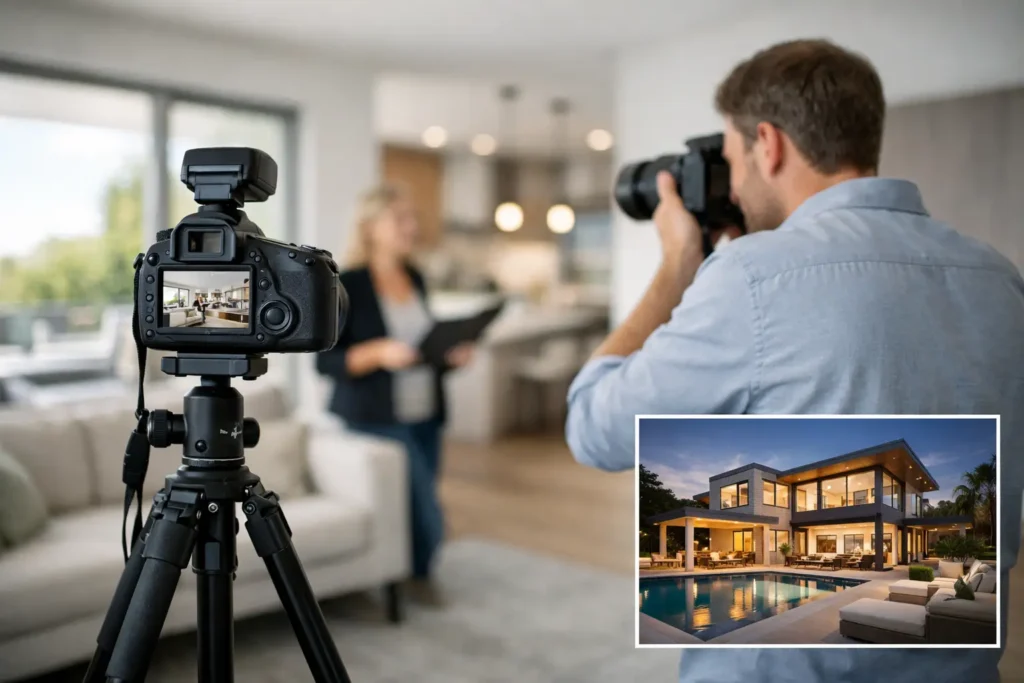
A buyer scrolls past your listing in two seconds or stops and books a showing. That decision often comes down to the visuals, which is why the best real estate photography is not just about pretty images. It is about creating instant confidence, stronger perceived value, and a clear reason to choose your property over the next ten competing listings.
In South Florida, where design, light, water views, and lifestyle all influence buyer interest, average listing photos rarely get the job done. Agents are not just marketing square footage. They are selling atmosphere, flow, and the promise of a better living experience. Good photography supports that. Great photography turns your listing into a 24/7 showing tool.
What the best real estate photography actually does
The best real estate photography makes a property feel worth seeing in person. That sounds simple, but it changes how buyers behave. Strong images increase click-throughs, improve the first impression on MLS, and help buyers understand the home before they ever step inside.
That last part matters more than many agents realize. When photos are flat, dark, or inconsistent, buyers fill in the gaps with doubt. They assume the layout is awkward, the rooms are smaller than they are, or the home has issues the photos are hiding. When the visuals are sharp and professionally composed, the opposite happens. Buyers feel informed. They trust the presentation. They are more likely to schedule a showing with real intent.
This is also where better photography helps agents operationally. You waste less time on low-intent inquiries when the listing presents the home clearly from the start. Better visuals can lead to better-fit showings, stronger engagement, and fewer conversations spent defending a property that simply was not marketed well.
Best real estate photography is more than wide angles
A lot of people reduce real estate photography to one idea: make rooms look bigger. Wide lenses absolutely have a place, but they are only one part of the job. If everything is shot too wide, spaces can feel distorted, vertical lines can bend, and buyers may feel misled when they walk in.
The best real estate photography balances scale with accuracy. It gives each room breathing room without making the property look unnatural. It also handles bright windows, reflective surfaces, mixed lighting, and tight floor plans in a way that feels clean and believable.
That balance is especially important in South Florida homes. Waterfront condos, luxury kitchens, outdoor entertaining areas, and modern renovations all require a slightly different visual approach. A downtown Miami high-rise needs careful exposure control and strong composition to preserve both the interior and the skyline. A family home in Broward may need a warmer, more functional presentation that highlights layout and everyday livability. A Palm Beach property may depend heavily on outdoor living and natural light timing.
Same service category, different visual strategy.
What separates average images from listing-ready assets
The difference usually starts before the camera comes out. The strongest shoots are planned around the property, the target buyer, and the way the home should compete in its price range.
That means knowing what deserves emphasis. In one home, it is the ceiling height and natural light. In another, it is the kitchen finishes, the primary bath, or the transition from indoor to outdoor space. Professional photography is not just documentation. It is selective storytelling built around buyer motivation.
Editing also matters, but this is where there is a real trade-off. Under-editing leaves images dull and inconsistent. Over-editing makes surfaces glow unnaturally, colors shift, and skies look fake. Buyers notice, even if they cannot explain why. The best final images look polished, not manipulated. They represent the property at its best while still feeling honest.
For agents, that honesty protects credibility. If the photos overpromise, the in-person showing disappoints. If the photos are accurate but elevated, the showing confirms what the buyer already hoped was true.
The visual package matters more than one hero shot
One great exterior image is not enough. A listing performs better when the entire visual set works together. Buyers want to understand the home quickly, and that takes more than a handful of attractive frames.
A complete package usually starts with high-quality interior and exterior photography, but in many cases that is only the baseline. Drone imagery can show lot position, water access, surrounding amenities, and neighborhood context in a way ground photography cannot. A Matterport or 3D tour can help serious buyers understand flow and layout before booking a showing. Floor plans reduce confusion and make online traffic more qualified. Twilight edits or sunset captures can add emotional pull, especially for luxury or lifestyle-driven listings.
Not every property needs every asset. A modest rental may not need a full premium media stack. A waterfront luxury listing almost certainly does. The right question is not what is available. It is what will help this property stand out and help this agent win.
Why speed matters almost as much as quality
Agents do not operate in a vacuum. You are coordinating staging, seller expectations, launch timelines, MLS deadlines, social promotion, and often a moving target on availability. The best real estate photography is not just visually strong. It is delivered fast enough to support momentum.
A delayed photo package can hold up an entire marketing plan. A rushed, careless shoot can hurt the listing from day one. The right media partner understands both pressures and builds around them. That means efficient scheduling, consistent turnaround, and a process that does not create more work for the agent.
This is one reason serious real estate professionals often stop treating photography like a commodity. Once you have dealt with missed windows, inconsistent image quality, or late delivery, the cheapest option stops looking cheap. Reliable media support protects your launch and your reputation.
How to judge the best real estate photography for your listings
If you are comparing providers, look past the highlight reel. Almost every photographer can show a few strong images. What matters is consistency across different properties, price points, lighting conditions, and room types.
Look at window exposures. Check whether vertical lines are straight. Notice whether colors feel natural from room to room. See if bathrooms, small bedrooms, and transitional spaces are handled as well as kitchens and living rooms. Those less glamorous areas reveal skill quickly.
It also helps to ask practical questions. Can they handle drone work, 3D tours, floor plans, and virtual enhancements when needed? Do they understand how agents use media across MLS, social, and property websites? Can they work at the pace your market demands?
In a market like South Florida, local understanding matters too. Light behaves differently here. Exterior timing matters. Water, glass, tropical landscaping, and bright sun create both opportunities and technical challenges. A team that knows how to shoot for this environment will usually produce cleaner results with fewer surprises.
Photography should help you win the next listing too
This is the part many agents overlook. Great listing photography does not only help sell the current property. It becomes proof of your marketing standard when you pitch the next seller.
When your portfolio consistently shows polished, high-performing visuals, you look like an agent who knows how to position homes properly. Sellers notice that. They may not understand exposure blending or composition, but they absolutely understand whether your listings look premium or ordinary.
That is why the best real estate photography has a compounding effect. It supports better listing presentation now, stronger brand perception later, and a more persuasive listing appointment in between. You are not just buying photos. You are investing in how your business shows up in a crowded market.
For teams and brokers, the effect is even stronger when the visual standard stays consistent across multiple listings. It creates a recognizable level of professionalism that helps build trust faster.
When premium media is worth it and when it is not
Not every listing needs every upgrade, and pretending otherwise does not help anyone. A smaller property with a tight budget may only justify professional still photography and a floor plan. That can still make a major difference versus phone photos or inconsistent amateur work.
But when the property has unique architecture, strong views, luxury finishes, or a story that needs to be experienced visually, premium media often pays for itself in buyer attention alone. Drone footage, 3D tours, virtual staging, and twilight visuals can all strengthen positioning when used strategically.
The key is matching the media plan to the listing goal. If the property needs broad attention fast, richer media can create a stronger launch. If the home is straightforward and price-sensitive, clarity and speed may matter more than high-production extras.
A smart approach is always property-specific, not one-size-fits-all.
The agents who get the most from visual marketing are usually the ones who think beyond getting photos taken. They use media to shape perception, qualify buyers, support pricing, and present themselves as serious professionals. That is where the real advantage is. When your listing looks right from the first click, everything that follows gets easier.