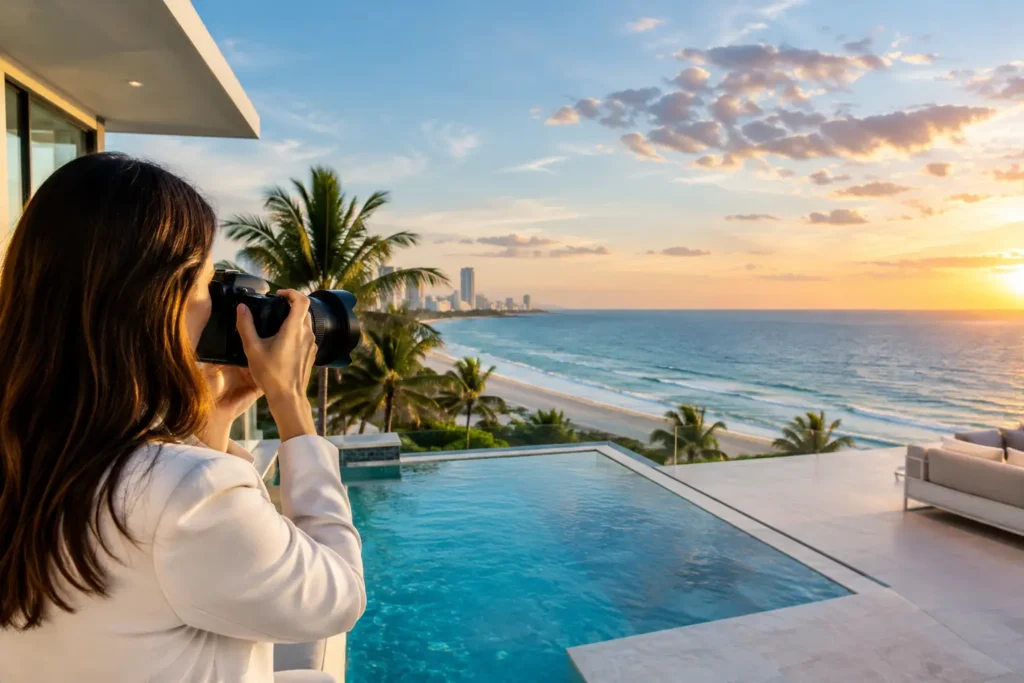
A Miami Beach listing has seconds to earn the click. Buyers scrolling MLS portals and social feeds are comparing waterfront views, renovated kitchens, building amenities, and natural light before they read a single property detail. This Miami Beach property photography guide is built for agents who want their visual marketing to create stronger first impressions, better-informed inquiries, and more productive showings.
The goal is not to make every property look like a magazine spread. The goal is to show its real advantages clearly, present the lifestyle buyers are shopping for, and give them enough confidence to take the next step.
Start With the Buyer, Not the Camera
The right photo strategy begins with one question: what will make the likely buyer choose this listing over the next comparable option? For a South Beach condo, that may be walkability, an ocean view, a remodeled interior, or access to a recognized building. For a family home farther inland, it may be outdoor living, bedroom count, privacy, and the way the floor plan functions day to day.
This matters because a beautiful image without a sales purpose can waste valuable space in the listing gallery. A tight shot of a faucet may look polished, but it rarely answers a buyer’s practical question. A bright, well-composed image that shows the kitchen’s scale, storage, and connection to the living area does.
Before the shoot, identify the property’s three to five strongest selling points. These should guide the shoot order, the final image selection, video story, and listing description. If the terrace view is the reason a buyer will book a showing, it should not be image 27.
Prepare the Property Before Photography Day
Professional media can elevate a listing, but it cannot fully overcome a cluttered room, burned-out light fixture, or crowded balcony. Preparation protects the investment and keeps the photographer focused on capturing the home rather than working around avoidable distractions.
Ask sellers to remove personal photos, pet items, countertop appliances, excess toiletries, cleaning products, cords, and visible trash bins. Clear the refrigerator, straighten dining chairs, and make every bed tightly. In Miami Beach condos, balconies deserve the same attention as interior rooms. Remove storage items, wipe outdoor furniture, and make sure the view is unobstructed.
Light matters as much as staging. Open blinds where privacy allows, replace bulbs that are out, and keep interior lighting consistent in color temperature when possible. Mixed blue, yellow, and daylight bulbs make a room look less intentional, even when the space itself is well maintained.
A few practical checks can prevent delays:
- Confirm that all rooms, parking areas, roof decks, docks, and amenity spaces that should be photographed are accessible.
- Tell building management in advance when a photographer, videographer, or FAA-certified drone pilot will be on site.
- Make sure pools, spas, fountains, and exterior lights are operating if they are part of the property’s appeal.
- Plan for pets, cleaners, contractors, and sellers to be off site during the shoot whenever possible.
Use HDR Photography to Establish Trust
HDR photography is the core asset for most listings because it handles the contrast that makes South Florida homes difficult to photograph well. Bright windows, white walls, reflective floors, and direct sun can easily turn a room into either a dark interior or a washed-out view. Properly balanced HDR images preserve the room while keeping exterior scenery visible and believable.
For the MLS, prioritize coverage before detail. Buyers want to understand the main living area, kitchen, primary bedroom, primary bath, secondary bedrooms, outdoor spaces, and any meaningful upgrades. The image sequence should feel like a logical walkthrough rather than a collection of unrelated highlights.
Editing should improve clarity, not rewrite reality. Correct vertical lines, balanced exposure, and accurate color make a listing feel professionally represented. Overly dramatic skies, distorted rooms, or excessive retouching may attract attention, but they can also create a mismatch between online expectations and an in-person visit. That mismatch leads to unproductive showings.
Choose Video When Lifestyle Needs Context
Photos stop the scroll. Video gives buyers a better sense of movement, proportion, and atmosphere. It is especially effective for waterfront homes, high-rise units with dramatic views, renovated properties with connected living areas, and listings where the surrounding lifestyle is part of the value proposition.
A cinematic walkthrough should not simply pan through every room. It needs a route and a reason. The opening sequence should lead with the feature that creates emotional interest, such as a bay view, a striking exterior, or a bright great room. From there, the video should show how the home lives: arrival, entertaining space, private areas, and exterior amenities.
For agents, video also creates flexible marketing material. A full walkthrough can support a property website and listing presentation, while shorter vertical edits can keep the listing visible on social media. The format depends on the campaign, but the visual message should remain consistent: this is what makes the property worth seeing in person.
Add Drone Media When It Answers a Real Question
Aerial photography and video are valuable when they show something ground-level images cannot. Waterfront position, distance to the beach, lot scale, a rooftop terrace, a golf course setting, or the relationship between a home and nearby amenities can all become clearer from the air.
Drone capture is not automatically the right choice for every listing. Dense urban locations, building restrictions, weather, airspace requirements, and the property’s actual setting all affect what is useful and permitted. A professional aerial plan should account for FAA rules, safety, building approval, and the story the footage needs to tell.
When it is appropriate, aerial media can give buyers instant geographic context. That is a major advantage in Miami Beach, where location is often inseparable from value. A buyer may need to see the water, the marina, the surrounding streets, or the building’s placement before they fully understand the listing.
Help Buyers Understand the Layout Remotely
Many serious buyers begin their search from another state or another country. They may not schedule a showing until they understand the layout, room relationships, and usable square footage. This is where 360-degree virtual tours and 2D or 3D floor plans do more than add technology to a listing.
A virtual tour lets prospects move through the home at their own pace. It can reduce basic orientation questions and help agents spend time with buyers who already understand the space. Floor plans add a different kind of value: they turn visual impressions into practical information about flow, room placement, and furniture potential.
Use both when layout is a selling point or when the audience is likely to include remote buyers. A compact condo with an efficient split-bedroom plan, a large home with multiple levels, or a property with separate guest quarters can benefit substantially. For a straightforward studio, a floor plan may be enough. The right mix depends on the property and the buyer profile.
Use Virtual Staging With Clear Intent
Vacant rooms are harder for many buyers to read. Without furniture, they can appear smaller, less functional, or disconnected from the rest of the home. Virtual staging helps buyers see the possibilities, not just the space.
It works best when it is realistic, restrained, and aligned with the property. A modern waterfront condo needs furniture that supports its style and scale. A family-oriented home may need a staging plan that clarifies how a bonus room, dining area, or flex space can be used.
Virtual staging should be disclosed where required and used thoughtfully. It is a visualization tool, not a substitute for showing a home’s true condition. Keep original vacant images available when appropriate, especially when a buyer needs to evaluate finishes, dimensions, or renovation needs without distraction.
Build One Cohesive Listing Campaign
The strongest listing campaigns do not treat photos, video, drone footage, tours, floor plans, and a single-property website as separate deliverables. They work together. Photography earns attention on the MLS. Video builds interest. A virtual tour and floor plan answer questions. A dedicated property website gives every asset one polished destination for emails, ads, and social sharing.
That consistency also helps agents win future listings. Sellers notice when an agent arrives with a clear media plan instead of a basic promise to “put it online.” A complete visual strategy signals preparation and gives the seller confidence that the property will be presented competitively from day one.
At Digitall Media, that strategy is shaped by more than camera technique. It comes from understanding how buyers compare homes, how agents qualify interest, and where listings lose momentum before the first showing.
Make the First Image Earn Its Position
Your lead image should be chosen for buyer behavior, not personal preference. In most cases, it should show the property’s most compelling, immediately understandable advantage: a distinctive exterior, a waterfront view, a dramatic living area, or a finished kitchen that clearly sets the home apart.
Then review the gallery on a phone. Most buyers will. Ask whether the first 10 images explain why this property deserves attention and whether the visual sequence answers the questions a serious buyer will ask before contacting you.
The best time to think about property photography is before the listing goes live, when there is still time to prepare the home and build the right asset mix. Give buyers a clear reason to stop, stay, and schedule the showing.