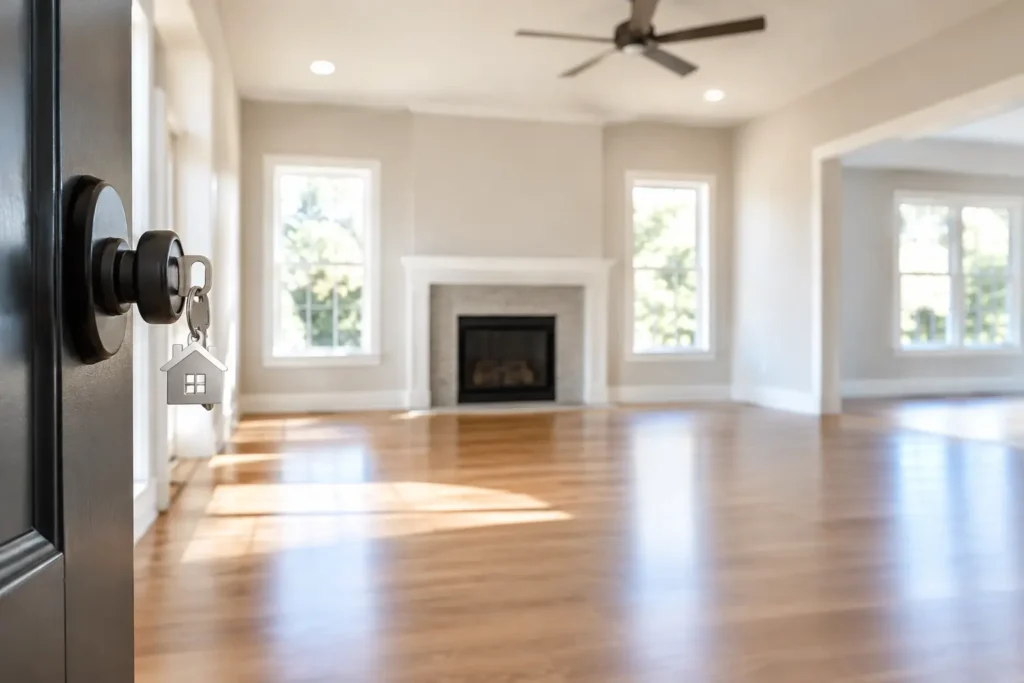
An occupied home can borrow warmth from furniture, art, lighting, and everyday life. A vacant home has to earn attention with architecture, scale, light, and a clear story from the first MLS photo. When those elements are not managed carefully, buyers do not see opportunity. They see empty rooms, uncertainty, and another reason to keep scrolling.
This vacant home listing guide is built for agents who need an empty property to compete in a visually crowded market. The goal is not to disguise that a home is vacant. The goal is to make its best features immediately understandable, create an inviting first impression, and give serious buyers enough visual information to book a showing.
Why Vacant Listings Need a Different Marketing Plan
Vacancy changes how buyers read a property. Without furniture for scale, a large room can feel undefined and a compact room can look smaller than it is. An empty living area may not show where a sofa, TV, or dining table belongs. Bedrooms can lose their purpose. A beautiful view or an upgraded kitchen can also get buried if the listing opens with dark, flat, or poorly framed images.
That is why an empty home cannot be marketed as an occupied home with the furniture removed. It needs a deliberate visual plan. Start with the strongest selling feature – waterfront exposure, a bright open layout, a renovated kitchen, a rooftop, a pool, or a walkable location – then make sure the first images, video, and property description support that story.
For South Florida listings, this often means emphasizing daylight, indoor-outdoor flow, balconies, water views, pool areas, and the way a home handles the climate. A vacant condo with floor-to-ceiling glass has a built-in advantage, but only if the exposure is controlled and the view is given room to work in the composition.
Prepare the Property Before the Camera Arrives
An empty house is not automatically camera-ready. In fact, vacancy makes every unfinished detail more visible. Scuffed baseboards, loose outlet covers, stained grout, dead landscaping, and an unclean pool stand out because there is nothing else in the frame.
Walk the property as a buyer would, beginning at the curb and ending at the primary outdoor space. Check that all utilities are active, every bulb works, blinds and shades operate, and ceiling fans can be turned off for photography. Replace mismatched bulbs where possible. A room lit by several different color temperatures will look inconsistent on camera and less polished in person.
Cleaning should go beyond a quick sweep. Windows, mirrors, appliances, floors, patios, garage doors, and pool decks all show more clearly in a vacant property. Remove leftover contractor materials, cleaning supplies, labels, cords, trash bins, and anything stored in closets or corners. If the home has been sitting empty, check for insects, water marks, odors, and signs of humidity before scheduling media.
Curb appeal carries extra weight because it is the first signal that the property has been cared for. Freshen landscaping, pressure-clean exterior surfaces when needed, clear the entry path, and make sure the front door presents well. Buyers form opinions before they reach the lockbox.
Use Staging Where It Changes Buyer Perception
Not every vacant listing needs full physical staging. It depends on the property, price point, room count, target buyer, and how much the layout needs explanation. A highly architectural luxury home may carry itself with strong photography and carefully selected virtual staging. A smaller condominium with an awkward living room may benefit from physical furniture that establishes scale during showings.
The key is to stage strategically rather than decorate broadly. The rooms that most often need help are the living room, dining area, primary bedroom, and any flex space that could otherwise confuse buyers. If a room could be an office, nursery, den, or bedroom, show one credible use. Buyers should not have to solve the floor plan in their heads.
Virtual staging is especially effective when a listing needs speed or when physical staging is not practical. It can show the possibilities, not just the space, by placing appropriately scaled furnishings into key images. Keep it realistic and disclose virtual staging where required by your MLS or brokerage policies. The in-person experience should match the promise of the listing, so avoid digitally adding features that do not exist or making rooms appear materially different from their actual proportions.
Photograph for Scale, Light, and Flow
Professional photography is the foundation of a vacant listing campaign. Phone photos and rushed wide-angle shots can make rooms look distorted, dim, or disconnected. A buyer may never notice the actual dimensions if the first image makes the home feel cold or difficult to understand.
A strong photo set gives each room a purpose and establishes how spaces connect. Wide images are useful, but they should not be the only images. Detail shots of a waterfall island, upgraded fixtures, custom millwork, a view, or a well-designed exterior add rhythm and reinforce value. The sequence should feel like a logical walk through the home, not a collection of unrelated rooms.
Windows require special attention. Miami-area properties often sell a lifestyle as much as square footage, and that lifestyle may be visible through the glass. Proper HDR photography can preserve interior detail while keeping the skyline, bay, golf course, or garden visible outside. Blown-out windows waste one of the property’s most valuable assets.
Avoid over-editing. Bright, accurate images create confidence. Over-saturated skies, unnaturally white walls, and warped vertical lines can make a listing look less credible once buyers arrive. The objective is a polished, compelling presentation that sets accurate expectations.
Add Video, Drone, and Virtual Tours With a Purpose
Each media format should answer a buyer question. Video communicates atmosphere, movement, and the transition from room to room. It works particularly well for homes with outdoor entertaining areas, dramatic views, waterfront access, or a layout that photographs alone cannot fully explain.
Aerial drone photography and video can establish location fast. For a vacant home, that context is valuable because there are no lived-in interiors to supply emotional cues. Drone coverage can show proximity to the beach, the marina, a park, major roads, or the relationship between a home and its neighborhood. It should clarify location and lot value, not simply add aerial footage because it is available.
A 360-degree virtual tour gives remote buyers and busy local buyers a way to inspect the layout on their own schedule. That can help agents attract more informed showings and reduce visits from people who would have ruled the property out after seeing the actual room flow. Pair it with a clear 2D or 3D floor plan so buyers can connect the visuals to dimensions and room placement.
For vacant properties, floor plans are more than a useful extra. They give buyers a practical framework for furnishing decisions. A buyer can see whether a sectional fits, where a home office belongs, or how bedrooms are positioned relative to the main living space.
Build the Listing Around a Clear First Impression
Your first photo must do more than show the front of the house. It should make the buyer want the second photo. For some listings, that is the exterior. For others, it is a striking water view, an open living room, a kitchen, or a pool terrace. Choose the lead image based on what creates the strongest emotional and commercial pull.
The MLS description should then reinforce what the images prove. Lead with the features that matter most to the likely buyer, such as renovated interiors, a flexible floor plan, natural light, outdoor living, building amenities, or location advantages. Avoid vague claims like spacious or stunning unless the visual assets demonstrate them. Specific details create a stronger reason to schedule a visit.
Your property website and social media campaign should use the same visual hierarchy. Lead with the hero image or short video moment, follow with the clearest proof points, and make it easy for buyers to move from curiosity to a showing request. A strong campaign turns a vacant home into a 24/7 open house without asking the property to be physically open all day.
Keep the Home Ready Until It Closes
Vacant listings can deteriorate quickly between showings. Build a simple maintenance routine around the property: keep utilities on, maintain the temperature and humidity, inspect for leaks, refresh landscaping, clean exterior areas, and check that lights and access systems work. If the listing has been active for several weeks, review the marketing performance and consider whether the lead photo, photo order, staging approach, or video cut needs an update.
A vacant property gives you control. There are no personal belongings to work around, no homeowner schedule to negotiate, and no clutter competing with the home itself. With the right preparation and a complete visual strategy, that empty space becomes a clear invitation for buyers to picture their next move.
Digitall Media approaches vacant listings from both sides of the transaction: what photographs well and what helps buyers understand value quickly. Treat the empty home as a marketing asset that needs direction, not as a limitation, and every image can do more work before the first showing begins.