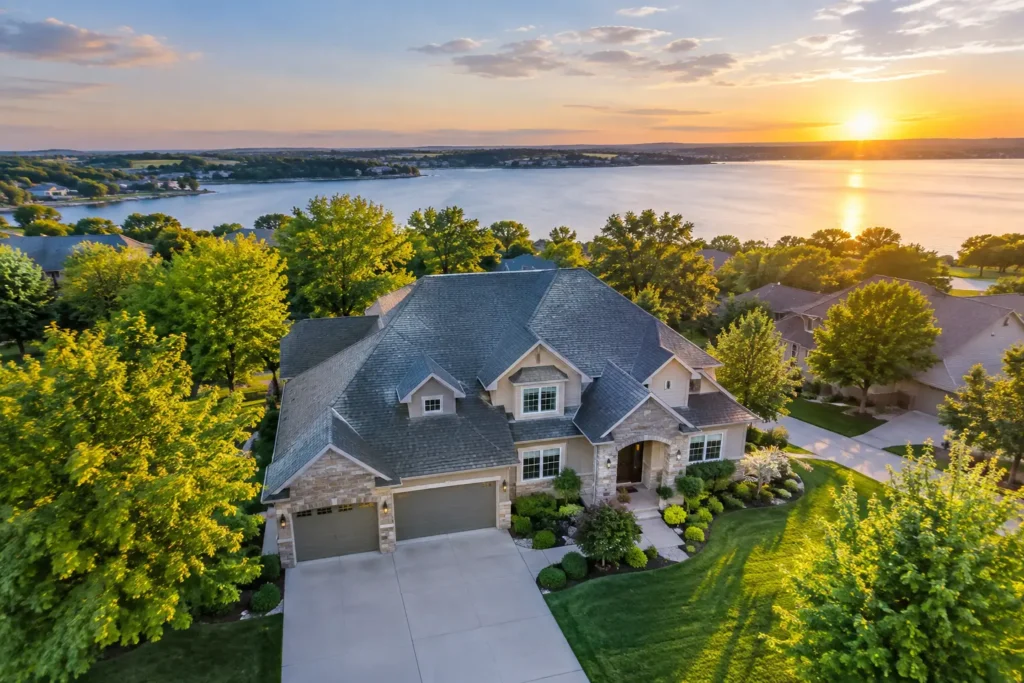
A guide to real estate aerials starts with one simple fact: buyers are not only evaluating a house. In South Florida, they are evaluating the view, the water access, the neighborhood, the distance to the beach, and the lifestyle surrounding the address. The right aerial media makes those advantages immediately visible before a buyer ever schedules a showing.
For agents competing across Miami-Dade, Broward, and Palm Beach, drone photography is not a decorative add-on. It is a listing tool that gives buyers context, helps qualify interest, and makes a property look more complete across the MLS, listing portals, social media, and email campaigns. But aerials only work when they are planned around the property’s strongest selling points.
What Real Estate Aerials Should Actually Show
Aerial photography is most effective when it answers a buyer’s practical questions at a glance. Where does the home sit on the street? How large is the lot? Is there a canal behind the property? Can buyers see the ocean, golf course, marina, park, or downtown skyline from the home? These are details interior photography cannot communicate on its own.
For a waterfront listing, a high-angle image can show the relationship between the house, dock, seawall, canal, and open water. For a condo, a carefully framed aerial can establish proximity to the beach, restaurants, a private marina, or major transit routes. For an estate, it can show acreage, a gated entry, guest structures, a pool layout, and mature landscaping in one clear image.
The goal is not to fly as high as possible or create a dramatic shot for its own sake. The goal is to show the possibilities, not just the space. Every image should help a serious buyer understand why this location commands attention.
Guide to Real Estate Aerials: Start With the Listing Strategy
Before a drone goes into the air, identify the story the listing needs to tell. Aerials should support the positioning already established by the price point, property type, target buyer, and marketing plan.
A renovated coastal home may need visuals that emphasize walkability to the beach and outdoor entertaining areas. A luxury waterfront property may require more emphasis on boat access, dock capacity, sunset orientation, and nearby inlets. A suburban family home may benefit from showing its quiet cul-de-sac, oversized yard, community amenities, and distance from parks or schools.
This is where a quick pre-shoot conversation matters. Tell your media team what buyers consistently ask about the property. Mention any features that do not photograph well from ground level, such as a corner lot, roof condition, solar panels, a detached guest house, or a backyard that extends farther than it appears from the patio. Those details shape the flight plan and prevent generic aerial coverage.
A strong shoot also considers where the images will be used. MLS images need to communicate quickly in a photo carousel. Social media video needs movement and a clear opening frame that stops the scroll. A property website can support a longer cinematic sequence that moves from neighborhood context to the home itself. One flight can produce assets for all three, but the shots need to be intentional.
Choose the Right Shots for the Property
Most successful aerial packages include a mix of context, scale, and feature-driven images. Context shots place the property within its neighborhood. Scale shots reveal lot size, building footprint, roofline, and outdoor areas. Feature-driven images isolate the details that create value, whether that is a private dock, resort-style pool, rooftop terrace, or unobstructed view.
The strongest hero aerial is often taken at an angle rather than straight overhead. It shows the front or rear elevation while also revealing the setting around it. This is especially useful for homes near water, golf courses, parks, and skyline views.
Straight-down imagery has a role too. It can clearly display a large lot, unusual pool shape, circular driveway, or the full layout of a waterfront parcel. Used sparingly, it adds a polished editorial feel. Used too often, it can make a listing feel like a map instead of a home.
Video should be equally purposeful. A slow reveal over a roofline can introduce a water view. A lateral pass can show the depth of a backyard and its relationship to a canal. A controlled approach toward the front elevation can create a strong opening for a listing film. Fast movements and excessive transitions may look exciting, but they can distract from the home and date the final edit.
Time the Flight Around Light, Weather, and Water
South Florida aerials are highly dependent on conditions. Midday sun can create harsh roof glare, deep shadows, and washed-out pools. Early morning often delivers cleaner light, calmer water, and less traffic around busy streets and beaches. Late afternoon can add warmth and dimension to exterior shots, particularly when the rear of the home faces west.
It depends on the property. A home with an east-facing waterfront view may photograph best in the morning. A west-facing pool deck and sunset view deserve a later flight. For waterfront properties, wind also matters. Choppy water can hide the clean, resort-like appearance buyers expect, while calm water can make a canal or bay view feel far more inviting.
Cloud cover is not always a problem. Light clouds can soften shadows and help white exteriors retain detail. Heavy gray skies, however, can flatten a luxury listing and reduce the impact of water and skyline views. A professional team watches conditions closely and recommends rescheduling when the weather will compromise the result.
Legal, Safe Flight Is Part of Professional Listing Media
Aerial marketing is not just about owning a drone. Commercial real estate drone work requires an FAA Part 107 certified pilot and a flight plan that accounts for airspace, nearby airports, weather, people, and local conditions. This matters throughout South Florida, where controlled airspace and flight restrictions are common.
A qualified operator checks whether authorization is required before the shoot, evaluates obstacles such as power lines and tall palms, and keeps the flight safe for neighbors, pedestrians, and the property itself. Privacy also matters. The camera should focus on the listing and its legitimate selling features, not on neighboring homes or private activity.
Agents should not promise aerial photos before a flight review is complete. In some cases, airport proximity, temporary restrictions, or unsafe weather can limit what is possible. A professional media partner will be direct about those limits and find the best available angle rather than taking risks that could delay the listing or create liability.
Use Aerials to Improve Buyer Quality, Not Just Reach
More views are useful, but better-informed buyers are more valuable. Aerials can reduce unnecessary showings by revealing the setting accurately. Buyers can see whether a home is near a busy road, how close neighboring properties are, whether the backyard is private, and what the surrounding environment actually looks like.
That transparency builds confidence. It also gives agents better material for conversations with out-of-state and international buyers who need to understand the property before they travel. In a market where a buyer may compare dozens of listings online before contacting an agent, clear aerial context can be the difference between being saved and being skipped.
For premium listings, aerial media also supports perceived value. It presents the property as a complete experience rather than a series of rooms. When paired with professional interiors, video, virtual tours, and floor plans, drone imagery helps turn your listing into a 24/7 open house that works while you are in appointments, at showings, or pitching your next seller.
Plan for a Better Final Deliverable
Ask for aerial images that are edited to match the rest of the listing photography. Color, sky treatment, water tone, and exposure should feel consistent from the first MLS image through the final video frame. Aerial footage should also be delivered in formats that fit your planned use, including vertical clips for social posts when appropriate.
Do not treat every aerial as a standalone asset. Use the best hero image near the beginning of your listing gallery. Include a brief aerial sequence early in the property video. Save a clean context image for email marketing and seller presentations. When the visuals reinforce one another, the listing looks organized, credible, and ready for the market.
The best aerials do more than make a property look impressive from above. They make the buyer feel oriented, informed, and closer to the lifestyle your listing offers. That is the kind of visual advantage that earns attention before the first showing and gives sellers a stronger reason to choose an agent who markets with purpose.