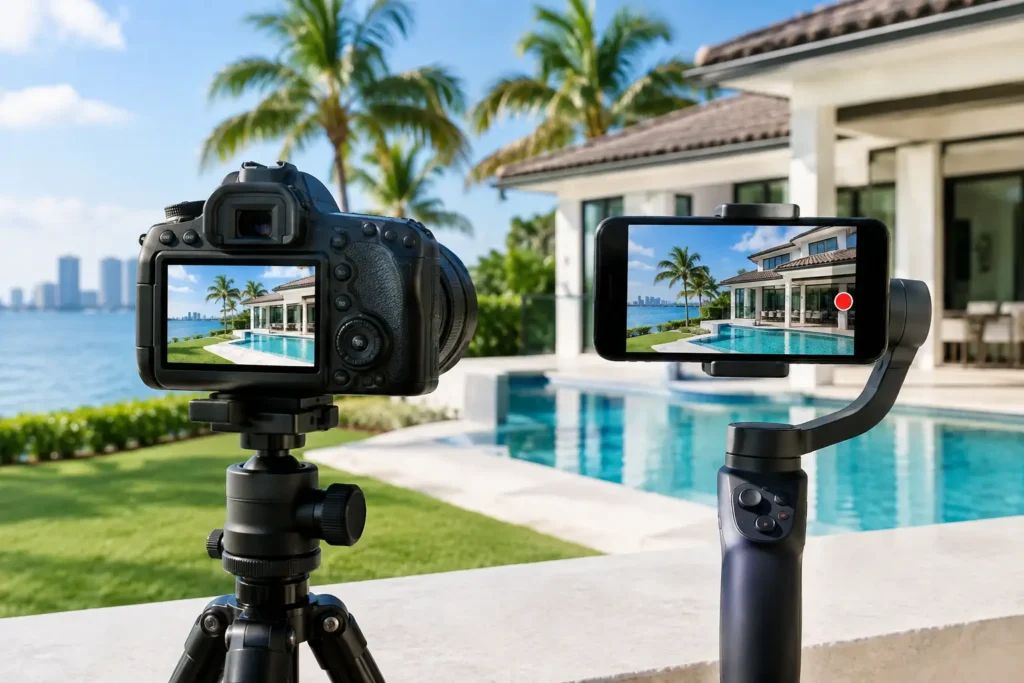
A buyer scrolling through Miami condos or Palm Beach waterfront homes makes an initial decision in seconds: keep looking or move on. That is why video versus photos is not a debate about which asset is better in the abstract. It is a decision about how to present a specific property, reach the right buyer, and create enough confidence to earn the next click, the inquiry, or the showing.
For most South Florida listings, the strongest answer is not video alone or photography alone. It is a visual strategy where each format does the job it does best. Professional photos create the polished first impression buyers expect. Video adds movement, context, and lifestyle. Used together, they turn a listing into a 24/7 open house that works across MLS, property portals, email, and social media.
Video Versus Photos: What Each Format Does Best
Photos are still the foundation of real estate marketing. Buyers use them to scan a home quickly, compare rooms, study finishes, and decide whether the asking price feels justified. A well-composed image can make a kitchen feel bright, show the scale of a primary suite, or reveal a view with more clarity than a moving camera can provide.
That matters because buyers do not consume listing content in a single, linear way. They jump between images. They stop on the pool, inspect the bathroom tile, return to the exterior, and compare the living space with other homes in the same price range. Photography supports that behavior. It gives people a clean, controlled view of the details that influence perceived value.
Video does something different. It creates flow. A walkthrough helps buyers understand how the entry connects to the main living area, where the bedrooms sit in relation to entertaining spaces, and how the property feels as someone moves through it. For a sleek Brickell residence, a video can convey the transition from lobby to skyline view. For a Fort Lauderdale waterfront home, it can show the connection between the interior, patio, dock, and water in a way a gallery cannot fully replicate.
The distinction is simple: photos make a property easy to inspect, while video makes it easier to experience. Serious listing marketing needs both outcomes.
When Photos Carry the Listing
Photography should be the non-negotiable starting point for nearly every listing. MLS galleries, search results, and buyer alerts are built around still images. Even when a listing includes a strong video, the cover image and photo sequence often determine whether a buyer gives that video a chance.
Photos are especially effective when the selling points are visual details that need a moment of attention. High-end appliances, custom millwork, designer finishes, architectural lines, city views, and landscaped outdoor areas all benefit from a carefully framed still. A buyer can pause, zoom, and study the feature without the camera moving on.
They are also more efficient when speed is the priority. A clean set of listing photos can be uploaded immediately across the channels buyers already use. For entry-level homes, rentals, or properties where the layout is straightforward, great photography may provide the strongest return on a limited marketing budget.
That does not mean “more photos” always means better marketing. A gallery filled with repetitive angles, dim rooms, or images that fail to establish the home’s flow can create confusion. The goal is not to document every square foot. It is to build a visual sequence that answers the buyer’s first questions and makes the property feel worth seeing in person.
When Video Creates a Competitive Advantage
Video earns its place when the home has a story that still images cannot tell efficiently. This is often true for larger homes, luxury properties, new construction, waterfront listings, and residences with a strong indoor-outdoor lifestyle. Movement gives the buyer a sense of arrival and helps the listing feel more complete before they ever schedule a tour.
A strong real estate video is not simply a camera walking room to room. It is edited to guide attention. It can open on the exterior or a signature view, move naturally through the main spaces, and finish with the lifestyle feature that makes the listing memorable. The pacing should feel polished but purposeful. Buyers need enough information to understand the home, not a cinematic sequence that hides the layout behind dramatic shots.
Video also gives agents a highly reusable asset. A horizontal property film can live on a listing website or be shared by email. Short vertical clips can introduce the home on social media, highlight a renovated kitchen, or showcase a sunset terrace. One professional shoot can provide material for multiple buyer touchpoints, helping the listing stay active instead of relying on the same first-day photo post.
For sellers, that visibility can be a meaningful differentiator. When you present a video plan during a listing appointment, you are not just promising exposure. You are showing a clear strategy for presenting their home at a higher perceived value and reaching buyers who may be relocating or shopping remotely.
The Trade-Offs Agents Should Consider
Video requires more planning than photography. The home needs to be prepared for movement, not just a few camera angles. Doors, closets, and sightlines may appear in the final edit. Window treatments, outdoor furniture, pool areas, and transitional spaces all deserve attention. A rushed property can still photograph well, but video is more likely to reveal what was overlooked.
There is also a question of audience. A buyer who is actively comparing five homes may prefer to scan photos first. They want to assess bedrooms, bathrooms, condition, and visual appeal quickly. Asking every buyer to watch a two-minute video before they understand the basics can add friction.
On the other hand, a relocating buyer may value video more than almost any other asset. If they cannot visit immediately, a walkthrough provides context that a gallery lacks. The same is true for luxury buyers evaluating properties with complex layouts, multiple structures, expansive grounds, or amenities that need a sense of scale.
This is where property type, price point, and buyer profile matter. Video is not a replacement for photos. It is an added layer of confidence when the listing needs to communicate more than finishes and room count.
Build the Right Visual Stack for the Property
The best marketing plan starts with the question, “What does a buyer need to understand before scheduling a showing?” For a polished condo with an exceptional view, professional photography plus a concise vertical video may be the right combination. The images establish the condition and finishes; the video captures the view, building energy, and location-driven lifestyle.
For a larger single-family home, photography and a full walkthrough video are often the better fit. Buyers need to see the layout, the relationship between living spaces, and how the exterior extends the home. Add aerial footage when location is a major part of the value proposition, such as proximity to the beach, golf course, marina, or downtown district.
Interactive 3D tours can strengthen the package further when buyer qualification is a priority. They let shoppers explore at their own pace and can reduce unnecessary showings from people who would have ruled out the layout after a basic walkthrough. Virtual staging or virtual enhancements can also help when a vacant property needs warmth or when an older room needs buyers to see the possibilities rather than just the space.
The key is not to add every available service because it sounds impressive. It is to choose the assets that solve the listing’s marketing challenge. A compact, well-executed package will outperform a scattered collection of visuals with no clear purpose.
Make Photos and Video Work Together
The strongest listing launch uses photos and video in sequence. Lead with the best hero image – usually the exterior, a major water view, or the most compelling living space. Give buyers a photo gallery that makes the home easy to evaluate. Then use video to answer the question that follows: what would it feel like to be there?
On social media, do not post a generic slideshow and call it video. Use short clips with a clear focus: a dramatic entry, a view opening beyond a living room, a pool at golden hour, or a kitchen designed for entertaining. The purpose is to stop the scroll and direct interested viewers toward the complete listing experience.
For agent-to-agent sharing, video can help communicate the property quickly to a buyer’s representative. For sellers, it demonstrates the level of marketing effort behind the listing. For buyers, it reduces uncertainty before they commit time to an in-person tour. Each audience sees a different benefit, but the outcome is the same: better-informed interest.
A property deserves more than attractive content. It needs visual assets that make its value clear, make its layout easier to understand, and give the right buyer a reason to act. Start with photography, add video where it can tell the story photos cannot, and make every frame work toward a stronger showing.