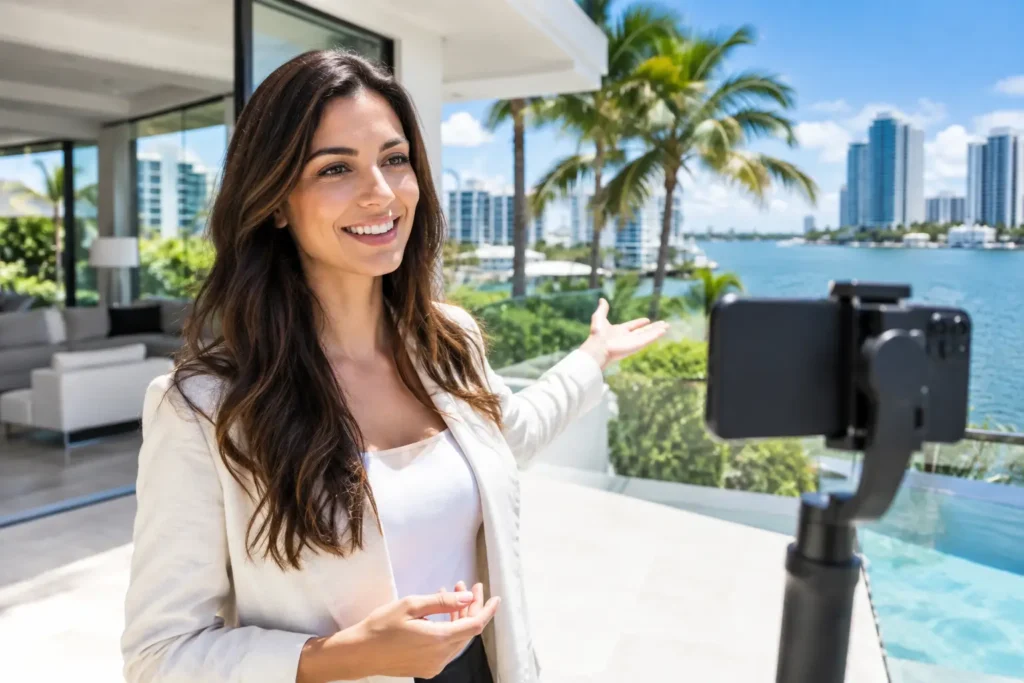
A buyer scrolling Miami, Fort Lauderdale, or Palm Beach listings can decide whether a home feels worth seeing before they ever book a showing. That is why a listing walkthrough video guide should focus on more than attractive footage. The goal is to give buyers a believable sense of flow, scale, condition, and lifestyle – then motivate the right prospects to take the next step.
For South Florida agents, a strong walkthrough turns a listing into a 24/7 open house. It can reduce basic layout questions, attract more qualified inquiries, and help sellers see that you are marketing their property with a clear strategy instead of posting the same assets as every competing listing.
What a Listing Walkthrough Video Must Accomplish
A walkthrough video is not a slideshow set to music, and it is not a cinematic commercial that hides the property behind dramatic close-ups. It needs to answer the questions buyers naturally ask when they cannot be in the home: Where do I enter? How do the main spaces connect? Does the primary suite feel private? What does the outdoor area actually offer? Is this home aligned with the life I want to live?
That requires a buyer-first sequence. A condo buyer may care most about the view, natural light, balcony, amenities, and proximity to the elevator. A family shopping in Weston or Parkland may want to understand bedroom placement, kitchen visibility, yard access, and how the home works during a busy weekday. The same camera technique will not serve both properties equally well.
The best videos balance aspiration with orientation. They make the home look polished while remaining honest about its layout. Buyers who understand the property before touring are more likely to arrive with real intent.
Listing Walkthrough Video Guide: Plan Before Filming
The strongest filming decisions are made before the camera comes out. Walk the property as if you are a buyer arriving for the first time. Identify the first visual payoff, the rooms that drive value, and any transitions that need extra clarity. In a waterfront home, that may mean revealing the water early. In a renovated townhome, it may be the moment the entry opens into the main living area.
Build a route, not a room checklist
A room-by-room approach often creates a choppy video: kitchen, bedroom, bathroom, hallway, repeat. Instead, create a route that follows how someone would experience the home. Start at the exterior or entry, move naturally into the main living spaces, then show private areas, outdoor features, and a final lifestyle payoff.
This does not mean every room deserves equal time. A well-designed kitchen, a resort-style pool deck, an expansive view, or a flexible bonus room may earn longer coverage because it influences a buyer’s decision. A small secondary bathroom might need only a clean, quick pass. Prioritization keeps the edit focused and respects the viewer’s attention.
Prepare the property for movement
Photography can work around a small imperfection. Video exposes it. Blinds that are uneven, cluttered countertops, a crooked dining chair, dark corners, and ceiling fans spinning at different speeds can distract from an otherwise premium presentation.
Before filming, turn on interior and exterior lights, open shades where the view or daylight is a selling point, remove personal items, and clear pathways for the camera. South Florida homes also require practical timing. Harsh midday sun can blow out windows and pool areas, while late-afternoon light may bring a warmer, more inviting look. For properties with major glass walls or east-west exposure, the shoot time can materially change the result.
Film for Clarity, Not Camera Tricks
Smooth camera movement creates confidence, but excessive motion can make a property feel smaller or harder to understand. Each shot should reveal a relationship: the kitchen to the living room, the primary bedroom to the terrace, the patio to the pool, or the home to its view.
Begin with an establishing shot that immediately signals what makes the listing valuable. Then let the camera move at a pace that allows buyers to absorb the space. A controlled push into a kitchen, a gentle pass through an open living area, or a transition from indoor dining to an outdoor entertaining space can communicate scale far better than fast cuts.
Use the first 10 seconds strategically
The opening needs a reason to keep watching. For a luxury listing, lead with the strongest visual advantage: bay views, a dramatic staircase, a designer kitchen, or an aerial reveal that establishes the home’s setting. For a more practical property, lead with the cleanest expression of value, such as a bright great room, an updated kitchen, or a backyard that clearly expands usable living space.
Avoid opening with a long logo animation or a slow driveway shot unless the arrival experience is central to the property’s appeal. The listing should earn attention before branding appears.
Let audio support the experience
Music can add polish, but it should never overpower the property. Some videos benefit from a concise agent voiceover that explains a unique feature, renovation, neighborhood advantage, or lifestyle detail. Others work better with music, text overlays, and natural room flow.
It depends on the audience and the property. A new construction home with specialized finishes may benefit from brief narration. A high-end oceanfront condo may need less explanation and more visual breathing room. If an agent speaks on camera, delivery should be concise and specific. Buyers do not need a biography. They need a compelling reason to explore the listing.
Show What Photos Cannot Explain
Professional photos remain essential because they stop the scroll and highlight individual features. Walkthrough video has a different job: it shows connection, pace, and atmosphere. Use it to reveal the open-plan layout, the distance from the kitchen to the pool, the depth of a balcony, or the natural light shifting through a living room.
Drone footage can also add context when location is part of the value proposition. It is especially useful for waterfront access, golf course frontage, large lots, proximity to downtown districts, or a home’s relationship to the beach. But aerial shots should support the story, not become the story. If the listing’s true advantage is an exceptional interior renovation, too much drone footage can delay the moment buyers came to see.
For complex layouts, a 3D tour can work alongside the video rather than replace it. The video creates emotion and guides attention. The virtual tour gives serious prospects the ability to inspect the home on their own terms. Together, they give buyers both confidence and curiosity.
Edit for Where Buyers Will Watch
One long horizontal video is not enough. Buyers may encounter the listing through the MLS, a property website, Instagram, YouTube, email, or a text from their agent. The core walkthrough should be designed for full viewing, while shorter edits can highlight the most marketable angle for social media.
A concise vertical teaser can lead with the pool, skyline, chef’s kitchen, or indoor-outdoor living and direct attention to the full property experience. The full walkthrough should still stand on its own, with clean pacing and a logical sequence. Do not simply crop a horizontal video into a vertical frame if important details disappear at the edges.
Captions and simple text overlays can help viewers watching without sound. Keep them useful: square footage, waterfront access, renovated features, a key community amenity, or a short location cue. Overloading the screen with every selling point makes the video feel like an ad rather than a property experience.
Common Walkthrough Video Mistakes
The biggest mistake is confusing expensive-looking footage with effective marketing. A video can have dramatic music, shallow focus, and impressive transitions yet leave buyers unclear about the property. If viewers cannot understand where the bedrooms are, how the living spaces connect, or what the outdoor area includes, the video has missed its main job.
Another common issue is moving too quickly. Fast edits may perform as a short social teaser, but they are frustrating in a full property tour. Give key spaces enough time to register. Conversely, avoid lingering on rooms without a meaningful feature. Pacing should follow buyer interest, not a fixed number of seconds per room.
Finally, do not overpromise. Overly edited skies, distorted wide-angle shots, or selective angles that conceal obvious limitations may generate clicks, but they can create disappointment at the showing. Trust is an asset. A polished, accurate presentation helps protect it.
Measure Whether the Video Is Helping the Listing
Views alone do not define success. Look for signs that the video is improving the quality of buyer engagement: longer watch time, more saves and shares, direct questions about featured amenities, and showings from people who already understand the layout. Ask buyers and cooperating agents what stood out. Their answers reveal whether the story is landing.
A well-produced walkthrough also has a listing-presentation benefit. Sellers want evidence that their home will receive serious exposure. When you can explain how video, photography, aerial coverage, and virtual tours each serve a different buyer need, you are not just offering media. You are showing a complete marketing plan.
Every property has one or two moments that make a buyer picture life there. Find those moments, film them with clarity, and let the rest of the walkthrough prove that the home delivers on the promise.