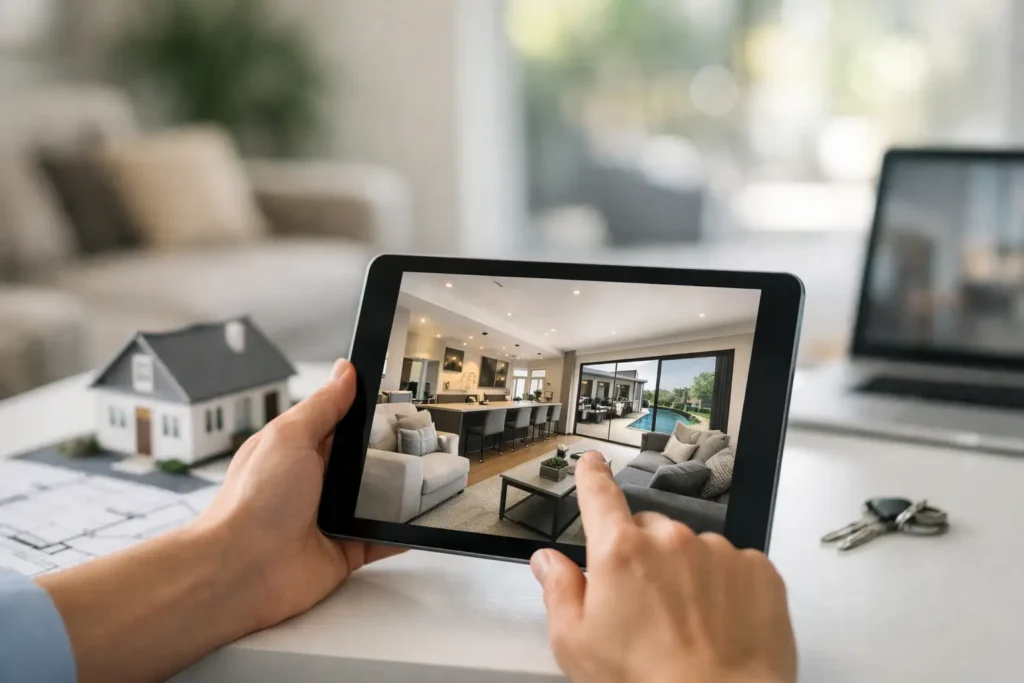
A buyer scrolling listings at 10:30 p.m. is not waiting for tomorrow’s open house. They are deciding, in seconds, which homes deserve their time. Can virtual tours help sell homes in that moment? Yes, when they give buyers a clear, honest sense of the layout, scale, condition, and lifestyle a property offers.
For South Florida agents, that matters because listings are competing against professionally photographed condos, waterfront homes, new construction, and investor-ready properties across every price point. A strong virtual tour turns a listing into a 24/7 open house, helping serious buyers move from curiosity to a showing request with more confidence.
Can Virtual Tours Help Sell Homes? Yes, With the Right Strategy
A virtual tour is not a replacement for great photography, video, staging, or an experienced agent. It is a tool that gives buyers something still photos cannot: control. They can move through rooms at their own pace, revisit the kitchen, check how the bedrooms connect, and understand whether the living space fits the way they actually live.
That added context can improve the quality of buyer interest. Instead of scheduling a showing based on one flattering image, buyers arrive with a more realistic understanding of the home. For sellers, that often means fewer casual walk-throughs and more productive appointments.
The strongest tours also keep a listing working after business hours. International buyers, relocating families, and busy professionals can explore without coordinating access first. In markets such as Miami-Dade, Broward, and Palm Beach, where buyers may be comparing properties from another city or another country, that access is a genuine advantage.
What a Virtual Tour Does for Buyer Decision-Making
Photos are designed to create attention. Virtual tours are designed to answer questions. A well-produced 3D walkthrough lets buyers see how the entry opens into the main living area, whether the primary suite feels private, and how indoor spaces connect to a balcony, pool deck, or backyard.
That clarity is particularly valuable for properties where the floor plan is a selling point. A renovated townhouse with a flexible office, a condo with direct water views, or a family home with a split-bedroom layout can be difficult to communicate in a photo gallery alone. A tour helps the buyer experience the flow rather than trying to piece it together image by image.
It can also make a listing feel more transparent. Buyers are used to polished real estate marketing, but they still want to know what is behind the camera angle. A tour gives them room to inspect the property more independently. That can build trust before the first conversation with an agent.
Better-qualified showings, not just more clicks
A virtual tour may increase engagement, but the more useful metric is intent. Buyers who spend time navigating a tour are often further along than someone who taps through a few photos and moves on. They have invested attention in the property and may have a clearer reason for requesting a showing.
This does not mean every tour viewer becomes a buyer. It means agents can use the tour to filter interest naturally. Someone who realizes the layout is not right can move on without consuming seller time. Someone who keeps revisiting the primary suite, outdoor area, and kitchen may be ready for a focused follow-up.
For occupied homes, that can be a major benefit. Fewer low-intent appointments mean less disruption for sellers and less pressure to keep the property show-ready for visitors who were never likely to make an offer.
Where Virtual Tours Deliver the Most Value
Virtual tours are especially effective when buyers need more context before visiting in person. Luxury homes, waterfront properties, condos, vacant listings, furnished short-term rental investments, and new construction all fit that profile. These properties often have details that deserve more than a static gallery.
They are also useful for homes with a distinctive layout or significant upgrades. If a property has an expanded kitchen, a reconfigured primary bath, a custom closet, a private dock, or a covered outdoor entertaining space, a tour helps show how those investments work together.
For vacant listings, virtual tours can prevent empty rooms from feeling flat or confusing. Combined with clean photography, accurate floor plans, and virtual staging where appropriate, a walkthrough gives buyers a much stronger read on room proportions and furniture placement.
Out-of-area and international buyers
South Florida attracts buyers who cannot always visit before narrowing their choices. A professional 3D tour gives those buyers a credible way to compare homes from a distance. It does not eliminate the need for due diligence or an in-person visit, but it can move a property onto the serious shortlist faster.
The key is credibility. The tour should accurately represent the home, not hide flaws or create distorted room sizes. Buyers who feel misled online are unlikely to trust the listing in person. Buyers who feel informed are more likely to schedule a visit with the right expectations.
The Trade-Off: A Tour Cannot Fix a Weak Listing
Virtual tours work best as part of a complete visual marketing plan. If the home is poorly prepared, poorly lit, or photographed without intention, adding a walkthrough will not create the premium impression sellers expect.
Preparation still matters. Decluttering, cleaning, staging key rooms, opening shades, and addressing obvious maintenance distractions should happen before capture. The tour records what is there. It cannot replace the strategic work of making a property look its best.
There is also a question of fit. A basic entry-level listing may not need every advanced media option, particularly when speed, budget, and property condition are tighter constraints. In those cases, excellent listing photography and a concise video may deliver the right return. The goal is not to add technology for its own sake. The goal is to choose assets that make the property easier to understand and easier to market.
How to Use a Virtual Tour to Support the Sale
A virtual tour should not sit quietly at the bottom of a listing page. Mention it in the property remarks where permitted, feature it prominently on the property website, and use short screen recordings or clips to create social content that directs viewers back to the full experience.
During listing presentations, it is also a strong differentiator. Sellers want to know how you will create attention beyond uploading photos to the MLS. Showing them how a Matterport or interactive walkthrough can keep their home accessible around the clock demonstrates a clear plan for attracting and qualifying buyers.
Pair the tour with the assets that tell the full story. Professional photography creates the first impression. Video adds emotion and pace. Drone footage establishes location, lot context, and proximity to water, parks, or downtown amenities. A floor plan offers practical measurement and flow. The virtual tour connects these pieces by letting buyers explore the home for themselves.
Ask the right performance questions
Do not judge a tour only by view count. Look at whether it supports stronger buyer conversations, more informed showing requests, longer time spent on the listing, and fewer mismatched appointments. Your MLS, property website analytics, and social engagement can provide useful signals, but agent feedback matters too.
Ask buyers what they understood from the tour before they arrived. Ask sellers whether showings became more targeted. Over time, those patterns will help you decide which listing types benefit most from immersive media and how to position it in your marketing package.
A Competitive Advantage Buyers Can Feel
The best real estate marketing makes the next step easy. A virtual tour does that by reducing uncertainty before a buyer ever walks through the door. It gives them permission to picture their furniture in the living room, their mornings in the kitchen, and their weekends by the pool.
For agents, that is the real opportunity. Use virtual tours to show the possibilities, not just the space, and give serious buyers a reason to move from a screen to a showing.