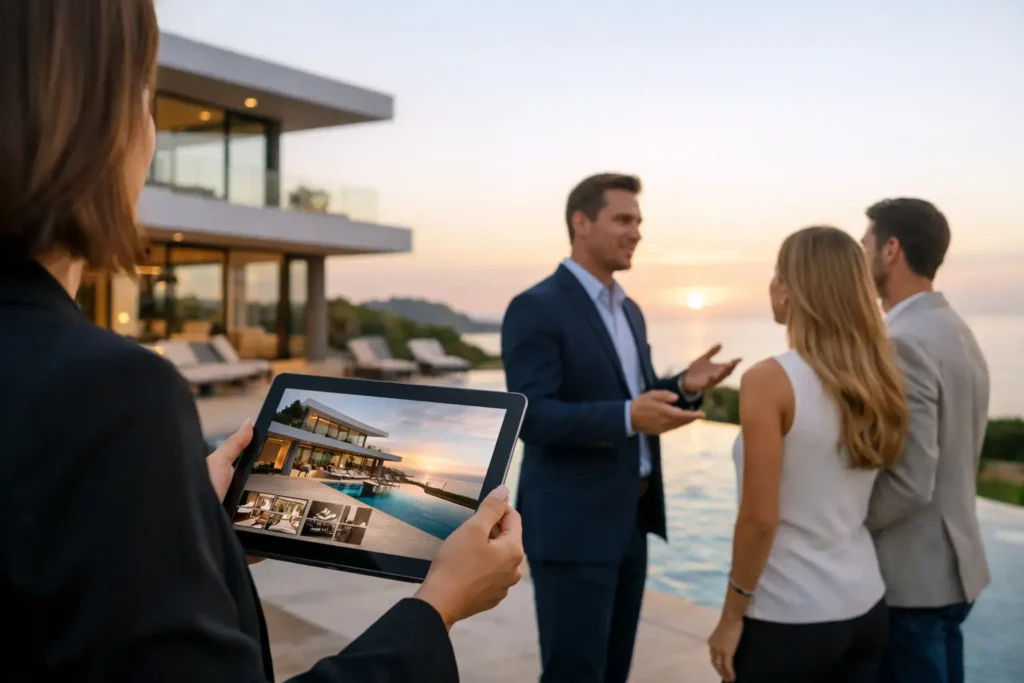
A luxury listing can lose momentum before the first showing if the marketing asks buyers to imagine too much. In South Florida, where a waterfront view, indoor-outdoor flow, and polished finishes can define value, luxury property marketing has one job: make the right buyer feel the property before they step through the door.
That takes more than a gallery of attractive photos. It requires a deliberate visual strategy that communicates scale, privacy, lifestyle, and condition across every place a buyer encounters the listing. Done well, it creates stronger first impressions, filters out poorly matched inquiries, and gives agents a more persuasive listing presentation.
Luxury Property Marketing Starts With Positioning
A luxury home is not automatically a luxury listing. Price alone does not create perceived value. The marketing needs to identify what makes the property scarce in its specific market and bring that story forward immediately.
For a Miami waterfront residence, the strongest angle may be unobstructed bay views, direct ocean access, or a protected dock. A Palm Beach estate may lead with architectural pedigree, privacy, and entertaining spaces. In Broward, a renovated penthouse may compete on panoramic views, walkability, and turnkey design. The point is not to force every home into the same polished formula. It is to determine the feature that changes a buyer’s decision and build the visual campaign around it.
Before a shoot, consider the buyer most likely to respond. Are they relocating from the Northeast? Looking for a seasonal residence? Seeking a family compound, a high-rise lock-and-leave home, or a yacht-friendly waterfront property? That answer informs the shoot timing, room styling, drone angles, video pacing, and what belongs in the first five listing photos.
A home with an exceptional sunset view should not be photographed only in bright midday light. A property with a resort-style backyard should show how the space feels when it is ready to host. Luxury buyers are purchasing a future version of their lives, not simply counting bedrooms.
Build the Visual Stack Around the Property
The most effective campaigns use the right media for the home rather than treating every listing as identical. Professional photography remains the foundation because it drives clicks across the MLS, property portals, email campaigns, and social posts. But photography alone cannot always explain a 7,000-square-foot floor plan, showcase a rooftop amenity, or convey the relationship between a home and the water.
Photography That Establishes Value Fast
The first image must earn the next click. For some homes, that is a striking exterior at twilight. For others, it is a wide living room framed by water, a sculptural staircase, or a kitchen that clearly signals the level of finish.
Good luxury photography balances aspirational composition with accuracy. Overly distorted wide-angle images may make a room look larger, but they can weaken trust when buyers arrive. The goal is to show generous scale without misrepresenting proportions. Clean lines, controlled lighting, and intentional composition allow architecture and design to do the work.
Preparation matters as much as capture. Remove personal clutter, manage cords and countertop items, replace burnt bulbs, and make sure the pool, landscaping, and outdoor furniture are presentation-ready. At the upper end of the market, small visual distractions can suggest poor maintenance or a rushed sale.
Video That Creates a Sense of Arrival
A property film gives buyers context that still images cannot. It can show the progression from gated entrance to foyer, from living area to terrace, or from primary suite to a private balcony overlooking the Intracoastal. This movement helps buyers understand how the home lives.
The strongest videos are not random room-by-room walk-throughs. They establish a point of view. A modern waterfront home may call for crisp exterior details, aerial context, and shots that emphasize open sightlines. A historic estate may need slower pacing and attention to craftsmanship. Keep the edit focused enough to hold attention, but detailed enough to answer the question buyers are already asking: what would it feel like to be here?
Short vertical clips also deserve a place in the plan. They are built for social platforms, agent stories, and direct sharing, where the first few seconds determine whether a buyer keeps watching. A single strong reel can introduce the view, the pool, or a memorable architectural feature faster than a long listing description ever could.
3D Tours and Floor Plans Reduce Friction
For expansive homes, unusual layouts, and out-of-area buyers, a 3D tour can function as a 24/7 open house. Matterport and CloudPano experiences let prospects move through rooms at their own pace, revisit details, and understand adjacencies that photos may not explain.
This does not replace in-person showings. Luxury buyers still want to experience materials, views, sound, privacy, and neighborhood atmosphere firsthand. But virtual tours help make those showings more qualified. Buyers who have already explored the layout are more likely to arrive with serious questions instead of basic uncertainty about the home.
A measured floor plan adds another layer of clarity. It is especially valuable when square footage, room proportions, guest-suite separation, or outdoor entertaining areas are major selling points. The trade-off is simple: not every condo or smaller listing needs every tool. Use immersive media when it solves a real buyer objection or helps the home compete in a crowded category.
Drone Media Provides Context, Not Just Spectacle
Aerial photography and video are essential when location is part of the value proposition. They can show proximity to beaches, golf courses, marinas, parks, downtown districts, and waterways in a way ground-level imagery cannot.
Still, drone footage needs purpose. A dramatic flyover is not useful if it leaves buyers unsure which property is being shown or what makes the setting valuable. The best aerial sequences establish the home, its lot, its privacy, and its connection to the surrounding lifestyle. They should also respect local airspace restrictions, weather conditions, and the privacy of neighboring properties.
Prepare the Home for the Camera and the Buyer
Visual marketing cannot compensate for a home that has not been prepared. The camera notices what a rushed showing may overlook: uneven patio cushions, empty planters, mismatched light temperatures, fingerprints on glass, and bulky furniture that blocks circulation.
Start with a property-specific preparation plan. Emphasize sightlines in view properties. Stage outdoor spaces with the same care as interiors. Make sure window treatments are open where privacy allows, and use lighting to create warmth without turning every fixture on indiscriminately. If a vacant property feels cold or difficult to understand, virtual staging can show the possibilities without the cost and logistics of full physical staging.
Virtual enhancements should be used carefully. They work well for vacant rooms, lawn cleanup, blue-sky replacements, and visualizing a furnished lifestyle. They should never conceal material defects, misrepresent views, or create features that cannot reasonably exist. Credibility is a luxury asset. Protect it.
Distribute Assets Where Buyers Actually Decide
Luxury property marketing is not complete when the shoot is delivered. Assets need to be organized for the platforms and conversations that drive interest: MLS entries, property websites, social media, email outreach, broker networks, and private buyer follow-up.
Lead with the most persuasive visuals everywhere. MLS photo order matters because buyers often decide in seconds whether to keep browsing. Social content should not be a duplicate of the full gallery. Use it to create curiosity, highlight one compelling feature, and send attention back to the listing experience.
For agents, a complete media package also creates leverage beyond the current sale. It demonstrates to prospective sellers that your marketing process is intentional, professional, and ready to compete at their price point. A strong campaign helps sell the home in front of you while helping win the next listing.
Measure More Than Views
High view counts are encouraging, but they are not the final measure of performance. Look at showing quality, saved listings, repeat tour activity, direct inquiries, social shares, and the questions buyers ask after engaging with the media. If prospects consistently ask about a feature that was underrepresented, that is useful feedback for future campaigns.
The market also affects the right approach. A one-of-one oceanfront estate may benefit from a cinematic, highly produced campaign and targeted private outreach. A well-priced luxury condo in a competitive building may need speed, crisp photography, floor plans, and frequent social distribution. The objective is not to use every available service. It is to remove uncertainty and make the property’s value easy to see.
The next time you prepare a premium listing, do not ask whether the media looks impressive. Ask whether a qualified buyer can understand the lifestyle, layout, location, and reason to act before the first showing. That is the standard that turns polished assets into real market advantage.