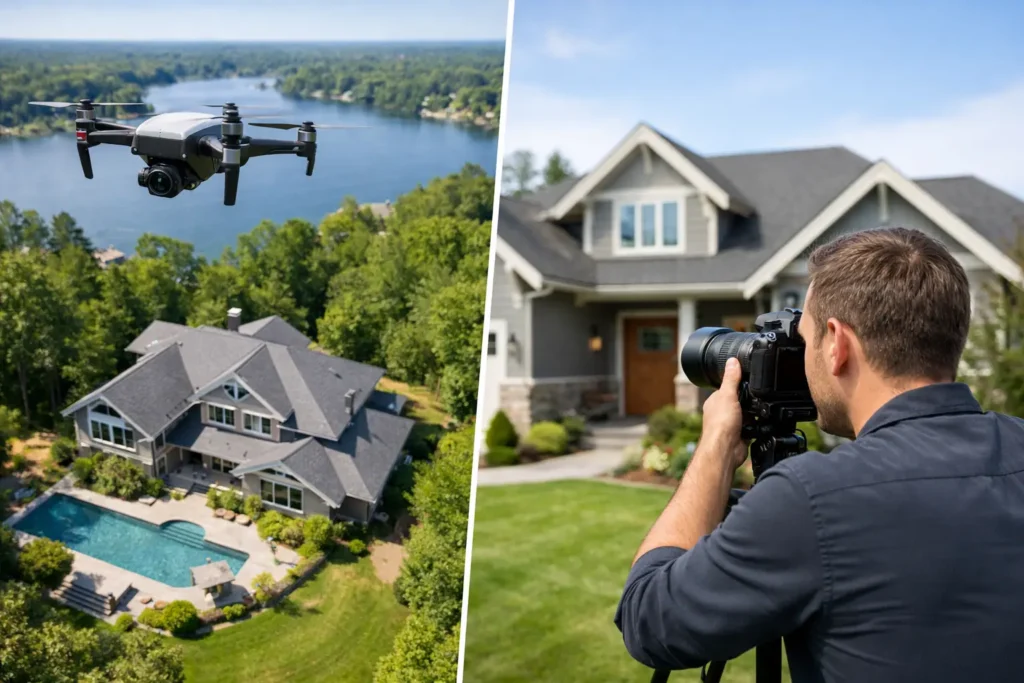
A waterfront home can lose its strongest selling point in a standard exterior photo. A luxury condo may need an elevated view to show its relationship to the beach, skyline, or nearby amenities. But a drone cannot show the warmth of a renovated kitchen or the flow from a living room to a covered patio. That is the practical reality of drone photography vs ground photography: each format sells a different part of the property story.
For South Florida agents, the right choice is rarely drone or ground coverage. The most effective listing strategy uses each where it creates clarity, builds perceived value, and helps qualified buyers understand what makes the home worth seeing in person.
Drone Photography vs Ground Photography: The Core Difference
Ground photography puts buyers in the home. It captures the finishes, scale, light, layout, and details that influence an emotional decision. Buyers use these images to picture morning coffee at the island, entertaining in the great room, or stepping into a primary suite that feels private and polished.
Drone photography puts the home in context. It shows the lot, roofline, exterior architecture, water access, golf frontage, neighboring development, and proximity to lifestyle features. In Miami-Dade, Broward, and Palm Beach, that context can be a major value driver. A home near the Intracoastal, a condo overlooking the ocean, or an estate on a large corner lot is easier to position when buyers can see the setting immediately.
The distinction matters because online buyers make quick judgments. Ground images answer, “What is it like to live inside?” Aerial images answer, “Why does this location matter?” Strong listing media answers both before a buyer schedules a showing.
When Drone Photography Creates a Competitive Advantage
Drone coverage is most valuable when the property has an exterior feature that cannot be communicated well from eye level. It gives agents a way to make location tangible rather than relying on a line in the listing description.
Properties With Land, Water, or a View
Aerial photography is especially effective for waterfront residences, equestrian properties, golf-course homes, new construction, estates, and homes with meaningful acreage. It can show canal frontage, dock placement, a pool and outdoor entertaining area, or the true size of a backyard. For a property near the beach or a downtown district, an aerial image can also establish the lifestyle story in seconds.
This is not about adding a dramatic overhead shot simply because it looks impressive. The best drone images explain a premium. If the home has direct ocean access, a short route to a marina, a protected backyard, or an unobstructed skyline view, aerial coverage can make that advantage easier to understand and easier to remember.
Listings Where Orientation Matters
Some homes photograph beautifully from the street but leave buyers wondering how the lot sits relative to water, roads, parks, or adjacent properties. A well-framed aerial image removes that uncertainty. It can also reduce unproductive showings from buyers who need to understand access, privacy, or surrounding development before they commit time to a visit.
For condo marketing, exterior aerials can establish the building’s position in relation to the beach, shopping, dining, and major landmarks. The key is honest framing. Drone imagery should provide useful perspective, not create a misleading impression of distance, size, or privacy.
Premium Listings That Need a Strong First Impression
High-end sellers expect marketing that matches the level of their property. Drone photography helps an agent present a complete campaign rather than a basic set of interior images. It signals preparation and supports a stronger listing presentation, particularly when competing for luxury, waterfront, or architecturally distinctive homes.
That said, premium does not automatically mean aerial. A penthouse with no meaningful exterior view, a townhome in a dense setting, or a small home without distinctive surroundings may get more value from exceptional ground photography, video, virtual staging, or a 3D tour.
Where Ground Photography Does the Heavy Lifting
Ground photography is the foundation of almost every real estate listing. Buyers may click because of the hero image, but they keep browsing because the photos make the home feel coherent, inviting, and worth pursuing.
Interiors Sell the Everyday Experience
Professional interior photography gives every important room a purpose. It shows how spaces connect, captures natural light without losing window views, and makes scale easier to read. In a competitive South Florida market, clean composition and accurate color matter because buyers are comparing homes quickly across MLS, property portals, social media, and agent emails.
A wide-angle image is useful when it clarifies the room, but it should not distort it. Good ground photography balances visual impact with credibility. Buyers should arrive at a showing feeling informed, not disappointed that a room looked dramatically larger online.
Exterior Images at Eye Level Build Trust
Drone shots are powerful, but the front exterior photo often remains one of the listing’s most important images. Eye-level exterior photography reveals curb appeal in the way a buyer experiences it on arrival. It shows landscaping, entry details, architectural character, driveway presentation, and the relationship between the home and the street.
Ground coverage also performs better for patios, pools, outdoor kitchens, and covered living spaces when the goal is to make buyers imagine themselves using the area. Aerial images establish the size and placement of a pool. Ground images show the atmosphere around it.
The Best Listing Strategy Uses Both Perspectives
The strongest visual campaigns do not treat drone photography as a replacement for traditional real estate photography. They use aerial and ground images in sequence to guide buyers through a property.
Start with the image that represents the listing’s clearest advantage. For a waterfront home, that may be a compelling aerial that shows the house, pool, dock, and waterway. For a design-forward residence, it may be a crisp front exterior or an interior hero image with dramatic volume and natural light. From there, ground photography should carry the buyer through the spaces that make up daily life.
A useful image set typically moves from curb appeal or lifestyle context into main living areas, kitchen, primary suite, outdoor spaces, and secondary features. Drone images work best at strategic moments, not as a gallery filled with repetitive overhead angles. One or two meaningful aerial views can do more for buyer confidence than ten images that say the same thing.
Cost, Timing, and Compliance Considerations
Drone capture requires more planning than ground photography. Weather, wind, restricted airspace, building rules, and local conditions can affect whether a flight is possible at the scheduled appointment. This is particularly relevant around airports, coastal areas, downtown corridors, stadiums, and other controlled zones across South Florida.
A professional drone operator should assess airspace and complete the work within applicable FAA requirements. Agents should also set expectations with sellers: a drone shoot may need to be rescheduled for safety or compliance, even when the rest of the property can be photographed as planned.
Budget matters too. If the listing has a limited marketing budget, prioritize the media that best explains its value. For an interior-driven condo, superior ground photography and a virtual tour may create more impact than aerial coverage. For a waterfront property, cutting drone imagery may leave the listing without the visual proof buyers need.
Choose Media Based on the Buyer’s Decision
Before booking a shoot, ask one question: what will a serious buyer need to see to understand why this property is priced where it is? If the answer is the lot, water, neighborhood access, or view corridor, drone photography deserves a place in the package. If the answer is the renovation quality, layout, natural light, or indoor-outdoor living, ground photography should receive the most attention.
For many listings, the right answer is both. A complete visual plan gives buyers context from above and confidence at eye level, helping your marketing work harder before the first showing is ever scheduled.
When you prepare your next listing, do not choose imagery based on what is trendy. Choose the perspective that makes the property’s best reason to buy impossible to miss.