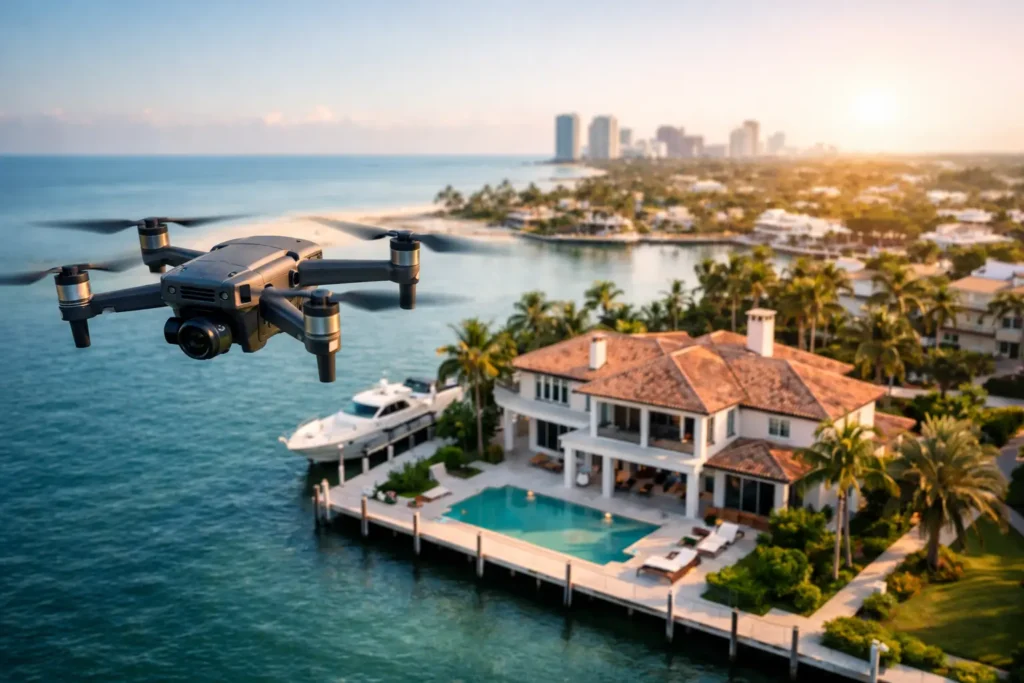
A waterfront home can have a redesigned pool, a private dock, and sunset views over the Intracoastal, yet still feel like another listing when every photo is taken at eye level. Drone photography changes that first impression. It shows buyers the setting, scale, and lifestyle around a property before they decide whether to schedule a showing.
For South Florida agents, that context is not a bonus feature. It is often the reason a buyer clicks, saves, shares, or moves on. In a market where location can carry as much value as the home itself, aerial imagery gives the listing a clearer story from the first scroll.
Why Drone Photography Performs for Real Estate
Aerial photography helps buyers understand what standard listing photos cannot fully explain. A wide exterior shot may show a beautiful facade, but it does not show whether the home sits on a quiet cul-de-sac, how close it is to the water, or how the backyard connects to a golf course, preserve, marina, or beach access point.
That perspective matters in Miami-Dade, Broward, and Palm Beach County. Buyers are often comparing lifestyle as much as square footage. They want to see the relationship between the home and its surroundings: the pool area, roofline, lot boundaries, water frontage, nearby parks, or neighborhood character. A thoughtful aerial image makes those selling points visible instead of leaving them to a caption.
It also establishes scale. Large estates, corner lots, multi-building properties, and homes with deep backyards can be difficult to understand through interior and ground-level exterior images alone. Aerial coverage gives buyers a faster read on the full property, which can lead to more informed inquiries and fewer showings from people who were never a real fit.
What Buyers Should See From the Air
The strongest drone photography is not simply a collection of high-altitude shots. It is a planned visual sequence that supports the listing strategy. Every image should answer a buyer question or reinforce a reason to see the property in person.
For a waterfront listing, that may mean showing the home, dock, seawall, canal width, and route toward open water in a way that feels accurate and appealing. For a suburban family home, the best angle may reveal the backyard, pool, outdoor kitchen, and proximity to a neighborhood park. For a luxury condo or townhome, aerial images can place the residence within its skyline, beach, marina, or walkable district.
A capable real estate media team will usually plan for several types of aerial views:
- A hero image that presents the property at its most compelling angle
- A wider context shot that shows the neighborhood and surrounding amenities
- Lower-altitude exterior images that add dimension to the architecture and outdoor spaces
- Detail shots that feature major lifestyle assets, such as a dock, pool, tennis court, rooftop, or private drive
The right mix depends on the property. Aerial images should never exaggerate distance, misrepresent a view, or make an ordinary location appear more private than it is. Buyers notice when marketing overpromises. The goal is to create excitement while giving them a trustworthy picture of what they will experience on arrival.
When Aerial Coverage Is Worth the Investment
Not every listing needs the same level of drone coverage. A compact condo with no meaningful exterior features may benefit more from strong interior photography, a floor plan, and a virtual tour. But when location, land, outdoor living, or access is part of the value proposition, aerial media can be one of the highest-impact additions to the listing package.
Drone photography is especially effective for waterfront homes, acreage and equestrian properties, golf course homes, new construction, luxury estates, gated communities, and listings near recognizable South Florida destinations. It can also help reposition a property that has been sitting on the market. Fresh aerial assets create a new lead image, new social content, and a stronger reason to bring the listing back into buyer conversations.
The trade-off is simple: aerial coverage should be purposeful. Adding drone images to a listing with no aerial story can feel decorative. Using them to show a major advantage can make the marketing feel more complete, polished, and credible.
Plan the Shoot Around the Listing Strategy
The best results start before the drone leaves the ground. Before scheduling, identify the property features that justify aerial coverage. Is the key selling point the water? The oversized lot? The proximity to downtown? The outdoor entertaining area? The answer guides the flight plan, timing, and final image selection.
Lighting is equally important. Morning can create clean, bright exterior images and calmer water conditions. Late afternoon can bring warmer tones and more dramatic shadows, especially for properties with west-facing backyards or skyline views. Twilight aerials can be striking for luxury listings, but they require the right property, weather, and visibility to earn their place in the campaign.
Preparation on site matters too. Pools should be clean, furniture arranged, umbrellas opened when appropriate, vehicles moved from the driveway, and trash bins stored out of view. For waterfront properties, agents should confirm that docks, boats, and outdoor areas are ready to be photographed. Drone images capture a broad scene, which means small distractions can become more noticeable than expected.
Compliance Protects Your Listing and Your Reputation
Real estate drone work is not just about owning a drone and getting a good angle. Commercial aerial capture requires proper licensing and a professional understanding of airspace, weather, local conditions, and property privacy.
South Florida presents real constraints. Many properties are close to airports, heliports, controlled airspace, stadiums, government facilities, or densely populated areas. Wind, rain, coastal conditions, and temporary flight restrictions can also affect whether a flight is safe and permitted. A professional operator plans for these variables rather than promising footage that cannot legally or safely be captured.
This is also why agents should avoid treating aerial media as an afterthought. Scheduling early gives the media team time to assess flight conditions and choose an alternate window if needed. If a drone flight is not possible, the listing can still move forward with a strong ground-level photography plan rather than losing momentum on launch day.
Use Aerial Images Beyond the MLS
Drone photography earns more value when it is used across the full listing campaign. The MLS may be the first destination for many buyers, but social media is often where a property earns attention before the search begins.
Aerial hero images work well as the lead visual in a listing announcement, a just-listed email, a property website banner, and a paid social campaign. Short aerial video clips can create immediate movement in Reels and vertical ads, particularly when they open with a wide view of the home and then move toward a signature feature. The message should stay specific: waterfront access, a private backyard, walkability, ocean proximity, or a rare lot size.
Keep the image choice aligned with the audience. An investor may care about lot size, access, and redevelopment context. A family buyer may respond to the yard, nearby green space, and neighborhood layout. A luxury buyer may be focused on privacy, waterfront position, and architectural presence. One flight can provide assets for each angle, but the campaign should not use every image the same way.
Build a Listing Story Buyers Can Understand
The most effective property marketing reduces uncertainty. Buyers should not have to guess where the home sits, how the outdoor spaces connect, or why the location justifies the asking price. When aerial coverage is paired with professional interior photography, video, floor plans, and virtual tours, the listing becomes easier to evaluate from anywhere.
That does not replace an in-person showing. It improves the quality of the people who request one. Buyers arrive with a stronger understanding of the property, while agents spend less time fielding questions that a well-produced visual package could have answered.
For the right South Florida property, drone photography does more than make a listing look impressive. It gives buyers a reason to picture their life there before they ever step through the front door.