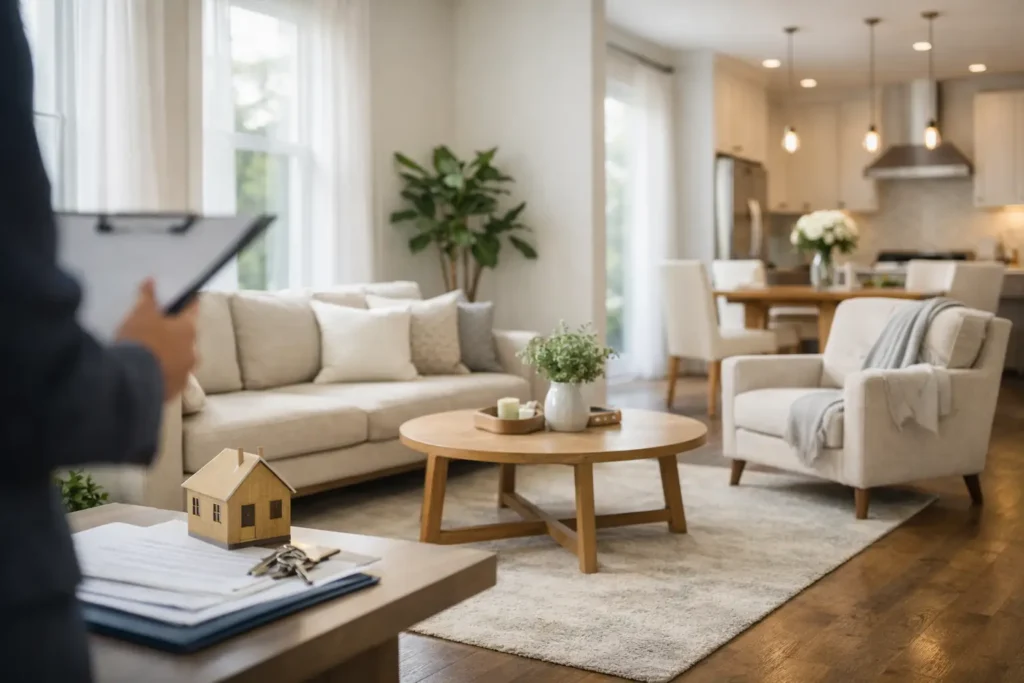
A vacant property can be harder to sell than a dated one. Empty rooms look smaller in listing photos, buyers struggle to read the layout, and every echo can make a home feel less inviting during a showing. Knowing how to stage vacant listings gives agents control over that first impression and turns blank square footage into a lifestyle buyers can picture themselves living.
In South Florida, where buyers compare dozens of polished listings across MLS, Zillow, social media, and agent websites, an empty home rarely gets the benefit of the doubt. The goal is not to fill every room with furniture. It is to show purpose, scale, light, and the lifestyle the property supports.
How to Stage Vacant Listings for Buyer Appeal
Start with the rooms that influence the buying decision. For most homes, that means the living room, kitchen or dining area, primary bedroom, and outdoor space. In a condo, the balcony may carry as much weight as the bedroom. In a family home, a flexible den or bonus room can help buyers understand how the property works for remote work, guests, or children.
Each staged room should answer a simple question: what is this space for? Buyers should not have to guess whether an awkward corner is intended as a dining area or whether a large room can accommodate a sectional and television. Furniture establishes scale. A rug defines a zone. Lighting and accessories create warmth without competing with the architecture.
Avoid treating staging as decoration alone. A beautifully styled room that blocks a walk path, hides a water view, or makes a modest room feel crowded works against the listing. The best staging directs attention toward the home’s strongest selling points: ceiling height, natural light, renovated finishes, storage, a view, or indoor-outdoor flow.
Match the staging level to the listing strategy
Physical staging is often the right choice for premium listings, occupied showing periods, model-like new construction, and homes with distinctive layouts. It gives buyers a convincing in-person experience and provides depth, shadows, and realism that photograph especially well.
Virtual staging can be the smarter option when the home is vacant, the listing timeline is tight, or the budget needs to stay focused on high-impact marketing. It is particularly effective for MLS photos and digital campaigns because it helps buyers see a room’s potential before they decide whether to schedule a showing.
The trade-off is straightforward. Virtual staging enhances online appeal, but the property will still be empty when a buyer walks through it. For a high-end property with frequent showings, physical staging may justify the investment. For an entry-level condo, a rental, or a seller testing price and demand, professionally virtual staged images can make the marketing far more competitive without the cost and logistics of furniture delivery.
Prepare the Property Before Any Furniture Arrives
Staging cannot compensate for poor preparation. Before scheduling photography, remove construction debris, patch visible wall damage, replace burned-out bulbs, clean windows, and make sure every room is ready to be shown. In Florida, pay close attention to window tracks, balconies, patio surfaces, ceiling fans, and air-conditioning vents. Small maintenance issues stand out in high-resolution photos and can make an otherwise polished property feel neglected.
Light is a major part of the presentation. Open blinds and shades where privacy allows, but do not sacrifice a clean exposure for a view that washes out the room. A professional real estate photographer can balance interior light and exterior views, yet the space still needs to be camera-ready. Turn on working lights with matching color temperatures and replace harsh daylight bulbs if they make the room look cold or uneven.
Clean lines matter. Even in an empty home, avoid leaving paint cans, lockboxes, cleaning supplies, spare tiles, or contractor materials in view. Buyers read those details as unfinished business. The property should feel ready for its next owner, not paused between projects.
Build a Staging Plan Room by Room
A practical staging plan begins with the hero image. Ask which room or exterior will stop a buyer from scrolling. In many South Florida listings, it may be a bright living room, a kitchen with a waterfall island, a waterfront balcony, or a pool patio. Stage that area first, then create visual continuity through the rest of the home.
For the living room, use seating that demonstrates the room’s capacity without overwhelming it. A sofa, two accent chairs, a coffee table, and a properly sized rug are often enough. Undersized rugs and tiny furniture can make a room feel smaller, while oversized pieces can restrict movement and distract from the floor plan.
In the dining area, show whether the space supports everyday meals, entertaining, or both. A table set for four may be more believable than a large formal table squeezed into a compact condo. In the primary bedroom, use a bed size that fits the room comfortably, plus restrained bedside furniture and layered bedding. Buyers should see comfort, not clutter.
Do not ignore secondary spaces. An empty den can look like wasted square footage until it becomes a clean home office or reading room. A small bedroom may perform better as a nursery, guest room, or office, depending on the likely buyer. The point is not to dictate how a buyer must live. It is to eliminate uncertainty and show possibilities, not just the space.
Make Virtual Staging Look Credible
Virtual staging should look like a natural extension of the property, not a design experiment. Choose furniture styles that match the home’s price point, architecture, and target audience. A sleek contemporary condo in Brickell calls for a different look than a coastal home in Fort Lauderdale or a traditional property in Palm Beach Gardens.
Keep the edit realistic. Virtual furniture should respect the room’s dimensions, door swings, window placement, and sightlines. Do not add oversized dining tables, impossible television placements, or decor that covers permanent features. Buyers may forgive an empty room. They are less forgiving when a showing reveals that the online images were misleading.
Transparency matters as well. Clearly identify virtually staged images according to MLS rules and brokerage policy. A simple disclosure protects credibility while still allowing the listing to perform at its best online. Consider including at least one unstaged photo of key rooms when appropriate, especially if buyers will see an empty property immediately after viewing the listing.
Coordinate Staging With Photography and Tours
Staging is most effective when it is planned around the full visual marketing package. Still photography establishes the listing’s first impression. Aerial photography can frame the neighborhood, water access, lot size, and proximity to beaches or city centers. A 3D tour gives remote buyers a better sense of flow, while a video walkthrough adds movement and emotion to social media campaigns.
The rooms selected for staging should support all of those assets. For example, a staged living area looks stronger in a wide-angle photograph, but it also creates a natural opening scene for video and a memorable stop inside a 3D tour. Coordinate furniture placement before capture day so cameras can move freely and every key angle remains clean.
For listings where full physical staging is not practical, a hybrid approach can work well. Physically stage the main living area and primary bedroom for showings, then use virtual staging to demonstrate an office, dining room, or secondary bedroom in listing photos. This keeps the presentation consistent while concentrating the budget where it has the most influence.
Measure Whether the Investment Is Working
Staging should support a sales strategy, not become an automatic expense. Compare the expected staging cost with the listing price, anticipated days on market, competition, and the home’s current condition. If comparable properties are professionally presented and yours is empty, the cost of doing nothing may be higher than the cost of staging.
Watch early performance after launch. Strong saves, shares, showing requests, and buyer feedback indicate that the visual story is doing its job. If traffic is high but showings are weak, review the price, lead image, photo order, and property description. If showings are active but buyers cannot connect with the empty home in person, physical staging may be the missing piece.
A vacant listing does not need more objects. It needs a clear point of view. Give buyers a reason to pause at the first photo, understand the layout before they arrive, and remember how the home felt after they leave. That is what moves a blank property closer to an accepted offer.