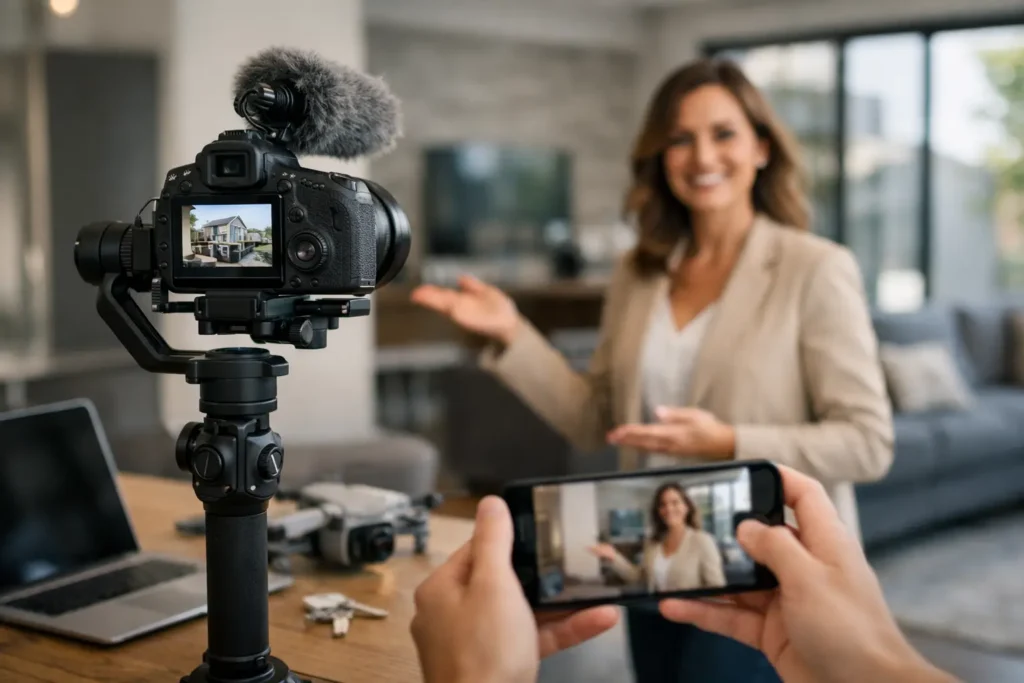
A great listing video can answer the questions that photos leave open in the first five seconds. Does the home flow well? Does the kitchen feel connected to the living space? Is the backyard private, usable, and worth the price point? This real estate video marketing guide is built for agents who need more than pretty footage. You need content that helps listings stand out, attracts better-qualified buyers, and gives sellers a clear reason to hire you again.
In South Florida, that standard is even higher. Buyers are comparing waterfront views, condo amenities, outdoor living spaces, and renovation quality at speed. If your video only looks cinematic but does not communicate layout, lifestyle, and value, it is not doing enough. The best video marketing shortens the gap between interest and action.
What a real estate video marketing guide should actually help you do
A useful guide should not treat every property the same. A luxury waterfront home, a downtown condo, and an investment duplex need different angles, different pacing, and often different distribution plans. The goal is not simply to film the home. The goal is to position the property in a way that matches buyer intent.
That means the video has to do three jobs at once. It needs to stop the scroll, explain the space, and support the price. If one of those pieces is missing, results usually soften. A flashy edit may win attention but fail to qualify buyers. A slow walkthrough may explain the floor plan but get ignored on social media. Strong listing video sits in the middle – polished enough to compete, clear enough to convert.
Start with the listing strategy, not the camera
Before a shoot gets scheduled, define what the property needs to communicate. For some homes, the layout is the selling point. For others, it is the water view, the oversized lot, the chef’s kitchen, or the building amenities. Video should emphasize the factor most likely to move a buyer from curiosity to showing.
This is where many agents lose momentum. They order video because it feels expected, but they do not shape the story. The result is generic footage that could fit almost any listing in the area. Buyers notice that. Sellers may not say it directly, but they notice it too when the asset does not create activity.
A sharper approach is to decide early whether the video is meant to sell lifestyle, clarify layout, showcase upgrades, or build your own agent brand while marketing the home. It can do more than one, but one priority should lead.
Match the video style to the property
A luxury home usually benefits from a more cinematic edit with slower movement, stronger detail shots, and a mood that supports aspiration. A mid-market family home often performs better when the video feels bright, efficient, and easy to understand. New construction may need clean explanatory visuals. Condos often need the building, neighborhood, and amenity package featured as heavily as the unit itself.
There is no universal best style. It depends on price point, audience, and where the content will appear first.
The core video assets every serious listing should consider
If you want video to pull real weight in your marketing, think in terms of a content package instead of one final export. One polished listing video is useful, but several purpose-built edits usually outperform it.
The foundation is the main property video. This is the piece that brings the home together and creates a complete impression. Then come the shorter cuts. A vertical social version, a quick teaser, and a few room-specific clips can extend the shelf life of the shoot and give you more ways to promote the listing without repeating yourself.
For the right property, drone footage adds context that ground-level video cannot. In South Florida, location is often part of the value proposition – proximity to water, golf, downtown corridors, beaches, or major roads matters. Aerial footage can make that clear fast. But it only helps when the surroundings actually support the sale. If the neighboring lots are visually weak or the property has limited exterior appeal, drone should be used carefully.
Agent on-camera segments can also work, especially when your goal is to build authority and win more listings. But they need to feel confident and concise. A rambling intro can reduce watch time. A short, direct presentation of the home’s best features is usually more effective.
Production quality matters, but clarity matters more
Yes, stabilization, color, lighting, and sound all affect perceived quality. They also affect how sellers judge your marketing. But buyers are not only measuring aesthetics. They are trying to understand what living in the space feels like.
That is why room order, pacing, and editing choices matter so much. If the video jumps around without helping the viewer orient themselves, it creates confusion. If every shot is wide and fast, the home may look impressive but impersonal. If every shot is tight and dramatic, buyers may suspect the layout is being hidden.
Good video builds trust. It shows enough to create excitement without creating false expectations that lead to wasted showings. That trade-off matters. Overproduced video can generate attention but disappoint in person if it oversells scale or condition. Strong video supports the in-person experience rather than setting it up to fail.
Where to use real estate video marketing for actual results
The best video strategy is distribution-first. If a video only lives in one place, you are leaving reach and return on the table.
Your main property video supports the listing presentation, your website presence, email follow-up, and social promotion. Short vertical edits are built for Instagram Reels, Stories, and similar feeds where quick attention matters. Teaser clips are useful before the full listing goes live. Community clips and amenity footage can help when the neighborhood is part of the value story.
MLS rules and platform behavior vary, so not every version belongs everywhere. Some placements favor a clean property-only presentation. Others reward personality and stronger hooks. It is worth planning for that upfront instead of trying to cut one video into every format later.
Social media should not feel like an afterthought
A lot of agents post listing videos the same way they upload photos – once, with little adaptation, then move on. That usually underperforms. Social platforms reward content that fits the platform, especially vertical video with quick movement and a clear opening moment.
The first few seconds should answer one question: why should someone keep watching? That might be a dramatic view, a standout kitchen, a rare backyard, or a price-to-value angle. If the opening is slow, elegant, and vague, the audience is gone before the best features arrive.
Common mistakes that weaken listing video
The biggest mistake is treating video as decoration instead of strategy. When that happens, shoots get rushed, homes are not prepared correctly, and the final edit lacks a clear purpose.
Another common issue is trying to show everything equally. Not every room deserves the same attention. Buyers remember standout moments, not comprehensive documentation. A home office might matter more than a secondary bathroom. An oversized terrace may matter more than a laundry room. Good editing creates hierarchy.
Music choice, pacing, and shot length also need discipline. If the edit feels too slow, buyers drop off. If it feels too aggressive, the property can lose its sense of comfort and scale. The right rhythm depends on the listing.
One more mistake is failing to coordinate video with the rest of the marketing stack. High-end photography, 3D tours, drone capture, floor plans, and virtual enhancements often work better together than any one asset does alone. Video creates emotional pull. Other media answer practical questions. Serious agents use both.
How to measure whether your video is working
Views alone are not enough. A video can attract attention and still fail to help the listing. The stronger indicators are watch time, click-through behavior, showing quality, seller feedback, and whether the asset helps you generate more listing opportunities.
If buyers mention the video on inquiries, if showings are better qualified, and if sellers respond positively to your presentation package, the content is doing its job. Sometimes the biggest payoff is not only selling the current listing faster. It is proving to the next seller that your marketing operates at a higher level.
That is where a dependable media partner matters. When production is consistent, turnaround is fast, and the content is built around buyer behavior instead of generic visuals, your marketing starts to compound. Teams like digitall.media understand that agents are not buying footage for its own sake. They are buying a competitive edge.
A strong listing video should make the next step easier, whether that is booking a showing, justifying a price, or winning the next appointment. If your current content looks good but does not move people, the fix is rarely more footage. It is a better plan.