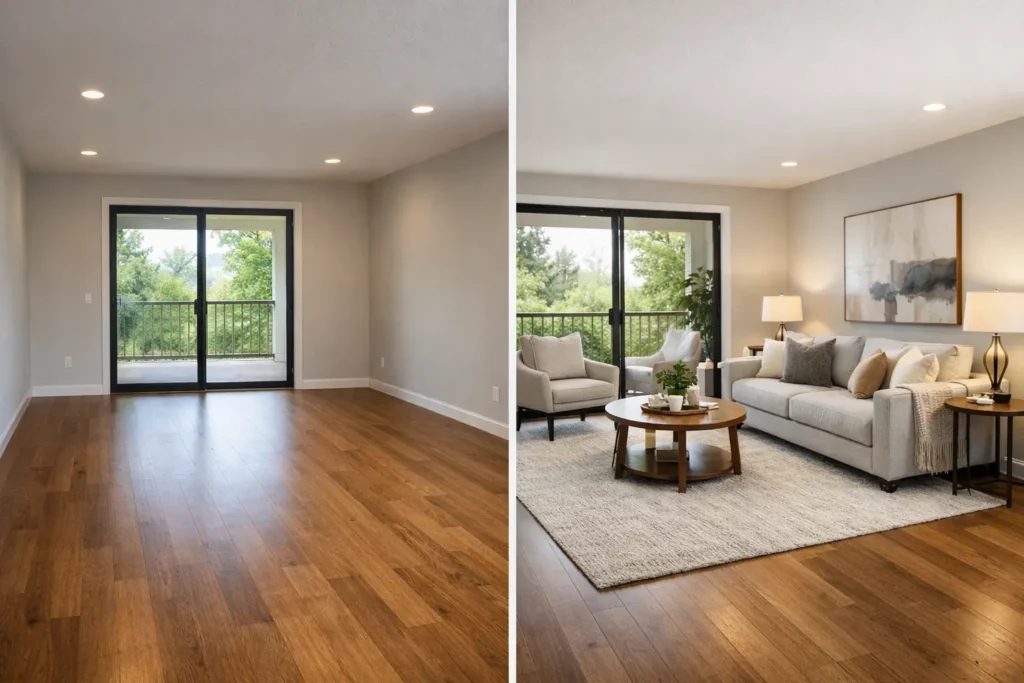
A vacant condo in Brickell can photograph like a blank box. The same unit, shown with clean furniture placement, a defined dining area, and a believable living room setup, suddenly makes sense to a buyer. That is why virtual staging before and after comparisons matter – they do not just make a listing look better, they help buyers understand how the space lives.
For agents in South Florida, that difference is not cosmetic. It affects click-through rates, showing quality, buyer expectations, and how quickly a listing builds momentum. In a market where buyers scroll fast and compare everything, strong visuals are often the first showing. If the photos fail, the property can lose attention before anyone reads the remarks.
Why virtual staging before and after matters
The biggest value in a virtual staging before and after transformation is clarity. Empty rooms tend to look smaller, colder, and less inviting in listing photos. Buyers may struggle to judge scale, layout, or even the purpose of an awkward area. Is that corner meant for a breakfast table, a desk, or wasted space? If they cannot picture it, they move on.
A well-staged image answers those questions immediately. It gives shape to open floor plans, softens hard edges, and creates a lifestyle context that helps the home compete. In Miami-Dade, Broward, and Palm Beach, where listings often need to appeal to both local and out-of-state buyers, that clarity becomes a selling tool.
There is also a practical advantage for agents. Better listing photos can reduce low-intent showings because buyers arrive with a more accurate understanding of the space. They know how the room can function. They know whether the scale works for their needs. That saves time for everyone involved.
What buyers actually notice in before and after images
Buyers rarely say, “This room benefited from digital enhancement.” What they say is, “I can see myself here.” That response usually comes from a few specific changes.
First, furniture creates proportion. A bedroom without furniture can feel oddly narrow or oversized depending on lens choice and light. Add a properly scaled bed, side tables, and simple decor, and the room becomes easier to read.
Second, staging defines use. In many South Florida homes, especially condos and renovated properties, there are flexible spaces that could be an office, den, sitting area, or dining nook. Virtual staging gives those spaces a job. That matters because confused buyers hesitate.
Third, style shapes perception. A modern coastal look may feel right for one waterfront listing, while a sleek contemporary setup may fit a downtown high-rise better. The best results are not about adding expensive-looking furniture everywhere. They are about matching the property, the likely buyer, and the price point.
Virtual staging before and after in real listing strategy
Used correctly, virtual staging is not a design trick. It is a listing strategy.
If you are marketing a vacant home, the goal is usually straightforward: make the property feel livable and polished without the cost and delay of physical staging. That can be especially useful when you need to launch quickly, when the seller has already moved out, or when the property is difficult to access repeatedly.
If the home is partially furnished, the strategy gets more selective. Sometimes only one or two key rooms need help. A strong living room and primary bedroom may be enough to anchor the visual story of the listing. Not every room needs intervention, and overdoing it can make the presentation feel forced.
For luxury listings, the standard is higher. Buyers expect refined visual consistency, and the staging style has to support the architecture rather than compete with it. Cheap-looking digital furniture can hurt more than it helps. In that price tier, realism is everything.
What makes a before and after transformation believable
Not all virtual staging delivers the same result. The difference between a useful marketing asset and an obvious fake usually comes down to execution.
The base photography has to be strong. Good composition, balanced light, and accurate room angles give the staging team something credible to work with. If the original image is dark, distorted, or poorly framed, even excellent virtual staging will struggle.
Furniture selection matters just as much. The pieces need to fit the room dimensions and reflect the property type. A compact Fort Lauderdale condo should not be staged like a sprawling estate in Palm Beach Gardens. Buyers notice when scale or style feels off, even if they cannot explain why.
Then there is restraint. The strongest before and after images are usually clean and intentional. They do not overload the room with accessories or trendy design choices that distract from the space itself. The property should stay the hero.
Where virtual staging works best
Virtual staging tends to perform best in vacant listings, new construction, investment properties, and refreshed homes waiting to hit the market. These are the situations where empty-space photography usually underperforms and where timing often matters most.
It is also useful for inherited properties or listings that were cleared out before sale. Once a room is empty, every flaw becomes more visible and every space feels less emotionally engaging. Strategic staging can shift attention back to layout, light, and potential.
That said, it is not always the right answer. If a home is heavily dated, cluttered, or in visible disrepair, virtual furniture will not solve the underlying issue. In those cases, photo editing, decluttering, or basic prep may need to come first. Buyers still need an honest visual impression.
The trade-off: speed and flexibility vs physical staging
For many agents, the appeal is obvious. Virtual staging is faster, more affordable, and easier to coordinate than moving furniture into a property. You can adjust style choices, test different looks, and prepare marketing assets without waiting on delivery schedules or installation windows.
But physical staging still has advantages in certain cases. If the property will host luxury open houses, private events, or high-touch in-person marketing, an actually staged space can elevate the full experience. Buyers do not just see the rooms online. They walk into them.
This is where it depends on the listing. If your main challenge is online presentation and speed to market, virtual staging is often the smarter move. If the home needs to impress both online and in person at a premium level, physical staging may still justify the investment.
How agents should use staged images responsibly
Transparency matters. If an image is virtually staged, buyers should not be left guessing. Clear labeling protects credibility and keeps marketing compliant. Most serious agents already understand this, but it is worth repeating because trust is part of the sale.
The best approach is simple: use virtual staging to show potential, not to misrepresent condition. Do not digitally hide flaws that will appear during a showing. Do not add finishes, views, or structural features that do not exist. Show the possibilities, not a different property.
That standard is also what makes the before and after format so effective. It demonstrates the room honestly while helping buyers see what is possible with furnishing and layout.
How to get better virtual staging before and after results
If you want stronger results, start with the right rooms. The living room, primary bedroom, dining area, and office-flex space usually have the biggest impact because they help buyers interpret how the home functions.
Next, think about your likely buyer. A downtown condo aimed at young professionals should not be staged the same way as a family home in the suburbs or a seasonal waterfront property. Design choices should support the audience you want to attract.
Finally, choose realism over drama. The most effective staged images do not scream for attention. They quietly remove uncertainty. That is what gets more buyers from scrolling to scheduling.
For agents who depend on listing presentation to win business, this also has value before the property ever goes live. Showing a seller a strong virtual staging before and after example can help justify your marketing plan and position you as someone who knows how to create demand, not just upload photos.
In a market as visual and competitive as South Florida, empty rooms rarely do a listing any favors. Buyers need help connecting the space to a lifestyle, and sellers need marketing that gives the home a stronger first impression from day one. When virtual staging is done with taste, accuracy, and strategy, it does more than fill a room. It gives the listing a better chance to move.