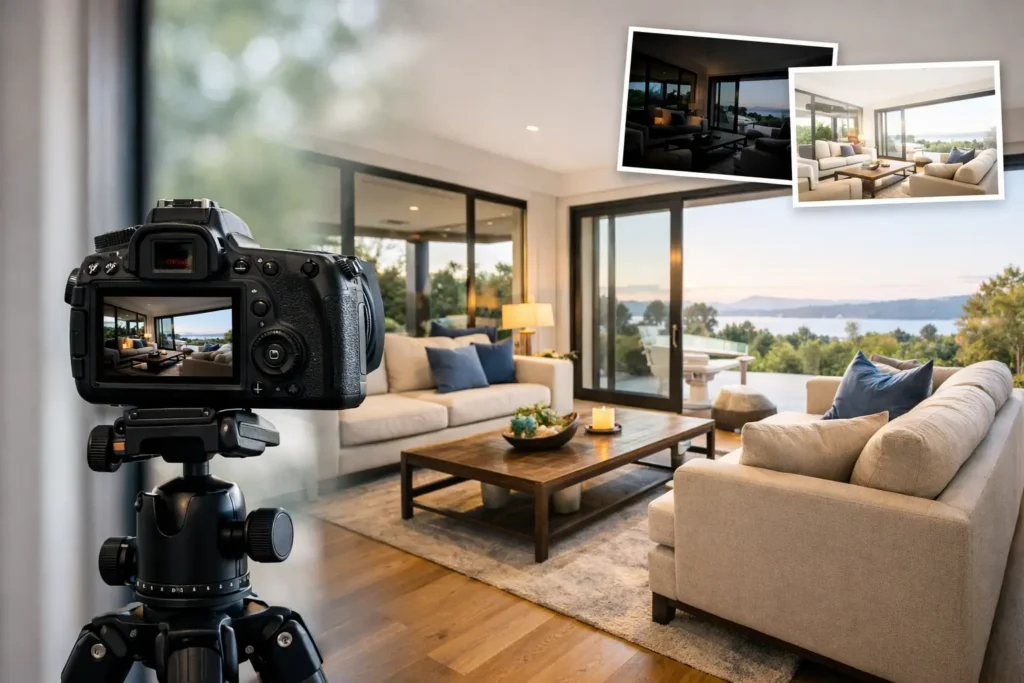
A bright living room with ocean views can look incredible in person and disappointing on camera fast. The windows blow out to pure white, the interior turns muddy, and the photo ends up showing neither the room nor the view well. That is exactly where the question what is HDR in real estate photography matters. For agents marketing property in South Florida, where sunlight is intense and indoor-outdoor living is part of the sale, HDR can make the difference between a listing that feels flat and one that feels market-ready.
HDR stands for High Dynamic Range. In real estate photography, it usually means combining multiple exposures of the same scene into one final image that holds detail in both the bright areas and the darker parts of the room. Instead of choosing between a properly exposed window or a properly exposed interior, HDR aims to balance both.
This is not just a technical trick. It is a sales tool. Buyers scroll quickly, and they make snap judgments about quality, condition, and value based on the images in front of them. If the photography makes a home feel dark, uneven, or amateur, the listing starts at a disadvantage.
What is HDR in real estate photography, really?
At the practical level, HDR photography is created by taking several photos of the same composition at different brightness levels. One frame may be exposed for the windows, another for the midtones, and another for the shadows. Editing software or a skilled editor then merges those frames into a single image.
The goal is not to make the property look fake. The goal is to make the camera capture the space more like the human eye experiences it. When a buyer stands in a room, they can usually see the cabinetry, the flooring, and the water view outside all at once. A single camera exposure often cannot do that cleanly, especially in high-contrast settings.
In real estate marketing, HDR is commonly used for interior shots with large windows, open-concept rooms, kitchens with mixed lighting, and homes where preserving exterior detail adds value. Think downtown condo views, waterfront backyards, bright entryways, and living rooms that connect visually to patios or pools.
How HDR works on a real estate shoot
During the shoot, the photographer places the camera on a tripod and captures a bracketed series of exposures. Usually that means three to five frames, though some scenes may need more. Nothing in the room should move much between exposures, which is why consistency matters.
After capture, the images are blended in post-production. This is where quality shows. Strong HDR editing keeps vertical lines straight, preserves natural color, and creates even brightness without making surfaces glow or shadows look strange. Poor HDR editing does the opposite. It can create halos around windows, muddy colors, or that crunchy overprocessed look buyers notice right away.
For agents, the important point is simple. HDR is not just about taking more photos. It is about producing a finished image that feels clean, bright, and believable.
Why HDR works so well for listings
Real estate photography has one job: make a property easy to understand and attractive enough to earn the next click, the next showing, and the next offer. HDR supports that by improving clarity.
A balanced image helps buyers read the room quickly. They can see finishes, layout, natural light, and exterior context without fighting the photo. That matters on MLS, on social media, and on branded property pages where first impressions carry a lot of weight.
It also helps protect perceived value. If a room looks too dark, buyers may assume it is smaller or less updated than it really is. If the windows are blown out, they miss one of the home’s strongest selling points. In a competitive market, that is unnecessary friction.
For South Florida properties, HDR is especially useful because many homes are marketed around brightness, openness, and connection to the outdoors. When the pool deck, skyline, golf course, or water view disappears in the photo, part of the listing story disappears with it.
HDR vs flambient in real estate photography
Agents often hear another term alongside HDR: flambient. The difference matters because both approaches are common in real estate media.
HDR blends multiple ambient-light exposures. Flambient combines ambient exposures with flash-lit frames, then blends them for a more controlled final image. In general, HDR is efficient, cost-effective, and very good for many listing types. Flambient often delivers more precise color and cleaner lighting control, especially in high-end interiors or spaces with complicated mixed lighting.
So which is better? It depends on the property, the budget, and the level of polish needed. A well-executed HDR workflow can be more than enough for many condos, single-family homes, rental listings, and fast-turn marketing shoots. For luxury properties or architecturally detailed interiors, a flash-based approach may produce a more refined result.
The real issue is not choosing a buzzword. It is choosing a photographer who knows when each method serves the listing best.
When HDR is the right choice
HDR works best when the home needs balanced, bright, natural-looking coverage and the turnaround has to support the pace of the market. That makes it a strong fit for many active listings.
It is especially effective in rooms with strong daylight, open spaces with visible windows, and homes where a clean and welcoming overall look matters more than highly stylized lighting. It can also be a smart option for agents who need professional results at a practical price point without slowing down launch timelines.
For many real estate teams, that balance is the win. You get polished images that present the home well and help you get to market quickly.
When HDR can fall short
HDR is useful, but it is not magic. Some scenes are difficult for it. Mixed lighting can create color issues, especially when daylight, warm bulbs, and accent lighting all compete in one frame. Spaces with reflective surfaces, mirrored walls, or intricate luxury finishes can also expose the limits of an HDR-only approach.
Movement is another factor. If trees are blowing outside, water is rippling in the background, or sheer curtains are shifting between exposures, ghosting can happen. Good editing reduces that, but it is still a variable.
There is also the quality problem. Not all HDR is equal. Overprocessed HDR can make walls look gray, windows look unnatural, and the entire room feel artificial. That hurts trust. Buyers may not know the technical reason, but they can tell when photos feel off.
What agents should look for in HDR photos
If you are hiring a media team, do not stop at asking whether they shoot HDR. Ask what their final images look like and whether the editing style stays true to the property.
Good HDR real estate photography should feel bright but not washed out. Colors should look accurate. Window views should be visible without stealing attention from the room. Vertical lines should be straight, and the space should feel clean, spacious, and realistic.
Fast turnaround matters too. In a market where timing affects momentum, the value of great photography drops if delivery slows down your listing launch. A dependable workflow is part of the product.
This is where an experienced provider earns their keep. A specialist who understands real estate marketing is not just creating technically correct images. They are creating assets built to help your listing perform.
Does HDR make a home look misleading?
Not when it is done properly. Professional HDR should present the home at its best while staying faithful to the space. The line gets crossed when editing starts changing reality instead of clarifying it.
There is a big difference between balancing exposure and inventing a sky that does not match the day, hiding flaws that should be disclosed, or pushing color so far that buyers walk in and feel disappointed. The best real estate photography builds interest without creating a disconnect between the photos and the showing.
That is why restraint matters. Strong media should increase confidence, not create suspicion.
Why this matters for your next listing
If you are competing for attention in Miami-Dade, Broward, or Palm Beach, visual quality is not optional. Buyers see dozens of listings in one sitting. Your photography has to communicate value fast.
HDR gives agents a practical way to show bright interiors, preserve premium views, and create listing photos that feel polished across MLS, social campaigns, and property marketing materials. It is not the answer for every property and every scene, but when used well, it does exactly what great listing media should do – reduce friction, increase appeal, and help serious buyers engage.
If a home has strong natural light, meaningful views, or interior spaces that lose impact in a single exposure, HDR is often the right move. And if the goal is to make the property feel clear, inviting, and ready to show, that is a strong place to start.
The best photos do more than document a space. They help buyers picture the life that comes with it.